

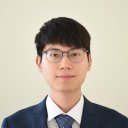
 Hao-Yu Hou
4 previous affiliations
- University of Toronto2025–2026
- MScAC Student · 2025–2026
- Substitute Service Training Center, Department of Conscription Administration2024–2025
- Underpaid worker · 2024–2025
- RIKEN2024
- Intern · 2024
- National Tsing Hua University2020–2024
- Undergrad student · 2020–2024
Research Overview
Hao-Yu Hou focuses on computer vision, specifically addressing small object detection and high-fidelity simulation environments for autonomous driving. Initial work concentrated on overcoming resolution and blurring challenges in detecting distant objects through ensemble methods and dataset curation. More recently, this research has shifted toward utilizing Neural Radiance Fields to bridge the sim-to-real gap in autonomous vehicle validation.
Research Trajectory
The available evidence indicates a focused research trajectory spanning 2023 to 2024, beginning with specialized challenges in 2D object detection and moving toward 3D environmental simulation.
In 2023, Hou’s primary focus was on Small Object Detection (SOD), a subfield of computer vision that deals with the difficulties of identifying distant, noisy, or blurred entities in images. Conventional feature extraction methods often struggle in this domain because down-sampling and convolutional operations tend to obscure the already limited details of tiny objects. As first author, Hou addressed these limitations in Ensemble Fusion for Small Object Detection. This work introduced an approach that leverages multiple diverse model variants, combining their predictions through ensemble fusion to improve the accuracy and localization of small objects.
During the same period, Hou participated as a contributing author in the broader community efforts surrounding SOD. This included collaborative work on the MVA2023 Small Object Detection Challenge for Spotting Birds: Dataset, Methods, and Results. As part of a large research consortium, Hou helped detail the Small Object Detection for Spotting Birds (SOD4SB) dataset, a collection of over 39,000 images containing more than 137,000 bird instances. This publication served to benchmark the state of the art by summarizing the methods of the challenge's 223 participants.
By 2024, Hou's collaborative work expanded into 3D computer vision and autonomous driving simulations. Operating as a middle author, Hou contributed to DriveEnv-NeRF: Exploration of A NeRF-Based Autonomous Driving Environment for Real-World Performance Validation. This research tackled the "sim-to-real gap"—the performance disparity that occurs when autonomous driving agents trained in virtual simulators are deployed in real-world conditions. The project proposed a workflow utilizing Neural Radiance Fields (NeRF) to construct high-fidelity simulation environments of targeted real-world scenes, enabling the rendering of realistic images from novel viewpoints and the construction of 3D meshes for emulation.
Current Directions
Based on the most recent papers in the evidence, Hou’s current collaborative efforts center on the application of Neural Radiance Fields (NeRF) for autonomous driving validation. This direction addresses the critical need for faithful forecasting of autonomous agent efficacy before real-world deployment. The recent work investigates how advanced 3D rendering techniques can be used to build highly realistic simulation environments, focusing on mitigating the sim-to-real gap by generating novel viewpoints and accurate 3D meshes that standard simulator-based rendering pipelines typically fail to capture.
Profile updated
Loading new papers…
Other researchers whose papers cluster into the same research directions — a proxy for overlapping technical interests and shared intellectual neighborhoods.
See something wrong? Report a mistake