

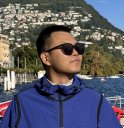
 Vincent Tao Hu
· 7 previous affiliations
- Full Professor · 2026–2032
- Ludwig-Maximilians-Universität MünchenSince 2023
- Postdoctoral Researcher · Since 2023
- Postdoc · 2023–2025
- University of Amsterdam2018–2023
- Guest Researcher · 2022–2023
- Ph.D, Computer Science · 2018–2022
- Applied Scientist · 2020
- Megvii (China)2017–2018
- Research Internship · 2017–2018
- Peking University2015–2018
- Peking University · 2015–2018
- Xiaomi (China)2017
- Research Internship · 2017
Research Overview
Vincent Tao Hu focuses on generative modeling, representation learning, and the optimization of diffusion processes for visual and textual data. His trajectory spans early work in 3D point cloud augmentation to the development of highly efficient, self-guided diffusion models and flow matching techniques. Most recently, his research investigates discrete tokenization and reinforcement learning fine-tuning for large language models.
Research Trajectory
Early work focused on representation learning for complex visual data. He contributed to the area of unstructured 3D point cloud learning by developing PointMixup: Augmentation for Point Clouds, which introduced a shortest-path linear interpolation technique for synthetic data generation to improve classification accuracy in low-data regimes. Around the same time, he participated in research on localizing brief actions in long video streams with Localizing the Common Action Among a Few Videos, proposing a 3D CNN architecture to align and fuse information from unlabeled support videos for few-shot action localization.
By 2023, his focus shifted toward improving the training and control of generative models, particularly in the domain of controllable generative modeling without human labels. He introduced Self-Guided Diffusion Models, which leverages feature extraction and self-annotation to provide guidance signals across various image granularities without requiring extensive image-annotation pairs. Expanding on this, Guided Diffusion from Self-Supervised Diffusion Features integrated an online clustering mechanism to eliminate the need for external labels or pre-trained backbones, advancing discriminative perception directly from generative diffusion features.
In 2024, the scope of his generative modeling research expanded significantly to encompass architectural efficiency, flow matching, and discrete diffusion. To address computational bottlenecks in vision models, he contributed to the development of locality-preserving serialization for sequence models through ZigMa: A DiT-style Zigzag Mamba Diffusion Model, which replaced traditional Transformer backbones with a State-Space Model optimized for spatial continuity. He also explored physics-guided generation with Retinex-Diffusion: On Controlling Illumination Conditions in Diffusion Models via Retinex Theory, enabling precise lighting control and relighting in diffusion models without the need for extra datasets or complex rendering pipelines.
Simultaneously, he advanced efficient generative modeling via flow matching. He developed Flow Matching for Conditional Text Generation in a Few Sampling Steps, which mitigates the slow sampling speeds and hyperparameter sensitivity of traditional diffusion models for text. He further investigated flow matching's latent structure in Latent Space Editing in Transformer-Based Flow Matching, introducing an editing space for scalable image manipulation. Bridging continuous and discrete paradigms, he proposed a unified mathematical framework in [MASK] is All You Need, reframing generation as a progressive unmasking process and advancing the research direction of Time-Agnostic Discrete Diffusion via Mask Density.
Moving into 2025, his work increasingly targeted video generation and depth estimation. He introduced MaskFlow: Discrete Flows For Flexible and Efficient Long Video Generation, a framework combining discrete flow-matching with frame-level masking to synthesize long videos efficiently, contributing to the area of Mitigating Temporal Drift in Autoregressive Video Generation. He also participated in applying flow matching to 3D perception tasks, as seen in DepthFM: Fast Generative Monocular Depth Estimation with Flow Matching, which aligns with the broader areas of Linear Trajectories for Fast Generative Modeling and Straight Path Generative Modeling.
Most recently, in 2026, his research has explored the intersection of continuous dynamics and discrete representations, as well as the optimization of large language models. He collaborated on Purrception: Variational Flow Matching for Vector-Quantized Image Generation, a hybrid model that uses categorical supervision to guide continuous transport dynamics for discrete visual tokenization. Concurrently, he participated in research on accelerating the reinforcement learning fine-tuning of reasoning models in Can Prompt Difficulty be Online Predicted for Accelerating RL Finetuning of Reasoning Models?, addressing the computational overhead of prompt evaluation during intensive model interactions.
Current Directions
The most recent work in the evidence, spanning 2025 and 2026, investigates the convergence of continuous generative dynamics and discrete tokenization. A major ongoing theme is the development of hybrid architectures that apply flow matching and diffusion principles to discrete spaces, enabling more efficient video synthesis and vector-quantized image generation with precise control over sampling and sharpness. Additionally, current research addresses the optimization of large language models, specifically focusing on reducing the computational overhead of reinforcement learning fine-tuning by predicting prompt difficulty during the training of reasoning models.
Profile updated
Loading new papers…
Other researchers whose papers cluster into the same research directions — a proxy for overlapping technical interests and shared intellectual neighborhoods.
See something wrong? Report a mistake