

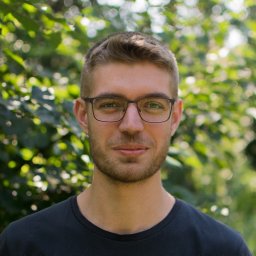
 Stefan Andreas Baumann
· 10 previous affiliations
- Ludwig-Maximilians-Universität MünchenSince 2023
- Doctoral Researcher · Since 2023
- Current
- Doctoral Researcher · Since 2023
- Intel (United States)2022–2023
- AI Research Intern · 2022–2023
- Intel (Israel)2022–2023
- Intern · 2022–2023
- Karlsruhe Institute of Technology2017–2023
- Master of Science - MS, Electrical Engineering and Information Technologies, Signal Processing · 2021–2023
- Instructor · 2021–2022
- Bachelor of Science - BS, Electrical Engineering and Information Technologies · 2017–2021
- Sony AI2022
- Intern · 2022
- Sony (Japan)2022
- Machine Learning Research Intern · 2022
- Aimino2021–2022
- Machine Learning Researcher · 2021–2022
- Aimino Tech GmbH2021–2022
- Working Student · 2021–2022
- Intern · 2020
Research Overview
Stefan Andreas Baumann focuses on generative artificial intelligence, computer vision, and efficient architectures for diffusion models. His trajectory spans from early work in audio representations to scalable image synthesis and fine-grained semantic control of text-to-image systems. Most recently, his research investigates motion reasoning and token-sparse training strategies to improve the efficiency and physical understanding of generative vision models.
Research Trajectory
Baumann’s early research explored representation learning and data augmentation in the audio domain. He investigated convolutional architectures for music analysis in Deeper Convolutional Neural Networks and Broad Augmentation Policies Improve Performance in Musical Key Estimation, examining how broad augmentation policies and deeper networks can improve key estimation performance.
Transitioning to computer vision and generative AI, his focus shifted toward overcoming the computational bottlenecks of standard transformer architectures in diffusion models. He introduced ZigMa: A DiT-style Zigzag Mamba Diffusion Model, which replaces the traditional transformer backbone with a state-space model optimized for visual data. By employing a zigzag scanning strategy to preserve spatial continuity, this work improved scalability and memory usage for high-resolution image and video generation, contributing to the area of Preserving Spatial Locality in Sequence Models. Alongside this, he investigated hierarchical architectures to reduce computational complexity. In Scalable High-Resolution Pixel-Space Image Synthesis with Hourglass Diffusion Transformers, he and his collaborators developed a U-Net-inspired transformer hierarchy that achieves linear computational scaling, advancing the research direction of Scaling Diffusion Models Directly in Pixel Space.
Another major theme in his trajectory is controlling the generative process to reflect specific semantic, structural, and stylistic intents. He participated in developing CTRLorALTer: Conditional LoRAdapter for Efficient 0-Shot Control and Altering of T2I Models, an approach that unifies style and structure conditioning under a single conditional LoRA block for zero-shot control. He also led work on fine-grained attribute manipulation in Continuous, Subject-Specific Attribute Control in T2I Models by Identifying Semantic Directions. This work addressed the limitations of discrete natural language prompts by enabling continuous control over specific subjects without requiring a fixed reference image, aligning with his broader interest in the area of Continuous Semantic Control for Image Synthesis and the direction of Linear Composition of Semantic Steering Vectors.
As his work progressed, Baumann increasingly utilized flow matching to improve the training and inference efficiency of generative models. He contributed to FMBoost: Boosting Latent Diffusion with Flow Matching, which bridges a frozen diffusion model with a convolutional decoder to enable high-resolution synthesis at a reduced computational cost, engaging with the area of Linear Trajectories for Fast Generative Modeling. This interest in flow matching extended to dense prediction tasks in DepthFM: Fast Generative Monocular Depth Estimation with Flow Matching, where the task was framed as a direct transport between image and depth distributions to avoid the blurry artifacts of discriminative methods and the slow sampling of traditional generative approaches.
He also investigated the internal representations of these models to extract better semantic descriptors. In CleanDIFT: Diffusion Features without Noise, he co-developed an unsupervised fine-tuning method that enables diffusion backbones to provide high-quality semantic features without the typical requirement of adding noise to the input images, a contribution relevant to the broader area of Robustness via Clean-Target Knowledge Distillation.
Most recently, Baumann’s research has expanded into video generation and physical dynamics. He introduced the Flow Poke Transformer in What If : Understanding Motion Through Sparse Interactions, a framework for predicting multi-modal scene motion conditioned on sparse physical interactions. He also collaborated on DisMo: Disentangled Motion Representations for Open-World Motion Transfer, which separates motion from appearance to enable zero-shot action transfer across entirely different object domains.
Parallel to his work on motion, he continues to address the fundamental costs of training and guiding diffusion models. He proposed a token routing strategy in TREAD: Token Routing for Efficient Architecture-agnostic Diffusion Training, which accelerates training by randomly routing a subset of tokens to skip intermediate layers. Building on this concept of sparsity, he co-authored Guiding Token-Sparse Diffusion Models, introducing Sparse Guidance to improve the inference performance of models trained on subsets of visual information, offering a highly efficient alternative to standard classifier-free guidance.
Current Directions
The most recent papers in the evidence point toward two primary research themes: motion reasoning and the optimization of diffusion model training through sparsity. Recent work investigates how to model multi-modal scene dynamics and physical interactions, aiming to build representations of motion that are disentangled from object appearance and identity. This enables more robust open-world motion transfer and a deeper physical understanding of video data. In parallel, ongoing research addresses the computational bottlenecks of generative AI by exploring token-level sparsity. This includes developing routing mechanisms that accelerate training without architectural changes, as well as designing new guidance techniques that maintain high synthesis quality during inference for sparsely trained models.
Profile updated
Loading new papers…
Other researchers whose papers cluster into the same research directions — a proxy for overlapping technical interests and shared intellectual neighborhoods.
See something wrong? Report a mistake