

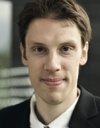
 Björn Ommer
· 5 previous affiliations
- Ludwig-Maximilians-Universität MünchenSince 2021
- Full Professor · Since 2021
- Heidelberg University2009–2021
- Full Professor · 2009–2021
- Postdoc · 2008–2009
- ETH Zurich2003–2008
- PhD student · 2003–2008
- University of Bonn1998–2003
- Undergrad student · 1998–2003
Research Overview
Björn Ommer focuses on computer vision, generative modeling, and representation learning, with an emphasis on efficient image synthesis and video understanding. His trajectory spans early work on compositional object models to the development of highly scalable latent diffusion architectures. Currently, his research addresses 3D scene stylization, zero-shot video classification, and the integration of continuous and discrete latent spaces for efficient generation.
Research Trajectory
His early research focused on unsupervised learning of visual hierarchies. In Learning the Compositional Nature of Visual Objects (2007), he introduced a framework to automatically decompose objects into a hierarchy of relevant compositions without supervision, using probabilistic graphical models to capture global shape and support feature sharing at the patch level.
By the late 2010s, his focus expanded to deep generative models and representation learning. His group explored the research direction of Decoupling Geometry and Appearance in Generative Models with A Variational U-Net for Conditional Appearance and Shape Generation (2018), which enabled shape-guided image generation by conditioning a U-Net on a variational autoencoder's appearance output. They also addressed interpretability in the area of Deterministic Latent Inversion for Semantic Manipulation via A Disentangling Invertible Interpretation Network for Explaining Latent Representations (2020), formulating the interpretation of black-box models as a bijective translation of hidden representations onto comprehensible semantic concepts.
In 2021, he applied deep learning to biological behavior analysis in Unsupervised behaviour analysis and magnification (uBAM) using deep learning, developing a non-invasive framework to automatically detect subtle deviations in animal and human posture. Concurrently, a major focus on generative architectures emerged. In Taming Transformers for High-Resolution Image Synthesis, he advanced the area of Discrete Visual Tokenization for Multimodal Sequence Modeling and contributed to the broader area of Scaling Visual Attention Beyond Quadratic Complexity. This work successfully combined the inductive biases of convolutional neural networks with the expressivity of transformers to synthesize high-resolution images.
This trajectory led to a major contribution in 2022 with High-Resolution Image Synthesis with Latent Diffusion Models, which significantly advanced the research direction of Generative Diffusion in Compressed Latent Spaces. By performing diffusion model training in the compressed latent space of an autoencoder, this approach drastically reduced computational costs while maintaining high performance across various synthesis tasks, including text-to-image generation. He also explored semi-parametric generation in Text-Guided Synthesis of Artistic Images with Retrieval-Augmented Diffusion Models, enabling zero-shot artistic stylization by conditioning a diffusion model on visual neighbors retrieved from an external database.
In 2024, his research expanded to address architectural alternatives to transformers and the modeling of 3D representations. He investigated state-space models for visual data in ZigMa: A DiT-style Zigzag Mamba Diffusion Model, introducing a zero-parameter scan scheme that preserves spatial continuity to improve speed and memory utilization. In the 3D domain, he developed techniques for geometric stylization in WaSt-3D: Wasserstein-2 Distance for Scene-to-Scene Stylization on 3D Gaussians, leveraging the Earth Mover's Distance to match the distributions of explicit Gaussian Splatting representations.
Work in 2025 continued to refine 3D modeling and video understanding. He addressed efficiency in 3D scene reconstruction with EDGS: Eliminating Densification for Efficient Convergence of 3DGS, proposing a dense initialization strategy that bypasses iterative densification. In video analysis, he introduced DisMo: Disentangled Motion Representations for Open-World Motion Transfer to separate motion from appearance for zero-shot action classification and transfer. He further addressed complex video recognition in ActAlign: Zero-Shot Fine-Grained Video Classification via Language-Guided Sequence Alignment, formulating zero-shot classification of extremely fine-grained actions as a sequence alignment problem guided by large language models.
By 2026, his focus included highly compressed latent spaces and novel generative paradigms. Adapting Self-Supervised Representations as a Latent Space for Efficient Generation demonstrated that entire images could be compressed into a single continuous latent token by fine-tuning pre-trained self-supervised models, significantly reducing training costs. Additionally, he participated in the development of Purrception: Variational Flow Matching for Vector-Quantized Image Generation, a hybrid model that bridges continuous flow matching and discrete vector-quantized latents to accelerate training convergence and enable precise control over image sharpness.
Current Directions
The most recent papers in the evidence indicate a focus on three primary areas: efficient 3D scene representation, advanced generative architectures, and fine-grained video understanding. Recent work investigates 3D Gaussian Splatting, specifically targeting faster convergence through dense initialization and exploring scene-to-scene stylization using optimal transport metrics. In generative modeling, the focus has broadened to include state-space models for visual data, hybrid approaches combining continuous flow matching with discrete latents, and extreme compression techniques that reduce images to single continuous tokens. Additionally, recent efforts in video analysis address the disentanglement of motion from appearance for open-world transfer and leverage large language models for zero-shot sequence alignment in complex action recognition.
Profile updated
Loading new papers…
Other researchers whose papers cluster into the same research directions — a proxy for overlapping technical interests and shared intellectual neighborhoods.
See something wrong? Report a mistake