

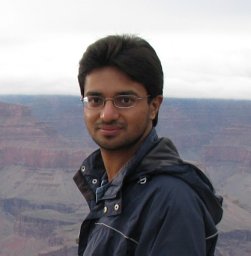
 Vaibhav Rajan
· 7 previous affiliations
- Google (United States)Since 2024
- Researcher · Since 2024
- Google DeepMind (United Kingdom)Since 2024
- Senior Research Scientist · Since 2024
- National University of Singapore2017–2024
- Assistant Professor · 2017–2024
- VideoKen2017
- Chief Data Scientist · 2017
- Xerox Research Centre India2012–2016
- Senior Research Scientist · 2016
- Research Scientist · 2012–2015
- Doctor of Philosophy (PhD), Computer Science · 2008–2012
- MS, Computer Science · 2006–2008
- Hewlett-Packard (United States)2004–2006
- Research Engineer · 2004–2006
1 other author named Vaibhav Rajan: Vaibhav Rajan (Friedrich Schiller University Jena · 1 paper)
Research Overview
Vaibhav Rajan focuses on computational biology, clinical machine learning, and probabilistic modeling. His trajectory spans early work in genomic algorithms and copula-based clustering to recent advances in medical language models and generative artificial intelligence for precision oncology. Currently, his research addresses diagnostic reasoning in large language models and high-resolution environmental monitoring using satellite imagery.
Research Trajectory
Rajan's early research concentrated on algorithmic challenges in computational genomics. With collaborators, he investigated the computational complexity of genomic inversions, contributing to Sorting Signed Permutations by Inversions in O(nlogn) Time (2009). Building on this foundation, he developed the ASM heuristic for reconstructing ancestral genomes in Heuristics for the inversion median problem (2010). This work provided a highly efficient approach to the inversion median problem, enabling the analysis of massive genomes and contributing to the broader research direction of Relaxing the Infinite Sites Assumption in Tumor Phylogeny.
In subsequent years, his methodological focus expanded to complex probabilistic modeling, particularly for datasets containing a mix of continuous, binary, and ordinal variables. He introduced novel clustering techniques in Dependency Clustering of Mixed Data with Gaussian Mixture Copulas (2016), advancing work in the areas of Decoupling Marginals and Dependencies with Copulas and Modeling Tail Dependence with Copulas. He further extended this framework in Vine copulas for mixed data : multi-view clustering for mixed data beyond meta-Gaussian dependencies (2017), which presented a Markov Chain Monte Carlo inference algorithm capable of handling asymmetric dependencies. This research supported broader efforts in the fields of Scaling Beyond the Quadratic Bottleneck of Feature Dimensions and Hybrid Markov Chain Monte Carlo for Complex Probabilistic Models.
Applying machine learning to critical healthcare settings, Rajan developed the CHISQ algorithm in ICU Mortality Prediction: A Classification Algorithm for Imbalanced Datasets (2017). By transforming overlapping clinical features into well-separated distributions, the model addressed class imbalance using routine physiological measurements, aligning with the research directions of Parsimonious Feature Selection for Clinical Prediction Models and Robust Learning through Random Subspace Ensembles. During this period, he also participated in developing novel neural architectures for natural language processing, such as the two-level pointer network in Extractive Summarization with SWAP-NET: Sentences and Words from Alternating Pointer Networks (2018). This contribution intersected with several areas, including Pointer-Generator Networks for Factual Text Generation, Hierarchical Representations for Document Level Understanding, The Faithfulness Abstractiveness Tradeoff in Text Summarization, and Adaptive Length Control for Neural Text Summarization. Additionally, he collaborated on Deep collective matrix factorization for augmented multi-view learning (2019), a deep learning framework for integrating diverse data sources that advanced the field of Nonlinear Tensor Decomposition for Multiway Data.
Rajan's work in optimization and multi-task learning includes Multi-Task Learning with User Preferences: Gradient Descent with Controlled Ascent in Pareto Optimization (2020), which explored trade-offs between conflicting tasks. This research contributed to the areas of Learning the Pareto Front Beyond Linear Scalarization and Preference-Guided Navigation of the Pareto Frontier.
Returning to genomic and biological challenges with modern deep learning tools, he applied graph neural networks to genetic variation in Graph Coloring via Neural Networks for Haplotype Assembly and Viral Quasispecies Reconstruction (2022). This approach addressed the complexities of polyploid species and fast-evolving viruses, advancing the directions of Graph Neural Networks for Heterophilic Data, Haplotype Assembly for Polyploid Genomes, and Graph Neural Networks for Heterophilic Structures. He continued to leverage graph-based constraints in Encoding Unitig-level Assembly Graphs with Heterophilous Constraints for Metagenomic Contigs Binning (2024), developing the UNITIGBIN tool to sort short DNA fragments into species-specific bins. In the domain of single-cell biology, he participated in a large collaborative effort to integrate multi-omics data across batches and modalities in scMoMaT jointly performs single cell mosaic integration and multi-modal bio-marker detection (2023). This work supported broader research in Multimodal Foundation Models for Single Cell Biology, Adaptive Neighborhood Selection for Robust Graph Representations, Multi-modal Fusion for Integrative Genomics, and Shared Latent Spaces for Multimodal Data Integration.
Simultaneously, Rajan began addressing the intersection of large language models and clinical reasoning. His group developed DiseaseGuru, detailed in Evaluation Dimensions for Assessing Question Answer Systems for Lay Users: The Case of DiseaseGuru (2023), which combined knowledge graphs with generative AI to answer chronic disease questions. This project introduced a holistic evaluation framework, contributing to the areas of Human Centered Evaluation of Medical Large Language Models, Grounding Large Language Models in Authoritative Clinical Evidence, Clinical Fidelity Metrics for Medical Language Models, Structured Knowledge Grounding for Generative AI, and Simplifying Clinical and Technical Jargon for Lay Audiences. He further refined this approach in A Joint-Reasoning based Disease Q&A System (2024), bridging the fluency of language models with the factual rigidity of knowledge graphs, advancing the direction of Domain Adaptation through Synthetic Data Generation. In precision oncology, his research group introduced the WISER framework in WISER: Weak Supervision and Supervised Representation Learning to Improve Drug Response Prediction in Cancer (2024). By bridging preclinical cell line data and patient outcomes, this work improved drug response predictions and contributed to the fields of Neighborhood Consensus for Robust Pseudo Labeling and Knowledge Informed Machine Learning for Biological Discovery.
Rajan's recent trajectory demonstrates a continued focus on generative models for healthcare and an expansion into environmental monitoring. In GANDALF: Generative AttentioN based Data Augmentation and predictive modeLing Framework for personalized cancer treatment (2025), his team utilized diffusion models to translate laboratory cell-line data into synthetic patient data, overcoming clinical data shortages. This advanced the research directions of Domain Adaptation through Generative Style Transfer, Quality Filtering for High Fidelity Synthetic Data, and Preserving Domain Specific Information for Robust Generalization.
Applying latent diffusion to a new domain, he guided the development of SEED-SR in Segmentation-Aware Latent Diffusion for Satellite Image Super-Resolution: Enabling Smallholder Farm Boundary Delineation (2025). By super-resolving abstract segmentation embeddings rather than pixels, the framework enabled the monitoring of tiny farm boundaries, contributing to Spatio-Temporal Data Fusion for High-Resolution Environmental Monitoring, Feature Super Resolution for Machine Perception, Arbitrary Scale and Extreme Super Resolution, and The Representational Ceiling of Latent Space Manipulation. This environmental focus continued with Farm-Level, In-Season Crop Identification for India (2026), which integrated satellite imagery with automated season detection algorithms to support agricultural planning, advancing work in Phenological Modeling for Satellite Image Time Series.
Most recently, Rajan has investigated the cognitive limitations of language models in medical contexts. In Closing the Abductive Gap: Cognitive Feature Matching to Evaluate Hypotheses in Medical Diagnosis (2026), his group introduced the Abductive Reasoning Quality Score (ARQS) to improve how models generate and evaluate diagnostic hypotheses. This research directly addresses the challenges in the areas of Bridging the Clinical Reasoning Gap in Language Models and Clinical Chain of Thought for Diagnostic Reasoning.
Current Directions
The most recent papers in the evidence indicate a dual focus on advanced reasoning in medical artificial intelligence and high-resolution environmental monitoring. In the healthcare domain, recent work investigates the "abductive gap" in large language models, developing cognitive-inspired metrics to enhance how these systems evaluate multiple plausible hypotheses during medical diagnosis. Concurrently, research in precision oncology leverages generative diffusion models to synthesize realistic patient data from preclinical cell lines, aiming to improve personalized cancer treatment predictions. Outside of clinical applications, recent efforts address agricultural and environmental challenges by applying latent diffusion frameworks to satellite imagery, enabling extreme super-resolution for delineating smallholder farm boundaries and facilitating in-season crop identification.
Profile updated
Loading new papers…
Other researchers whose papers cluster into the same research directions — a proxy for overlapping technical interests and shared intellectual neighborhoods.
See something wrong? Report a mistake