

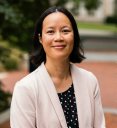
 Joyce C. Ho
· 6 previous affiliations
- Emory UniversitySince 2016
- Associate Professor · Since 2022
- Assistant Professor · 2016–2022
- The University of Texas at Austin2011–2015
- Research Assistant · 2011–2015
- IBM Research2013
- Research Intern · 2013
- Endeavor Health2012
- Project Coordinator, Research · 2012
- Systems Engineer · 2004–2011
- Master of Engineering (M.Eng.), Electrical Engineering and Computer Science · 2003–2004
Research Overview
Joyce C. Ho focuses on computational phenotyping, tensor factorization, and the application of machine learning to electronic health records. Her early work developed high-throughput methods for extracting clinical concepts from irregular patient data without extensive human supervision. More recently, her research investigates the integration of large language models into healthcare, emphasizing clinical reliability, synthetic data generation, and safe patient-facing question answering.
Research Trajectory
Her early research began in human-computer interaction, exploring how to manage user attention in Using context-aware computing to reduce the perceived burden of interruptions from mobile devices (2005). She subsequently shifted her focus to healthcare analytics and computational phenotyping, a transition that eventually led her to co-found the healthcare analytics company Accordion Health.
In the clinical domain, she addressed the challenge of extracting meaningful signals from complex, irregularly sampled patient data. She developed DYNACARE: Dynamic Cardiac Arrest Risk Estimation, a model designed to track temporal signatures in a patient's risk trajectory to predict sudden cardiac events. This foundational work contributed to the broader research area of Temporal Decay Mechanisms for Irregular Clinical Sequences. Recognizing that electronic health records (EHRs) require extensive manual supervision to yield useful medical concepts, she introduced high-throughput tensor factorization methods. This included Limestone: High-throughput candidate phenotype generation via tensor factorization and Marble: high-throughput phenotyping from electronic health records via sparse nonnegative tensor factorization. By decomposing observed tensors into bias and interaction terms, these methods automated the discovery of concise, clinically meaningful phenotype candidates with virtually no human intervention.
Building on these factorization techniques, she later participated in developing MULTIPAR: Supervised Irregular Tensor Factorization with Multi-task Learning for Computational Phenotyping, which extended PARAFAC2 models to handle unaligned patient record lengths. Her collaborative work also emphasized model interpretability; she contributed to the CACHE framework in Counterfactual and Factual Reasoning over Hypergraphs for Interpretable Clinical Predictions on EHR, utilizing causal reasoning to identify necessary and sufficient medical codes for diagnoses, thereby providing clinical justifications that medical experts can trust.
As her research group expanded, she oversaw projects addressing missing data and complex graph structures, advancing the area of Multimodal Representation Learning for Electronic Health Records. She led the development of A Flexible Generative Model for Heterogeneous Tabular EHR with Missing Modality and explored hierarchical relationships in HypMix: Hyperbolic Representation Learning for Graphs with Mixed Hierarchical and Non-hierarchical Structures. Her lab also investigated natural language processing for entity matching in EMBA: Entity Matching using Multi-Task Learning of BERT with Attention-over-Attention, intersecting with the research direction of Dynamic Balancing of Competing Training Objectives.
In applied clinical settings, she designed An AdaBoost-based algorithm to detect hospital-acquired pressure injury in the presence of conflicting annotations. She also led investigations into equitable medical imaging, evaluating passive thermal perception in Is thermography a viable solution for detecting pressure injuries in dark skin patients?.
Addressing the strict privacy constraints of medical data, her group investigated generative synthesis. She directed the creation of LLMSYN: Generating Synthetic Electronic Health Records Without Patient-Level Data, utilizing external medical knowledge and high-level statistical information to produce high-fidelity synthetic records while mitigating re-identification risks. This work, alongside her collaboration on FusionDP: Foundation Model-Assisted Differentially Private Learning for Partially Sensitive Features, pushed forward the area of Local Deployment of Specialized Small Language Models. To facilitate cross-institutional collaboration without compromising privacy, she also developed TransFed: cross-domain feature alignment for semi-supervised federated transfer learning.
Most recently, her research has rigorously evaluated the deployment of large language models in healthcare, contributing significantly to the direction of Grounding Large Language Models for Clinical Reliability. She led studies such as Evaluating safety of large language models for patient-facing medical question answering and Does Domain-Specific Retrieval Augmented Generation Help LLMs Answer Consumer Health Questions?, which critically assessed whether RAG architectures actually improve upon vanilla LLMs in clinical contexts. Beyond healthcare-specific applications, she has collaborated on broader information retrieval challenges, including the Evaluating Hybrid Retrieval Augmented Generation using Dynamic Test Sets: LiveRAG Challenge and Collab-RAG: Boosting Retrieval-Augmented Generation for Complex Question Answering via White-Box and Black-Box LLM Collaboration. The latter framework pairs small and large models to decompose difficult queries, advancing the research area of Iterative Retrieval Augmented Generation for Multi Hop Reasoning.
Current Directions
Recent work investigates the safe and effective integration of large language models (LLMs) into healthcare systems. A primary focus is evaluating the reliability of LLMs for patient-facing medical question answering, particularly assessing how models handle variations in user inquiries and whether retrieval-augmented generation (RAG) provides measurable benefits over baseline models in consumer health contexts.
Additionally, her research addresses the logistical and privacy bottlenecks of clinical machine learning. This includes developing pipelines for generating high-fidelity synthetic electronic health records without requiring patient-level data, utilizing foundation models to improve differentially private learning by focusing protection on partially sensitive features, and designing semi-supervised federated transfer learning frameworks that allow healthcare institutions with heterogeneous data collection practices to collaborate securely.
Profile updated
Loading new papers…
Other researchers whose papers cluster into the same research directions — a proxy for overlapping technical interests and shared intellectual neighborhoods.
See something wrong? Report a mistake