

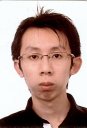
 Tuan Zea Tan
· 1 previous affiliation
- National University of SingaporeSince 2016
- Senior Research Scientist · Since 2016
Research Overview
Tuan Zea Tan focuses on the development and application of computational intelligence, neuro-fuzzy systems, and deep learning frameworks to solve complex predictive problems in clinical oncology, bioinformatics, and financial modeling. His work is characterized by the integration of brain-inspired learning architectures with high-dimensional biological and economic data. In the early stages of his career, Tan’s research centered on complementary learning fuzzy neural networks and their utility in medical diagnosis and time-series prediction. More recently, his work has transitioned toward precision oncology, specifically the development of domain-adapted and generative models designed to predict patient-specific drug responses using clinical-grade genomic sequencing data.
Research Trajectory
The evolution of Tan’s research reflects a broader shift in the field of artificial intelligence, moving from the rule-based interpretability of fuzzy logic to the high-capacity predictive power of deep neural networks. Between 2005 and 2007, Tan’s primary research output focused on the "Complementary Learning" paradigm. This approach was heavily influenced by neuropsychological models of the human memory system, specifically the interplay between the hippocampus and the neocortex. During this period, Tan developed architectures that utilized fuzzy neural networks to mimic the brain's ability to learn from new information while retaining long-term knowledge. These models were applied to diverse domains, including the diagnosis of ovarian cancer through proteomic profiling and the prediction of stock market fluctuations and bank failures. The methodological core of this work involved the use of genetic algorithms to optimize fuzzy rule bases, ensuring that the models remained interpretable while handling the noise inherent in biological and financial datasets.
Following this initial phase, Tan’s work expanded into bioinformatics, specifically addressing the identification of genomic features such as translation initialization sites. This research maintained the use of genetic complementary learning but applied it to the sequence-level analysis of genetic data. The focus during this era was on the ability of computational models to identify patterns in sparse, high-dimensional biological spaces where traditional statistical methods often struggled.
In the most recent phase of his career, observed from 2023 to 2025, Tan has participated in the development of sophisticated deep learning frameworks for precision medicine. This work addresses a critical gap in oncology: the difficulty of predicting how individual patients will respond to chemotherapy when only limited, clinical-grade sequencing data is available. This recent trajectory emphasizes the use of transfer learning and domain adaptation to bridge the "knowledge gap" between laboratory-based cell line studies and real-world clinical outcomes. By contributing to the development of multi-task models and generative data augmentation frameworks, Tan’s recent collaborative work aims to make personalized drug response prediction viable for the majority of cancer patients who do not qualify for targeted therapies.
Current Directions
Tan’s current research interests are centered on the intersection of generative AI and precision oncology. A significant portion of this work involves addressing the scarcity of labeled clinical data through innovative data augmentation techniques. By participating in the design of frameworks that use attention mechanisms and diffusion models, Tan contributes to efforts that "translate" abundant laboratory data into synthetic patient data that retains clinical relevance. This approach is intended to improve the precision of drug response models, particularly for "untargetable" cancer patients—those whose genetic profiles do not match existing targeted drugs but who may still benefit from optimized chemotherapy regimens.
Furthermore, Tan is involved in the refinement of multi-task domain-adapted models. These models are designed to work with restricted gene sets typical of clinical-grade next-generation sequencing (cNGS) panels, rather than the whole-exome or whole-transcriptome data often required by earlier iterations of drug response predictors. This focus on clinical utility suggests a research direction aimed at the practical implementation of AI tools in oncological practice, ensuring that computational models can function within the constraints of standard medical diagnostics.
Representative Work
Ovarian cancer diagnosis using complementary learning fuzzy neural network (2005) represents Tan’s early foundational work in medical informatics. In this study, Tan proposed a diagnostic framework based on a complementary learning fuzzy neural network (CLFNN) to analyze proteomic patterns. The research addressed the challenge of identifying ovarian cancer from complex protein mass spectrometry data. By utilizing a fuzzy logic-based approach, the model provided a degree of interpretability that was often lacking in contemporary "black-box" neural networks, allowing for the extraction of rules that could potentially be validated by clinicians.
In Ovarian cancer diagnosis by hippocampus and neocortex-inspired learning memory structures (2005), Tan further refined the CLFNN architecture by explicitly incorporating biological principles of memory. This paper explored how a dual-network system—one mimicking the rapid learning of the hippocampus and the other the long-term storage of the neocortex—could improve the stability and accuracy of cancer diagnosis. This work highlighted Tan’s interest in brain-inspired computing as a means to handle the non-linearities and high dimensionality of clinical proteomics.
Tan’s work on the generalizability of these architectures is evidenced in Biological Brain-Inspired Genetic Complementary Learning for Stock Market and Bank Failure Prediction (2007). In this study, he applied the genetic complementary learning framework to financial time-series data. The research demonstrated that the same principles used for biological pattern recognition could be adapted for economic forecasting. By integrating genetic algorithms with fuzzy neural networks, the model was able to evolve its rule base to account for the volatility and uncertainty of the stock market and the complex indicators of bank insolvency.
In the domain of sequence analysis, Genetic Complementary Learning for Translation Initialization Sites Prediction (2006) applied Tan’s established methodologies to the problem of identifying translation initialization sites (TIS) in genomic sequences. This work was significant for its attempt to use computational intelligence to solve a fundamental problem in molecular biology—predicting where the translation of mRNA into protein begins. The study utilized the CLFNN to process sequence motifs, demonstrating the flexibility of fuzzy neural architectures in handling categorical biological data.
Tan participated in the development of the DruID (Drug IDentifier) model, as detailed in A multi-task domain-adapted model to predict chemotherapy response from mutations in recurrently altered cancer genes (2023). This work represents a shift toward modern deep learning and domain adaptation. The project addressed the limitation of drug response prediction models that rely on whole-transcriptome data, which is rarely available in clinical settings. Tan contributed to a multi-task learning approach that uses only mutations in recurrently altered genes—data that is standard in clinical-grade sequencing. By transferring knowledge from large-scale cell line datasets to smaller patient cohorts, the DruID model provides a more feasible path for predicting chemotherapy outcomes in a clinical context.
Finally, Tan was part of the research team that developed GANDALF: Generative AttentioN based Data Augmentation and predictive modeLing Framework for personalized cancer treatment (2025). This framework utilizes generative diffusion models and attention mechanisms to overcome the chronic shortage of labeled clinical datasets in oncology. Tan’s participation in this work involved the application of generative AI to "translate" laboratory data into synthetic patient profiles, thereby enhancing the training of drug response predictors. This research represents the current frontier of Tan’s work, combining generative modeling with the long-standing goal of improving clinical decision-making through computational intelligence.
Profile updated
Loading new papers…
Other researchers whose papers cluster into the same research directions — a proxy for overlapping technical interests and shared intellectual neighborhoods.
See something wrong? Report a mistake