

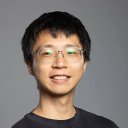
 Tsun-Hsuan Wang
5 previous affiliations
- PhD student · 2020–2025
- Liquid AI2024
- Researcher · 2024
- Intern · 2022
- Uber AI (United States)2019–2020
- Intern · 2019–2020
- National Tsinghua University2014–2020
- MS student · 2017–2020
- Undergrad student · 2014–2017
Research Overview
Tsun-Hsuan Wang focuses on generative simulation, safe robotic control, and the co-design of robot morphology and behavior. His work bridges the gap between digital intelligence and physical embodiment by integrating physics-based reasoning with foundation models. Recently, his research emphasizes scalable data generation and mathematically guaranteed safety constraints for complex autonomous systems.
Research Trajectory
Wang's early research addressed perception and navigation challenges in autonomous systems, particularly in handling sparse data and sensor limitations. He developed Omnidirectional CNN for Visual Place Recognition and Navigation, introducing a network architecture designed to estimate relative distances and manage severe camera pose variations using omnidirectional inputs. Expanding on perception for autonomous driving, he explored the area of Overcoming Sensor Occlusion Through Collaborative Perception with V2VNet: Vehicle-to-Vehicle Communication for Joint Perception and Prediction. This work demonstrated that intelligently aggregating compressed feature maps from nearby vehicles could effectively bypass occlusions and improve long-range detection. To further support the development of robust driving algorithms, he contributed to VISTA 2.0: An Open, Data-driven Simulator for Multimodal Sensing and Policy Learning for Autonomous Vehicles, an open-source engine integrating diverse sensor modalities to enhance the photorealism and utility of simulation environments.
Moving into 2023, Wang's focus expanded to the physical embodiment of robots, specifically the simultaneous optimization of morphology and control. He introduced SoftZoo: A Soft Robot Co-design Benchmark For Locomotion In Diverse Environments, a comprehensive virtual platform supporting naturally-inspired materials to evaluate design tradeoffs. This work advanced the broader research direction of Unified Particle Simulation of Heterogeneous Materials. Building on this foundation, he developed DiffuseBot: Breeding Soft Robots With Physics-Augmented Generative Diffusion Models, a framework that augments 3D diffusion models with physics-based feedback to automatically co-design functional soft robot shapes and controllers for tasks like crawling and gripping.
Alongside morphological design, Wang investigated the safety and interpretability of neural policies. In Measuring Interpretability of Neural Policies of Robots with Disentangled Representation, he utilized decision trees to extract factors of variation, providing a quantitative lens for understanding how learning-based controllers make decisions. He also addressed formal safety guarantees in Learning Stability Attention in Vision-based End-to-end Driving Policies, embedding stability constraints directly into driving models via a differentiable optimization layer. Concurrently, he explored the integration of large-scale models into autonomous systems with Drive Anywhere: Generalizable End-to-end Autonomous Driving with Multi-modal Foundation Models, extracting spatial features from transformers to improve adaptability in open-set environments.
In recent years, Wang has increasingly leveraged foundation models and generative AI to scale robot learning and ensure system safety. He evaluated the temporal reasoning capabilities of state-of-the-art models in Probing Multimodal LLMs as World Models for Driving, identifying significant limitations in their ability to predict traffic dynamics. To bridge the gap between abstract reasoning and physical execution, he co-authored Grounding Language Plans in Demonstrations Through Counterfactual Perturbations, a framework that synthetically perturbs human demonstrations to ground high-level language plans into specific physical state boundaries.
His work in the research direction of Generative Simulation for Scaling Embodied AI is exemplified by his participation in RoboGen: Towards Unleashing Infinite Data for Automated Robot Learning via Generative Simulation. This automated pipeline utilizes foundation models to self-generate robotic training data, constructing 3D scenes and coding reward functions with minimal human intervention. In parallel, he contributed to the area of Automated Red Teaming for Scalable Safety Evaluation through Curiosity-driven Red teaming for Large Language Models, integrating curiosity-driven exploration to discover vulnerabilities in heavily fine-tuned models.
In 2025, Wang's research continues to push the boundaries of safe control and generative modeling. He co-developed ABNet: Adaptive explicit-Barrier Net for Safe and Scalable Robot Learning, introducing a multi-head architecture with an explicit-barrier layer that replaces unstable optimization solvers with efficient closed-form solutions for guaranteed safety. Similarly, SafeDiffuser: Safe Planning with Diffusion Probabilistic Models embeds Control Barrier Functions directly into the denoising process of diffusion models, ensuring trajectory planners remain within safe boundaries.
Expanding generative capabilities to complex physical interactions, he participated in Articulate AnyMesh: Open-Vocabulary 3D Articulated Objects Modeling, which uses vision-language models to transform static 3D meshes into functional objects with moving parts. He also contributed to LuciBot: Automated Robot Policy Learning from Generated Videos, a framework that extracts dense supervisory signals from general-purpose video generation models to train robot policies for manipulating complex materials like liquids and granular media. Finally, demonstrating the versatility of his methodological approaches, he applied hierarchical State Space Models to medical domains in Holistic Surgical Phase Recognition with Hierarchical Input Dependent State Space Models, offering a computationally efficient alternative to Transformer architectures for surgical video analysis.
Current Directions
The most recent papers in the evidence indicate a strong focus on leveraging generative artificial intelligence to automate and scale robot learning while maintaining rigorous safety guarantees. Recent work investigates the use of video generation models and foundation models to synthesize infinite training data, construct 3D scenes, and extract dense supervisory signals for complex manipulation tasks without manual reward engineering. Concurrently, Wang is addressing the critical need for safety in these advanced systems by embedding Control Barrier Functions and explicit-barrier layers directly into neural architectures and diffusion-based planners. This dual focus aims to bridge the gap between the open-ended creativity of generative models and the strict physical and safety constraints required for real-world robotic deployment.
Profile updated
Loading new papers…
Other researchers whose papers cluster into the same research directions — a proxy for overlapping technical interests and shared intellectual neighborhoods.
See something wrong? Report a mistake