

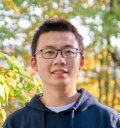
 Zhenjia Xu
· 4 previous affiliations
- Nvidia (United States)Since 2024
- Researcher · Since 2024
- Genesis AICurrent
- Current
- Columbia University2019–2024
- PhD student · 2019–2024
- Shanghai Jiao Tong University2015–2019
- Undergrad student · 2015–2019
Research Overview
Zhenjia Xu focuses on robotic manipulation, embodied AI, and computer vision, developing systems that allow robots to interact with complex, deformable, and articulated objects. His trajectory spans from learning 3D dynamic scene representations to designing cross-embodiment interfaces that transfer human demonstrations to diverse robot platforms. Recently, his work emphasizes scalable data collection and policy learning for in-the-wild dexterous manipulation.
Research Trajectory
Zhenjia Xu’s research trajectory begins with a focus on equipping robotic systems with a deep, intuitive understanding of physical environments and object dynamics. In 2019, he introduced DensePhysNet: Learning Dense Physical Object Representations Via Multi-Step Dynamic Interactions, a framework that allows robots to build dense physical representations of objects by actively interacting with them over multiple steps. That same year, he proposed a method for the Unsupervised Discovery of Parts, Structure, and Dynamics from unlabeled video. This work formulated a hierarchical, disentangled representation that recognizes object parts through layered image representations and predicts their future movements. Building on this foundation of scene understanding, he developed Learning 3D Dynamic Scene Representations for Robot Manipulation (2020), which emphasized the importance of capturing object permanency and amodal completeness to maintain robust tracking even when objects become occluded during manipulation.
Having established methods for perceiving and predicting physical dynamics, Xu’s focus expanded to the mechanics of grasping and manipulating complex objects. In Adagrasp: Learning an adaptive gripper-aware grasping policy (2021), he addressed the challenge of hardware variability by training a single grasping policy capable of generalizing to novel end-effectors. By computing a cross convolution between the shape encodings of the scene and the input gripper, the system could infer viable grasping poses across a large collection of tools. He subsequently tackled the manipulation of articulated objects with Universal Manipulation Policy Network for Articulated Objects (2022). This network, UMPNet, infers complex, closed-loop action sequences from visual input alone, utilizing an "Arrow-of-Time" attribute to distinguish between actions that advance the object to new states and those that revert it. Expanding beyond rigid and articulated items, he explored highly deformable materials in DextAIRity: Deformable Manipulation Can be a Breeze (2022). This framework introduced active airflow as a manipulation tool, combining self-supervised learning with closed-loop visual feedback to unfold large fabrics and open soft bags—tasks that are notoriously difficult for traditional contact-based grippers.
In 2023, Xu’s work increasingly intersected with generative models and the simulation of complex, multi-material environments. He participated in the development of Diffusion Policy: Visuomotor Policy Learning via Action Diffusion, which framed visuomotor policy learning as a conditional denoising diffusion process, contributing to the broader research direction of Modeling Multi-modal Action Distributions for Robotic Control. Concurrently, he collaborated on FluidLab: A Differentiable Environment for Benchmarking Complex Fluid Manipulation, a simulation environment designed to handle the multifaceted complexities of fluids, including elastoplastic deformation and multi-component interactions. Returning to direct manipulation policies, he developed RoboNinja: Learning an Adaptive Cutting Policy for Multi-Material Objects (2023). This system learns adaptive cutting strategies for objects composed of multiple materials, advancing work in the area of Unified Differentiable Simulation of Heterogeneous Materials.
Most recently, Xu has concentrated on topological manipulation and bridging the embodiment gap between human demonstrations and robot execution. In DoughNet: A Visual Predictive Model for Topological Manipulation of Deformable Objects (2024), he introduced a Transformer-based architecture that reasons in a learned latent space to predict how actions like squeezing or cutting alter the topology of elastoplastic materials like dough. To address the challenge of scaling robot learning without relying exclusively on in-domain robot data, he worked on Flow as the Cross-domain Manipulation Interface (2024). This framework, Im2Flow2Act, uses object flow generated from human demonstration videos as a universal interface to condition policies trained in simulation. He further advanced this paradigm by developing the Universal Manipulation Interface: In-The-Wild Robot Teaching Without In-The-Wild Robots (2024). UMI leverages a portable, low-cost hardware setup to capture human demonstrations in the wild, enabling zero-shot transfer to multiple robot platforms and contributing significantly to the research direction of Task Space Abstraction for Cross Embodiment Robot Learning. Building on this interface, he contributed to DexUMI: Using Human Hand as the Universal Manipulation Interface for Dexterous Manipulation (2025), which incorporates wearable hand exoskeletons and high-fidelity video inpainting to transfer dexterous skills directly from human hands to diverse robotic counterparts.
Current Directions
The most recent papers in the evidence indicate a strong focus on scalable data collection and cross-embodiment skill transfer for dexterous robotic manipulation. Recent work investigates how to bypass the bottleneck of collecting teleoperated robot data by using the human hand itself as a universal interface. This involves developing hardware and software adaptations—such as wearable exoskeletons for haptic feedback and visual inpainting techniques—to minimize the kinematic and visual gaps between human demonstrators and robot end-effectors. Additionally, ongoing research addresses the topological manipulation of highly deformable, elastoplastic materials, utilizing advanced visual predictive models to anticipate complex state changes from single RGB-D observations.
Profile updated
| Paper | Venue | Year |
|---|---|---|
| Unsupervised Discovery of Parts, Structure, and DynamicsGitHubzhenjia-xu/ | ICLR | 2019 |
Loading new papers…
Other researchers whose papers cluster into the same research directions — a proxy for overlapping technical interests and shared intellectual neighborhoods.
See something wrong? Report a mistake