

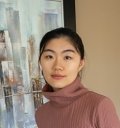
 Liyiming Ke
· 6 previous affiliations
- physical intelligenceSince 2024
- Researcher · Since 2024
- University of Washington2017–2024
- PhD student · 2017–2024
- Meta (United States)2021–2022
- Researcher · 2021–2022
- Researcher · 2018
- Vanderbilt University2013–2017
- Undergrad student · 2013–2017
- Intern · 2016
Research Overview
Liyiming Ke focuses on machine learning for robot manipulation, imitation learning, and vision-language-action models. Her early work explored adversarial evasion and autonomous agent navigation before shifting toward data-driven fine motor skills, including precision control for contact-rich tasks. Currently, she investigates large-scale foundation models for general-purpose robotic control, emphasizing robustness, dexterity, and open-world generalization across diverse hardware embodiments.
Research Trajectory
Ke's early research examined security and machine learning, specifically focusing on how malicious actors bypass automated filters. In Behavioral Experiments in Email Filter Evasion, she investigated the behavioral dynamics of spammers manipulating message content, contributing to the broader research direction of Adversarial Linguistic Evasion in Content Moderation and exploring the area of Feature Dimensionality and the Adversarial Attack Surface.
She subsequently transitioned toward embodied artificial intelligence and navigation. With collaborators, she developed the Frontier Aware Search with backTracking (FAST) framework in Tactical Rewind: Self-Correction via Backtracking in Vision-And-Language Navigation.. This system allowed agents to balance local action decisions with global signals to explore unseen environments, advancing the area of Backtracking and State Reversion in Autonomous Agent Workflows.
During her doctoral studies, Ke concentrated on data-driven fine motor skills and the theoretical foundations of imitation learning. She addressed the challenge of multi-modal expert demonstrations in Imitation Learning as f-Divergence Minimization, demonstrating that minimizing the reverse KL divergence prevents policies from incorrectly interpolating between distinct expert behaviors. Applying these principles to physical systems, she built robotic setups capable of highly dexterous tasks, such as the chopsticks-wielding robot detailed in Grasping with Chopsticks: Combating Covariate Shift in Model-free Imitation Learning for Fine Manipulation. This work directly engaged with the research direction of Precision Control for Contact-Rich Robotic Manipulation.
To further improve policy robustness without requiring continuous human intervention, she investigated offline reinforcement learning and data augmentation. In Real World Offline Reinforcement Learning with Realistic Data Source, she explored learning from pre-collected datasets, contributing to the area of Policy Constraints for Offline Reinforcement Learning. She then introduced a novel technique to mitigate compounding errors in CCIL: Continuity-Based Data Augmentation for Corrective Imitation Learning. By leveraging the local continuity of environmental dynamics to generate synthetic corrective labels, this method allowed agents to recover from mistakes. This framework was further formalized in a subsequent publication of the same name, CCIL: Continuity-Based Data Augmentation for Corrective Imitation Learning, advancing the direction of Lipschitz Continuity for Stable Model Based Learning.
In her recent work as a researcher at Physical Intelligence, Ke has focused on scaling robotic capabilities through large Vision-Language-Action (VLA) models. As part of a broad collaborative effort, she contributed to π0: A Vision-Language-Action Flow Model for General Robot Control, a foundation model trained on extensive cross-embodiment data that combines the semantic reasoning of vision-language models with the high-frequency precision of flow matching. This architecture was expanded in π0.5: a Vision-Language-Action Model with Open-World Generalization, which demonstrated that hierarchical reasoning and massive co-training could enable robots to perform complex, multi-stage chores in entirely unseen environments.
To enable these models to improve continuously, she participated in developing the RECAP framework in π*0.6: a VLA That Learns From Experience, allowing policies to refine themselves through a mix of autonomous trials and human corrections. She also co-developed hierarchical systems for complex human-robot interaction in Hi Robot: Open-Ended Instruction Following with Hierarchical Vision-Language-Action Models, which decouples high-level reasoning from low-level execution to handle nuanced constraints. Finally, addressing the brittleness of visuomotor policies to visual distractors, she contributed to ATK: Automatic Task-driven Keypoint Selection for Robust Policy Learning, improving the reliability of policies in visually complex real-world settings.
Current Directions
The most recent papers in the evidence indicate a strong focus on scaling general-purpose robotic control through Vision-Language-Action (VLA) models. Recent work investigates how massive cross-embodiment pre-training can enable open-world generalization, allowing robots to execute multi-stage tasks in unseen environments. A major theme in this research is the integration of hierarchical reasoning, which decouples high-level semantic planning from high-frequency, low-level motor execution. Additionally, current efforts address the continuous refinement of these foundation models, exploring reinforcement learning frameworks that allow robots to learn from both autonomous practice and human corrections, as well as techniques to improve policy robustness against visual distractors in messy, real-world settings.
Profile updated
Loading new papers…
Other researchers whose papers cluster into the same research directions — a proxy for overlapping technical interests and shared intellectual neighborhoods.
See something wrong? Report a mistake