

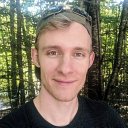
 Trevor Campbell
· 1 previous affiliation
- University of British ColumbiaSince 2018
- Associate Professor · Since 2023
- Assistant Professor · 2018–2023
Research Overview
Trevor Campbell focuses on scalable Bayesian inference, Bayesian nonparametrics, and the development of automated algorithms for complex data streams. His early research explored small-variance asymptotics for dynamic clustering and robust optimization. His current work emphasizes locally adaptive Markov chain Monte Carlo methods, variational inference, and the theoretical foundations of Bayesian coresets for large-scale datasets.
Research Trajectory
Campbell's early research concentrated on Bayesian nonparametrics and dynamic clustering. He introduced an algorithm for clustering batch-sequential data in Dynamic Clustering via Asymptotics of the Dependent Dirichlet Process Mixture, utilizing a low-variance asymptotic analysis to achieve computational efficiency with hard clustering guarantees. Expanding on this approach, he contributed to the broader area of Small-Variance Asymptotics for Deterministic Bayesian Inference through Small-variance nonparametric clustering on the hypersphere, which developed k-means-like algorithms for directional data such as surface normals. This work also intersected with the research direction of Real-Time Bayesian Inference for Dynamic Physical Systems. During this period, he applied Dirichlet process Gaussian mixtures to robust optimization, presenting a data-driven approach to uncertainty set construction in Bayesian nonparametric set construction for robust optimization. He later returned to small-variance asymptotics to track evolving clusters in streaming data with Dynamic Clustering Algorithms via Small-Variance Analysis of Markov Chain Mixture Models..
In the mid-2010s, his work expanded to include structural modeling in networks and spatial data. He participated in developing alternative generative models for sparse networks in Edge-exchangeable graphs and sparsity, demonstrating that edge-exchangeable models can capture the sparsity often observed in real-world graphs. He also applied Bayesian nonparametric mixtures to computer vision challenges, contributing to Efficient Global Point Cloud Alignment Using Bayesian Nonparametric Mixtures. This research utilized branch and bound optimization over a novel tessellation of rotation space, advancing the research direction of Decoupling Search Spaces for Global Point Registration.
A major, sustained theme in Campbell's trajectory is the development of Bayesian coresets to scale inference for massive datasets. He established a foundational framework in Automated Scalable Bayesian Inference via Hilbert Coresets, reformulating coreset construction within a Hilbert space to provide theoretical guarantees and computational speedups. He continued to refine this methodology, later introducing a method to simultaneously simulate a Markov chain targeting the coreset posterior and update the coreset weights in Coreset Markov chain Monte Carlo. To solidify the theoretical underpinnings of these techniques, he provided comprehensive upper and lower bounds for coreset quality in General bounds on the quality of Bayesian coresets, extending guarantees to multimodal and heavy-tailed distributions.
Concurrently, Campbell investigated the computational and theoretical properties of variational inference (VI) and Markov chain Monte Carlo (MCMC) methods. He analyzed the convergence of popular approximation methods in The computational asymptotics of Gaussian variational inference and the Laplace approximation, designing algorithms that leverage asymptotic theory to navigate non-convex optimization landscapes. His research group subsequently developed MixFlows: principled variational inference via mixed flows, bridging the rigorous convergence of MCMC with the optimization framework of VI. He also explored inference for continuous-time Markov chains in Pseudo-Marginal Inference for CTMCs on Infinite Spaces via Monotonic Likelihood Approximations. Addressing the challenge of step-size selection in sampling, he collaborated on autoMALA: Locally adaptive Metropolis-adjusted Langevin algorithm, contributing to the research direction of Local Adaptation for Gradient-Based MCMC. He synthesized many of these overlapping themes in MCMC-driven learning, a unifying framework connecting adaptive MCMC, normalizing flows, and coreset construction.
In recent years, his focus has increasingly shifted toward automated, tuning-free inference algorithms. He guided the development of a gradient-free framework for Sequential Monte Carlo in Tuning Sequential Monte Carlo Samplers via Greedy Incremental Divergence Minimization. Building on his prior work in local adaptation, his group introduced AutoStep: Locally adaptive involutive MCMC, a robust method for sampling from multiscale distributions that advances the area of Optimal Scaling for High-Dimensional MCMC. He also returned to Bayesian coresets with Tuning-Free Coreset Markov Chain Monte Carlo via Hot DoG, eliminating the need for manual learning rate tuning in coreset weight optimization. Most recently, he investigated the underlying mechanics of variational inference in Stochastic Gradient Variational Inference with Price's Gradient Estimator from Bures-Wasserstein to Parameter Space, demonstrating that performance gains often attributed to Wasserstein geometry are primarily driven by the choice of gradient estimator.
Current Directions
Recent work investigates the automation and optimization of advanced sampling and inference algorithms, with a particular emphasis on eliminating manual tuning. The most recent papers in the evidence address the development of locally adaptive MCMC methods that dynamically adjust to the geometry of target distributions, as well as tuning-free optimization strategies for Bayesian coresets and Sequential Monte Carlo samplers. Additionally, ongoing research explores the theoretical properties of stochastic gradient estimators in variational inference, seeking to clarify the mechanisms that drive convergence in high-dimensional parameter spaces.
Profile updated
Loading new papers…
Other researchers whose papers cluster into the same research directions — a proxy for overlapping technical interests and shared intellectual neighborhoods.
See something wrong? Report a mistake