

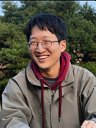
 Kyurae Kim
· 6 previous affiliations
- University of PennsylvaniaSince 2022
- PhD student · 2022–2027
- Current
- Genentech2024–2025
- Research Intern · 2024–2025
- University of Liverpool2021–2022
- Postdoc · 2021–2022
- 서강대학교2019–2021
- Researcher · 2020–2021
- Undergraduate Intern · 2019–2020
- Hardware Developer · 2019
- Sogang University2016–2021
- Undergrad student · 2016–2021
- Samsung Medical Center2017–2020
- Undergraduate Researcher · 2017–2020
Research Overview
Kyurae Kim focuses on the theoretical foundations of variational inference, stochastic optimization, and scalable Bayesian computation. His trajectory spans from robust scheduling in high-performance computing to establishing rigorous non-asymptotic convergence guarantees for black-box variational inference methods. His most recent work investigates dimension-independent convergence properties and advanced gradient estimators for high-dimensional sampling.
Research Trajectory
His early research explored applied machine learning within high-performance computing systems. In Towards Robust Data-Driven Parallel Loop Scheduling Using Bayesian Optimization (2019), he developed workload-aware scheduling methods designed to improve the efficiency and predictability of parallel loop execution, addressing the performance variability common in classical scheduling algorithms.
Shifting toward the theoretical foundations of probabilistic modeling, his focus turned to scalable Bayesian inference via stochastic gradient Markov chain Monte Carlo methods. He introduced a unifying framework in Markov Chain Score Ascent: A Unifying Framework of Variational Inference with Markovian Gradients (2022), providing a non-asymptotic convergence analysis for methods that minimize the inclusive Kullback-Leibler divergence using biased gradient estimates obtained from Markov chains.
In 2023, he made a series of foundational contributions to the research direction of Convergence and Stability of Black-Box Variational Inference. A major open problem in the field was the lack of rigorous guarantees for Monte Carlo variational inference under realistic conditions. He addressed this in On the Convergence of Black-Box Variational Inference, establishing the first convergence guarantee for black-box variational inference (BBVI) with the reparameterization gradient for log-smooth posterior densities, notably without requiring algorithmic modifications like bounded domains or bounded support. He expanded on this theoretical foundation in Black-Box Variational Inference Converges, which also explored the area of Robust Initialization for Variational Inference and demonstrated how common nonlinear parameterizations of the scale matrix can inadvertently lead to suboptimal convergence rates. Further solidifying these guarantees, he proved that these methods satisfy the relaxed "ABC condition" for gradient variance in Practical and Matching Gradient Variance Bounds for Black-Box Variational Bayesian Inference. This work also touched upon the broader area of Dimensionality Independent Convergence through Gradient Noise Dilution, showing that mean-field approximations scale significantly better with dimensionality than full-rank models.
Building on his variance analysis, his work progressed into doubly stochastic optimization and the use of control variates. In Demystifying SGD with Doubly Stochastic Gradients (2024), he provided a rigorous convergence analysis for settings where both data subsampling and intractable expectations are present, proving the efficiency of random reshuffling and offering practical heuristics for balancing minibatch sizes with Monte Carlo sample counts. Returning to variational inference, he analyzed variance reduction techniques in Linear Convergence of Black-Box Variational Inference: Should We Stick the Landing?. By proving a quadratic bound on the gradient variance of the sticking-the-landing estimator, he established a geometric convergence rate under perfect variational family specification.
In 2025, his research expanded to include automated tuning for sampling algorithms. He developed a gradient-free framework in Tuning Sequential Monte Carlo Samplers via Greedy Incremental Divergence Minimization, which minimizes the incremental Kullback-Leibler divergence to achieve efficient tuning of step sizes and parameters at a fraction of the computational cost of end-to-end optimization. Concurrently, he returned to the theoretical scaling limits of variational inference. In Nearly Dimension-Independent Convergence of Mean-Field Black-Box Variational Inference, he provided a theoretical explanation for the empirical success of mean-field models in high dimensions, proving that they converge at a nearly dimension-independent rate for well-behaved target distributions. Most recently, he investigated the fundamental drivers of performance in variational inference in Stochastic Gradient Variational Inference with Price's Gradient Estimator from Bures-Wasserstein to Parameter Space (2026). This work challenges the assumption that geometric properties, such as those in Wasserstein spaces, are solely responsible for algorithmic superiority, demonstrating instead that applying Price's gradient estimator yields identical state-of-the-art convergence guarantees across different frameworks.
Current Directions
The most recent papers in the evidence address the intersection of gradient estimator design, second-order optimization, and high-dimensional scaling in probabilistic inference. Recent work investigates how specific algorithmic choices—such as the integration of Hessian information through advanced gradient estimators—dictate the convergence properties of variational inference, often superseding the underlying geometry of the probability space. Alongside this focus on estimator mechanics, ongoing research continues to explore the theoretical limits of high-dimensional sampling. A major theme is establishing how simplified independence assumptions, such as those used in mean-field approximations, can paradoxically enable highly scalable, dimension-independent convergence in complex probability landscapes.
Profile updated
Loading new papers…
Other researchers whose papers cluster into the same research directions — a proxy for overlapping technical interests and shared intellectual neighborhoods.
See something wrong? Report a mistake