

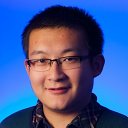
 Tongyang Li
· 4 previous affiliations
- Peking UniversitySince 2021
- Assistant Professor · Since 2021
- Postdoc · 2020–2021
- University of Maryland, College Park2015–2020
- PhD student · 2015–2020
- Tsinghua University2011–2015
- Undergrad student · 2011–2015
Research Overview
Tongyang Li focuses on the intersection of quantum computing, machine learning, and theoretical computer science, specifically designing quantum algorithms for optimization and learning tasks. His trajectory spans foundational quantum query complexity, quantum generative models, and optimization under noise, bridging theoretical bounds with practical considerations for near-term quantum devices. Currently, his work investigates quantum algorithms for non-convex optimization, game theory, and learning with comparison oracles.
Research Trajectory
His early research addressed fundamental challenges in quantum simulation and information theory. In 2017, he contributed to Efficient simulation of sparse Markovian quantum dynamics, which explored techniques for digitizing continuous quantum dynamics and touched upon the broader research direction of The Precision Bottleneck in Quantum Algorithms. Building on foundational quantum theory, he subsequently established new quantum speedups and corresponding lower bounds for estimating various types of entropy and KL divergence in Quantum Query Complexity of Entropy Estimation (2019).
Expanding into quantum machine learning, he participated in the design of Quantum Wasserstein Generative Adversarial Networks (2019), proposing a Wasserstein semimetric for quantum data to improve the robustness of adversarial training on noisy hardware. Concurrently, he collaborated on Quantum SDP Solvers: Large Speed-Ups, Optimality, and Applications to Quantum Learning (2019), which presented highly efficient algorithms for Semidefinite Programs with optimal parameter dependence. His focus on rigorous theoretical limits continued with Quantum algorithms and lower bounds for convex optimization (2020), a work that characterized the quantum complexity of optimizing convex functions and advanced the area of Bridging Upper and Lower Bounds in Quantum Query Complexity. He also investigated the boundaries of quantum advantage by developing quantum-inspired classical algorithms for singular value transformation in Sampling-based sublinear low-rank matrix arithmetic framework for dequantizing quantum machine learning (2020).
By 2022, his research increasingly targeted complex optimization landscapes and sampling tasks. He introduced polynomial quantum speedups for zeroth-order stochastic convex bandits in Quantum Speedups of Optimizing Approximately Convex Functions with Applications to Logarithmic Regret Stochastic Convex Bandits. This work contributed significantly to the research directions of Breaking the Square Root Regret Barrier with Quantum Learning and Quadratic Precision Speedups via Quantum Amplitude Estimation. In the same year, he collaborated on Quantum Algorithms for Sampling Log-Concave Distributions and Estimating Normalizing Constants, utilizing underdamped Langevin diffusion to match the query complexity of classical first-order methods using only zeroth-order quantum queries, advancing the field of Quantum Gradient Estimation for High Dimensional Optimization.
In recent years, his work has addressed both the theoretical limits of quantum algorithms and their practical deployment challenges. He developed a hybrid quantum-classical approach for navigating noisy quantum dynamics in Efficient Optimal Control of Open Quantum Systems (2024). Exploring near-term heuristics, he co-authored Quantum Approximate Optimization Algorithms for Maxmimum Cut on Low-Girth Graphs (2024), analyzing QAOA performance on graph structures with short cycles. He also established near-optimal bounds for minimax problems in Near-Optimal Quantum Algorithm for Minimizing the Maximal Loss (2024), utilizing a ball optimization framework.
A major recent theme in his trajectory is optimization using limited information, particularly comparison oracles. He formalized this in Comparisons Are All You Need for Optimizing Smooth Functions (2024), providing algorithms for scenarios where gradient computation is infeasible. This line of inquiry extended into non-convex settings with Finding Stationary Points by Comparisons (2026), which demonstrated how to reconstruct second-order information purely from binary comparisons.
His recent theoretical contributions also include Instance-Optimal Matrix Multiplicative Weight Update and Its Quantum Applications (2025), which introduced an adaptive MMWU algorithm via a novel trace inequality. In game theory, he achieved a quadratic speedup for finding approximate equilibria in multi-player games with Near-Optimal Quantum Algorithms for Computing (Coarse) Correlated Equilibria of General-Sum Games (2025). Furthermore, he provided a systematic analysis of noise tolerance in Robustness of Quantum Algorithms for Nonconvex Optimization (2025), addressing the broader area of Dimensionality and Precision Bottlenecks in Quantum Optimization by establishing fundamental limits on when noise renders optimization unsolvable.
Current Directions
Recent work investigates the robustness and efficiency of quantum algorithms in highly constrained or noisy environments. A primary focus is optimization via comparison oracles, developing methods to find stationary points and optimize smooth functions when explicit gradient information is unavailable—a setting highly relevant to preference-based reinforcement learning. Additionally, the most recent papers in the evidence address the theoretical limits of quantum advantage in non-convex optimization under noise, as well as the application of quantum Gibbs sampling to compute correlated equilibria in complex, general-sum games.
Profile updated
Loading new papers…
Other researchers whose papers cluster into the same research directions — a proxy for overlapping technical interests and shared intellectual neighborhoods.
See something wrong? Report a mistake