

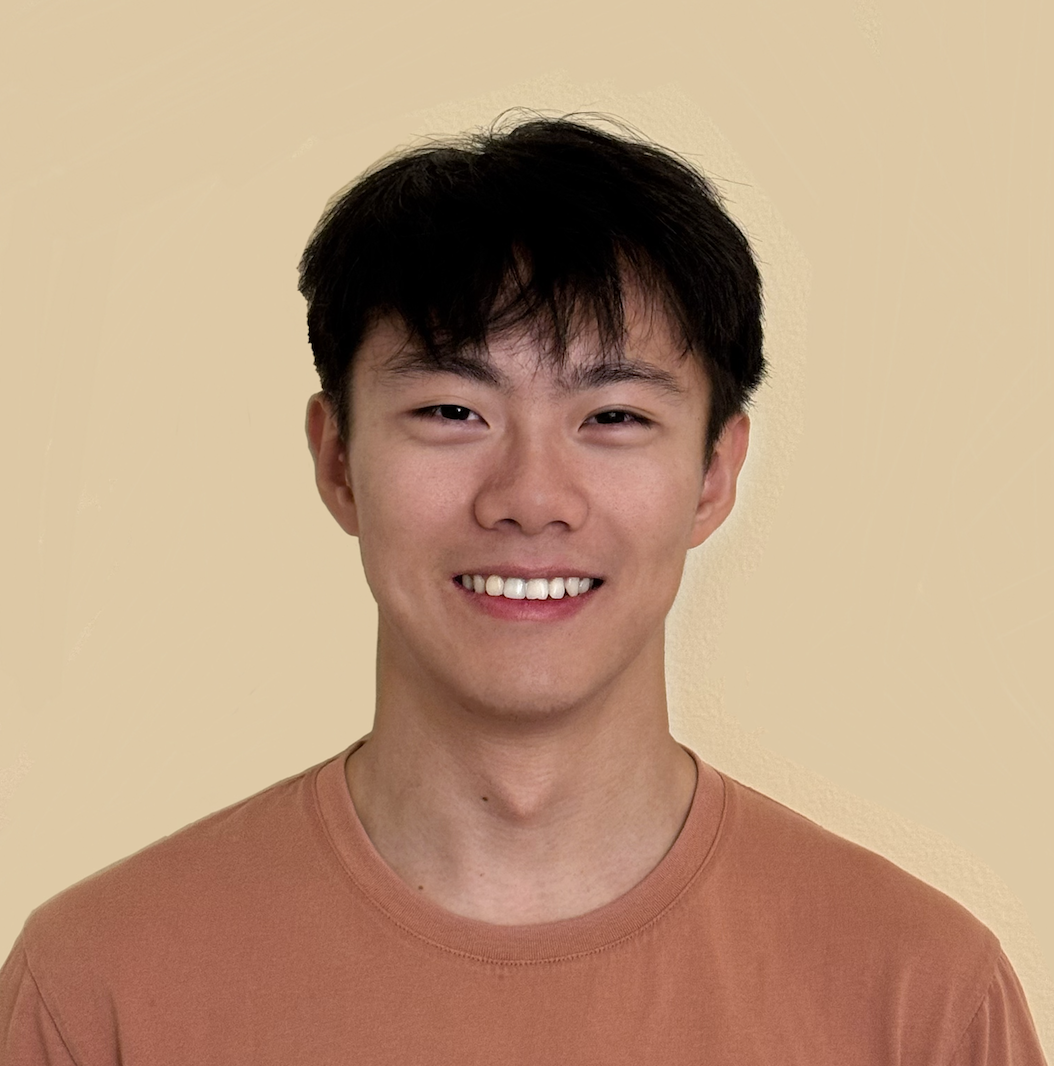
 Chenyi Zhang
· 2 previous affiliations
- Stanford UniversitySince 2022
- PhD student · 2022–2027
- Current
- Tsinghua University2018–2022
- Undergrad student · 2018–2022
2 other authors named Chenyi Zhang: Chenyi Zhang (Nanjing University · 1 paper), Chenyi Zhang (1 paper)
Research Overview
Chenyi Zhang focuses on theoretical computer science, quantum computing, and mathematical optimization. His research investigates the fundamental limits and algorithmic possibilities of both classical and quantum systems, particularly in non-convex optimization and query complexity. His current work emphasizes comparison-based optimization and high-dimensional gradient estimation for machine learning applications.
Research Trajectory
His early trajectory centered on the mathematical challenges of non-convex optimization, with a particular emphasis on escaping saddle points. In Quantum algorithms for escaping from saddle points, he introduced quantum algorithms that leverage the simulation of wave equations to achieve a polynomial speedup in the dimension parameter compared to classical methods. Parallel to this quantum approach, he advanced classical optimization techniques in Escape saddle points by a simple gradient-descent based algorithm, proposing a method that outputs approximate second-order stationary points with improved iteration complexity, polynomially reducing the dependence on dimensionality. Expanding his focus to physical systems, he also explored the Quantum simulation of real-space dynamics.
By 2023, his research began to systematically map the boundaries of quantum advantage in optimization. He established fundamental limitations in Quantum Lower Bounds for Finding Stationary Points of Nonconvex Functions, proving that quantum computers offer no fundamental query speedup over classical systems for finding stationary points in certain nonconvex settings, as both are bound by the sequential discovery of information. Conversely, he identified areas where quantum systems provide distinct advantages. In Quantum speedups for stochastic optimization, he and his collaborators demonstrated convergence rates that are provably impossible for classical computers. This work contributed significantly to the research direction of Quantum Variance Reduction for Stochastic Optimization by combining quantum mean estimation with multilevel Monte Carlo methods, directly addressing challenges in the broader area of Dimensionality and Precision Bottlenecks in Quantum Optimization.
In 2024, his work expanded across quantum complexity, foundational machine learning theory, and novel optimization oracles. He investigated the properties of quantum states in Quantum Pseudoentanglement. Turning to the mathematical backbone of machine learning training, he provided a systematic study of finite-sum optimization within a quantum framework in Quantum Algorithms and Lower Bounds for Finite-Sum Optimization, further advancing the field of Bridging Upper and Lower Bounds in Quantum Query Complexity. During this period, he also began exploring scenarios where standard gradient computations are infeasible, such as preference-based reinforcement learning. In Comparisons Are All You Need for Optimizing Smooth Functions, he developed algorithms that optimize smooth functions using only an oracle that compares two function values, contributing to the research area of Quantum Gradient Estimation for High Dimensional Optimization.
His most recent work continues to refine both classical and quantum optimization algorithms, particularly in high-dimensional and noisy environments. In Isotropic Noise in Stochastic and Quantum Convex Optimization, his research group introduced an "isotropic noise" model for stochastic gradients alongside a novel quantum isotropifier algorithm, achieving new query complexities for convex optimization. He also addressed the computational cost of second-order methods in Balancing Gradient and Hessian Queries in Non-Convex Optimization, introducing a framework that uses lazy Hessian updates to trade expensive Hessian computations for cheaper gradient queries.
Building on his earlier work with comparison oracles, his 2026 publications demonstrate sophisticated methods for extracting higher-order information from simple binary comparisons. In Finding Stationary Points by Comparisons, he and his collaborators showed how to reconstruct second-order Hessian information purely from comparisons, matching the efficiency of advanced second-order methods in both classical and quantum settings. Furthermore, in Gradient Testing and Estimation by Comparisons, he proved that gradient alignment can be tested in constant time regardless of dimensionality, offering an optimal classical algorithm and an exponentially faster quantum algorithm for high-dimensional spaces.
Current Directions
The most recent papers in the evidence indicate a strong focus on comparison-based optimization and the efficient extraction of gradient and Hessian information in high-dimensional spaces. This work is particularly relevant to environments where direct gradient computation is impossible, such as preference-based reinforcement learning and human-feedback systems. By developing algorithms that rely solely on comparison oracles—and proving their efficiency in both classical and quantum regimes—his current research seeks to match the performance of advanced first- and second-order optimization methods using strictly zeroth-order information. Additionally, he continues to investigate the theoretical trade-offs between different types of computational queries, designing frameworks that balance expensive operations with cheaper alternatives to achieve optimal convergence rates in complex, non-convex landscapes.
Profile updated
Loading new papers…
Other researchers whose papers cluster into the same research directions — a proxy for overlapping technical interests and shared intellectual neighborhoods.
See something wrong? Report a mistake