

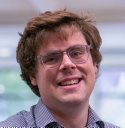
 Tom Rainforth
· 1 previous affiliation
- University of OxfordSince 2014
- Associate Professor · Since 2024
- Assistant Professor · 2019–2024
- Postdoc · 2017–2019
- PhD student · 2014–2017
Research Overview
Tom Rainforth focuses on Bayesian experimental design, active learning, and probabilistic machine learning. His research trajectory spans foundational work in Monte Carlo estimation and variational inference to the development of amortized frameworks that scale optimal experimental design to high-dimensional and sequential settings. Currently, he investigates loss-aware uncertainty quantification and the integration of Bayesian experimental design with large language models.
Research Trajectory
Early work by Rainforth examined foundational challenges in probabilistic modeling and inference. In Tighter Variational Bounds are Not Necessarily Better, he demonstrated that optimizing tighter evidence lower bounds can paradoxically degrade the learning of inference networks by reducing the signal-to-noise ratio, contributing to the research direction of Gradient Signal Decay in Importance Weighted Variational Inference. Concurrently, he addressed the computational difficulties of nested expectations in machine learning through On Nesting Monte Carlo Estimators, which provided new strategies for efficient numerical integration when conventional Monte Carlo estimation falls short.
Moving into experimental design, Rainforth and collaborators began addressing the computational bottlenecks of optimizing experiments. The paper Variational Bayesian Optimal Experimental Design introduced fast estimators for expected information gain using amortized variational inference. This work advanced the area of Amortizing Doubly Intractable Expectations in Bayesian Experimental Design. Building on this foundation, the development of the Deep Adaptive Design (DAD) framework in Deep Adaptive Design: Amortizing Sequential Bayesian Experimental Design allowed researchers to train design policy networks offline. This enabled near-optimal, real-time experimental decisions, significantly pushing forward the field of Amortized Sequential Bayesian Experimental Design and the broader direction of Amortized Bayesian Optimal Experimental Design.
Parallel to his work in experimental design, Rainforth investigated the statistical biases inherent in data selection. In Active Testing: Sample-Efficient Model Evaluation, he participated in developing a framework that uses bias-corrected importance sampling to evaluate machine learning models with significantly fewer labeled test points. This was complemented by On Statistical Bias In Active Learning: How and When to Fix It, which formalized the bias introduced when training data deviates from the population distribution and introduced corrective weights. Together, these papers established key methodologies in the research area of Unbiased Active Learning and Testing with Importance Weighting.
As the methodologies matured, Rainforth co-authored Modern Bayesian Experimental Design, a comprehensive review outlining how recent computational advances have transformed the practical deployment of these techniques. He continued to refine these systems with Step-DAD: Semi-Amortized Policy-Based Bayesian Experimental Design, which combined the speed of pre-trained neural policies with online updates to overcome the rigidity of fully amortized methods. This hybrid approach further enriched the study of Non-myopic Sequential Bayesian Experimental Design.
His recent trajectory also critically examines the mathematical coherence of established probabilistic models. In Do Bayesian Neural Networks Actually Behave Like Bayesian Models?, his group demonstrated that common approximate training algorithms for Bayesian Neural Networks suffer from catastrophic forgetting and incoherent belief updating, cautioning against their uncritical use in sequential tasks. Similarly, Rethinking Aleatoric and Epistemic Uncertainty challenged the standard dichotomy of uncertainty, proposing a decision-theoretic perspective that grounds uncertainty quantification in specific loss functions to better separate model beliefs from predictive performance.
In the most recent phase of his work, Rainforth has scaled these principles to high-dimensional spaces and foundation models. Scaling Up Active Testing to Large Language Models applied active testing frameworks to massive language models, utilizing small surrogate models and in-context learning to drastically reduce the human labeling costs associated with evaluation. The integration of large language models with experimental design was further explored in BED-LLM: Intelligent Information Gathering with LLMs and Bayesian Experimental Design, which mathematically maximized expected information gain to transform language models into proactive, information-seeking agents.
To handle complex, high-dimensional data modalities, his team developed DiffBED: Scaling Bayesian Experimental Design to High-Dimensions. By employing diffusion models to regularize the design process, this framework prevents optimizers from exploiting model flaws, enabling the generation of highly informative experiments for complex outputs like high-resolution images. Additionally, Loss-Driven Bayesian Active Learning introduced a framework that directly optimizes for specific downstream loss functions, such as weighted Bregman divergences, rather than relying on generic uncertainty measures. Finally, A Geometric Approach to Optimal Experimental Design proposed mutual transport dependence—a measure grounded in optimal transport theory—providing a novel geometric objective that overcomes the restrictive invariance properties of traditional, density-based mutual information approaches.
Current Directions
The most recent papers in the evidence indicate a focus on scaling Bayesian experimental design and active learning to highly complex, high-dimensional domains. Recent work investigates the intersection of experimental design with large language models, transforming them into proactive agents capable of targeted information gathering and scalable self-evaluation. Additionally, there is a strong emphasis on refining the theoretical foundations of uncertainty and experimental design. This includes developing loss-driven active learning frameworks that optimize directly for downstream tasks, utilizing diffusion models to regularize high-dimensional experimental designs, and exploring geometric approaches based on optimal transport theory to overcome the limitations of traditional mutual information objectives.
Profile updated
Loading new papers…
Other researchers whose papers cluster into the same research directions — a proxy for overlapping technical interests and shared intellectual neighborhoods.
See something wrong? Report a mistake