

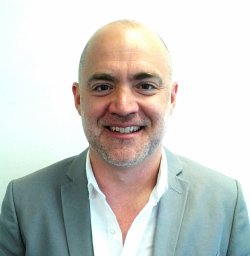
 Frank Wood
· 10 previous affiliations
- University of British ColumbiaSince 2018
- Full Professor · Since 2022
- Associate Professor of Computer Science · Since 2018
- Associate Professor · 2018–2022
- Inverted AISince 2021
- CEO · Since 2021
- Associate Professor · 2019–2021
- University of Oxford2013–2018
- Associate Professor · 2013–2018
- The Alan Turing Institute2016–2018
- Faculty Fellow · 2016–2018
- Columbia University2009–2013
- Assistant Professor · 2009–2013
- Assistant Professor of Statistics · 2009–2012
- University College London2007–2009
- Postdoc · 2007–2009
- Brown University2007
- PhD student · 2007
- BS, Computer Science · 1996
- Cornell Tech1994–1996
- Undergrad student · 1994–1996
Research Overview
Frank Wood focuses on probabilistic programming, amortized Bayesian inference, and the development of scalable generative models. His trajectory spans foundational work in nonparametric Bayesian methods and sequential Monte Carlo to the design of universal probabilistic programming languages. Most recently, his research investigates advanced diffusion models, continual learning, and reinforcement learning for autonomous systems.
Research Trajectory
His early research addressed nonparametric Bayesian methods and sequence modeling. He introduced A Non-Parametric Bayesian Approach to Spike Sorting in 2006. Later, he developed The sequence memoizer (2011), a hierarchical Bayesian model for discrete sequence data designed to capture long-range dependencies and power-law characteristics.
Transitioning to the field of Automated Inference via Probabilistic Programming, his lab developed Anglican, a probabilistic programming system designed to interoperate with JVM languages. He detailed this system in Design and Implementation of Probabilistic Programming Language Anglican. Building on this foundation, his group advanced the broader area of Amortized Bayesian Inference with Neural Networks by introducing Inference Compilation and Universal Probabilistic Programming, which established methods for compiling probabilistic programs into efficient inference artifacts.
Moving into variational inference and sampling, he participated in research on the dynamics of evidence lower bounds, exploring the area of Gradient Signal Decay in Importance Weighted Variational Inference in Tighter Variational Bounds are Not Necessarily Better. He continued scaling probabilistic programming to high-performance computing environments with Etalumis: bringing probabilistic programming to scientific simulators at scale. His group also proposed The Thermodynamic Variational Objective, contributing to differentiable optimization for discrete latent variable models and the broader study of Mass-Covering Objectives for Reliable Variational Inference. In the domain of Power Mean Annealing Paths for Importance Sampling, he investigated geometric tempering by developing q-Paths: Generalizing the geometric annealing path using power means.
Expanding into few-shot learning, diffusion models, and reinforcement learning, he addressed the research direction of Ellipsoidal Decision Boundaries with Class Covariance Modeling and cross-domain few-shot learning with Beyond Simple Meta-Learning: Multi-Purpose Models for Multi-Domain, Active and Continual Few-Shot Learning. In 2024, his focus shifted heavily toward generative modeling and diffusion processes. He guided work on score-based generative modeling with oracle-assisted guidance in Don't be so Negative! Score-based Generative Modeling with Oracle-assisted Guidance, contributing to the domain of generative modeling for heterogeneous tabular data. He also introduced variance-reduction techniques in Nearest Neighbour Score Estimators for Diffusion Generative Models. He explored continual learning paradigms for generative models in Online Continual Learning of Video Diffusion Models From a Single Video Stream and applied conditional diffusion models to video synthesis in Semantically Consistent Video Inpainting with Conditional Diffusion Models. Concurrently, he contributed to reinforcement learning simulation by developing TorchDriveEnv: A Reinforcement Learning Benchmark for Autonomous Driving with Reactive, Realistic, and Diverse Non-Playable Characters.
Returning to probabilistic programming compilation and generative model mechanics, he authored Daphne: Multi-Pass Compilation of Probabilistic Programs into Graphical Models and Neural Networks, a system that transforms recursive probabilistic models into sparse neural network architectures. He also investigated the theoretical underpinnings of diffusion models in Towards a Mechanistic Explanation of Diffusion Model Generalization. Most recently, he collaborated on optimizing flow-based generative models in Discrete Meanflow Training Curriuculum, which decreases the computational and data budget required for training by exploiting a specific discretization of the Meanflow objective.
Current Directions
Recent work investigates the theoretical mechanics and optimization of generative models, alongside advancements in the compilation of probabilistic programs. The most recent papers in the evidence address the generalization behavior of diffusion models through localized denoising operations and explore stable, efficient training curricula for flow-based generative models. Concurrently, ongoing research in probabilistic programming focuses on multi-pass compilation techniques that transform complex recursive models into sparse neural network architectures for efficient inference.
Profile updated
Loading new papers…
Other researchers whose papers cluster into the same research directions — a proxy for overlapping technical interests and shared intellectual neighborhoods.
See something wrong? Report a mistake