

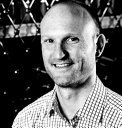
 Michael U. Gutmann
· 4 previous affiliations
- University of EdinburghSince 2016
- Associate Professor · Since 2016
- Aalto University2012–2016
- Postdoc · 2012–2016
- University of Helsinki2008–2012
- Postdoc · 2008–2012
- The University of Tokyo2005–2008
- PhD student · 2005–2008
Research Overview
Michael U. Gutmann focuses on machine learning for science, with a particular emphasis on developing methods for Bayesian inference, parameter estimation, and experimental design. His work addresses the fundamental challenges of performing statistical inference in settings where the likelihood function is intractable, a field often referred to as simulation-based or likelihood-free inference. By leveraging contrastive learning, density-ratio estimation, and neural information processing, he develops frameworks that enable the application of complex probabilistic models to domains such as epidemiology, synthetic biology, and cognitive science.
Research Trajectory
The early stages of Michael U. Gutmann’s research were rooted in computational neuroscience and the statistical modeling of natural stimuli. During this period, he investigated how the brain’s visual system represents information beyond the primary visual cortex (V1). In Statistical model of natural stimuli predicts edge-like pooling of spatial frequency channels in V2, he applied Independent Component Analysis (ICA) to modeled V1 cell outputs, demonstrating that the pooling of spatial frequency channels provides a statistical explanation for the emergence of "step-edge" detectors in area V2. This work established a career-long interest in latent variable models and the extraction of meaningful structures from high-dimensional data.
This interest in structured representations evolved into the development of more sophisticated component analysis techniques. He explored Topographic Component Ordering via Traveling Salesman Optimization, addressing the limitation of standard ICA where components are treated as an unordered "bag of features." By introducing methods like Topographic Analysis of Correlated Components, he enabled the arrangement of latent components on topographic grids, capturing both linear and higher-order correlations in natural images and text.
A pivotal shift in Gutmann’s trajectory occurred with the development of Noise-Contrastive Estimation (NCE). This methodological breakthrough addressed a core problem in statistical modeling: the estimation of "unnormalized" models, such as Energy-Based Models (EBMs), where the normalizing constant (partition function) is computationally intractable. Through Noise-Contrastive Estimation for Unnormalized Models, he proposed framing parameter estimation as a supervised classification task, where the model is trained to distinguish between observed data and artificially generated noise. This approach bypassed the need to calculate the partition function and laid the groundwork for Noise Contrastive Estimation and the Search for Optimal Noise, which explored the theoretical limits and practical refinements of contrastive learning.
In the mid-2010s, Gutmann transitioned toward the broader field of simulation-based inference (SBI). Scientific simulators in fields like epidemiology and climate science often generate realistic data but lack a tractable likelihood function, making traditional Bayesian inference impossible. He began investigating Automated Feature Engineering for Simulation Based Inference, seeking to replace the manual selection of summary statistics with learned representations. During this time, he also conducted critical evaluations of model identifiability. In On the identifiability of transmission dynamic models for infectious diseases, he demonstrated that complex epidemiological simulators might be poorly identified by available data, suggesting that prior assumptions often drive conclusions more than the data itself.
As his work progressed into the late 2010s and early 2020s, Gutmann focused on the intersection of SBI and experimental design. He developed frameworks for Optimization Under Stochastic Evaluation Noise, which are essential for navigating the high-dimensional parameter spaces of scientific simulators. This led to the creation of efficient methods for Bayesian Experimental Design (BED) in the context of implicit models, where the goal is to select experimental conditions that maximize the information gained about model parameters.
Current Directions
Gutmann’s current research focuses on enhancing the robustness and efficiency of simulation-based inference. A significant theme in his recent work is the development of advanced density-ratio estimation techniques. Recognizing that standard contrastive methods fail when data and noise distributions are highly dissimilar, he introduced frameworks to stabilize estimation in high-dimensional spaces. This methodological focus extends to Balancing Latent Space Structure and Reconstruction Fidelity, where he examines how generative models balance the fidelity of data reconstruction with the quality of new content generation.
He is also actively working on robust inference under model misspecification. In many scientific applications, the simulator is only a coarse approximation of reality, and standard Bayesian methods can yield overconfident or biased results when the model is wrong. His recent efforts involve developing "risk-averse" optimization techniques and new Monte Carlo frameworks that can handle differentiable simulators more efficiently. These methods are being applied to cutting-edge problems in synthetic biology, such as the optimization of genetic circuits under uncertainty, and in cognitive science to design optimal behavioral experiments.
Furthermore, Gutmann continues to refine neural mutual information estimation. By combining ratio estimation with deep learning, he is developing tools that can quantify dependencies in complex systems, providing a more rigorous statistical foundation for the "machine learning for science" paradigm.
Representative Work
Statistical model of natural stimuli predicts edge-like pooling of spatial frequency channels in V2 In this 2005 paper, Gutmann (as first author) provides a statistical explanation for the functional properties of neurons in the V2 area of the visual cortex. While V1 neurons are well-modeled as Gabor-like filters, the pooling mechanisms of V2 were less understood. By applying ICA to the outputs of a V1 model trained on natural images, the study demonstrates that the optimal representation of natural scenes involves pooling across spatial frequencies. This process transforms wavelet-like filters into step-edge detectors, matching the physiological characteristics of V2 cells and establishing a link between natural scene statistics and neural architecture.
On the identifiability of transmission dynamic models for infectious diseases As first author of this 2015 study, Gutmann critically examines the "black box" of simulation-based inference in epidemiology. Focusing on a popular model for Tuberculosis (TB) transmission, the paper investigates whether the parameters of complex simulators can actually be recovered from incidence and molecular data. The analysis reveals significant identifiability issues, showing that different parameter combinations can produce nearly identical data. This work highlights the danger of over-interpreting simulation results and emphasizes the need for rigorous identifiability analysis before drawing public health conclusions from complex models.
Efficient Bayesian Experimental Design for Implicit Models In this 2018 paper, Gutmann (as first author) introduces a framework for Bayesian Experimental Design (BED) when dealing with simulators that lack a tractable likelihood. The method, Likelihood-Free Inference by Ratio Estimation (LFIRE), approximates mutual information by framing it as a density-ratio estimation problem. By combining LFIRE with Bayesian Optimization, the framework enables the identification of optimal experimental designs in high-dimensional spaces that were previously computationally unreachable. This work significantly expanded the utility of BED for complex scientific simulators.
Bayesian Experimental Design for Implicit Models by Mutual Information Neural Estimation Continuing his work on experimental design, this 2020 paper (as second author of two) leverages Mutual Information Neural Estimation (MINE) to further improve BED for implicit models. The high computational cost of computing posteriors and maximizing mutual information often limits BED to simple models. This research demonstrates that neural estimators can provide a more scalable way to maximize information gain, allowing for the design of experiments in settings where the relationship between parameters and data is highly non-linear and high-dimensional.
Telescoping Density-Ratio Estimation As the senior author of this 2021 study, Gutmann addresses a critical limitation of density-ratio estimation via classification. Standard methods fail to accurately estimate the ratio between two densities when they differ significantly, typically when the KL divergence exceeds a few dozen nats. The paper introduces Telescoping Density-Ratio Estimation (TRE), which decomposes a difficult ratio into a product of smaller, more manageable ratios using a chain of intermediate distributions. This framework enables accurate estimation in high-dimensional spaces and has broad implications for representation learning and generative modeling.
Fast and Robust Simulation-Based Inference With Optimization Monte Carlo In this 2026 paper, Gutmann (as senior author) proposes a new method for differentiable simulators that delivers accurate posterior inference with significantly reduced runtimes. Traditional SBI methods often require a massive number of simulations, which is prohibitive for complex models. By reformulating stochastic simulation as a series of deterministic optimization problems—a framework called Optimization Monte Carlo—the method uses gradient-based techniques to efficiently navigate toward high-density regions of the posterior. This approach provides a faster and more robust alternative for parameter inference in high-dimensional scientific models.
Profile updated
Loading new papers…
Other researchers whose papers cluster into the same research directions — a proxy for overlapping technical interests and shared intellectual neighborhoods.
See something wrong? Report a mistake