

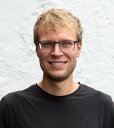
 Cornelius Schröder
· 1 previous affiliation
- University of TübingenSince 2016
- Postdoc · Since 2022
- PhD student · 2016–2022
Research Overview
Cornelius Schröder focuses on simulation-based inference, computational neuroscience, and differentiable mechanistic modeling. His early research explored the biophysics of retinal circuits and visual processing, establishing a foundation for integrating biological constraints into computational models. More recently, he develops scalable Bayesian inference frameworks and amortized machine learning techniques to accelerate parameter estimation and model selection for complex scientific simulators.
Research Trajectory
Schröder’s early work was deeply rooted in computational neuroscience and retinal physiology, particularly focusing on how neural circuits adapt to process visual information. In 2019, he investigated the specialized "strike zone" in the retina of larval zebrafish in Cellular and molecular mechanisms of photoreceptor tuning for prey capture in larval zebrafish. This research revealed a multi-level mechanistic toolkit—spanning anatomical features, gene expression, and synaptic signaling—that amplifies UV-cone performance for detecting tiny prey. This contributed to the broader research direction of Tuning Visual Systems to Natural Scene Statistics. He expanded on these findings the following year in Fovea-like Photoreceptor Specializations Underlie Single UV Cone Driven Prey-Capture Behavior in Zebrafish, demonstrating that UV cones in the area temporalis boost photon detection probability by more than tenfold, utilizing an elevated baseline of synaptic calcium to encode bright objects.
Continuing his investigation into retinal circuits, Schröder contributed to Ancestral circuits for vertebrate color vision emerge at the first retinal synapse (2021), which mapped the complete circuit architecture underlying color processing in larval zebrafish, detailing how synaptic outputs of different cone types efficiently encode natural daylight. In parallel, he explored cellular adaptation in Distinct synaptic transfer functions in same-type photoreceptors (2021), showing that synaptic properties within a single neuron type vary significantly based on their location in the eye to allow for specialized encoding of visual information.
During this period, Schröder also began bridging the gap between descriptive neural models and interpretable biophysics through advanced statistical methods. He introduced a framework utilizing Approximate Bayesian Computation (ABC) in Approximate Bayesian Inference for a Mechanistic Model of Vesicle Release at a Ribbon Synapse (2019). By fitting complex models of neurons to experimental data from the zebrafish retina, this work advanced the area of Sequential Refinement for Simulation Based Inference. He further integrated biological knowledge into computational models in System Identification with Biophysical Constraints: A Circuit Model of the Inner Retina (2020), presenting a model of temporal processing that explicitly included inhibitory feedback circuits and realistic synaptic release mechanisms, contrasting with standard black-box convolutional neural networks. The utility of these biophysical models was demonstrated in Bayesian inference for biophysical neuron models enables stimulus optimization for retinal neuroprosthetics (2020), where Bayesian inference was used to optimize electrical stimulation patterns, a critical step for developing effective retinal prosthetics.
By 2024, Schröder’s methodological focus had shifted significantly toward the development of general-purpose machine learning frameworks for scientific simulators. He developed the Simulation-Based Model Inference (SBMI) framework in Simultaneous identification of models and parameters of scientific simulators (2024). This approach uses neural networks to jointly identify the best model structure and its associated parameters from data, treating model selection as a rigorous probabilistic inference problem and contributing to the growing field of Amortized Bayesian Inference with Neural Networks. He also participated in standardizing the evaluation of complex models, co-authoring A Practical Guide to Sample-based Statistical Distances for Evaluating Generative Models in Science (2024), which provided an accessible overview of metrics like Sliced-Wasserstein distances and Classifier Two-Sample Tests, aligning with work in the area of Likelihood Free Evaluation of Implicit Generative Models.
In 2025, Schröder’s research expanded to tackle high-dimensional and computationally expensive inference problems. His group introduced Fourier Neural Operator Posterior Estimation in FNOPE: Simulation-based inference on function spaces with Fourier Neural Operators (2025). By combining the spectral efficiency of Fourier Neural Operators with flow matching, FNOPE enabled Bayesian inference on function-valued parameters—such as spatially varying permeability—using significantly fewer simulations than prior methods. Returning to his roots in neuroscience with new computational tools, he collaborated on Jaxley: differentiable simulation enables large-scale training of detailed biophysical models of neural dynamics (2025). This open-source Python toolbox leveraged GPU acceleration to make detailed biophysical neuron simulations fully differentiable, advancing the research direction of Differentiable Mechanistic Modeling for Scientific Discovery.
The versatility of these simulation-based inference (SBI) techniques was further demonstrated in applied medical imaging domains, such as Uncertainty mapping and probabilistic tractography using Simulation-based Inference in diffusion MRI: A comparison with classical Bayes (2025). To consolidate the rapid advancements in the field, Schröder oversaw the compilation of Simulation-Based Inference: A Practical Guide (2025). This comprehensive roadmap detailed how deep learning can perform Bayesian inference when a scientific model's likelihood function is intractable, summarizing best practices and highlighting the importance of the area of Statistical Diagnostics for Simulation-Based Inference. Building on the need for scalable model selection, he recently co-authored Scalable Simulation-Based Model Inference with Test-Time Complexity Control (2026), introducing PRISM, an encoder-decoder architecture that infers a joint posterior over discrete models and continuous parameters without requiring users to hard-code complexity penalties at training time.
Current Directions
Schröder’s most recent work investigates the intersection of deep learning and mechanistic scientific modeling, with a primary focus on scaling Simulation-Based Inference (SBI) to handle increasingly complex hypothesis spaces. Recent papers address the challenge of performing Bayesian inference on high-dimensional, function-valued parameters and the simultaneous identification of model structures and continuous parameters. By developing tools like differentiable biophysical simulators and amortized inference frameworks with test-time complexity control, his current research aims to transform computationally expensive, "black-box" scientific simulators into tractable, uncertainty-aware models for rapid parameter estimation and rigorous model selection across disciplines.
Profile updated
Loading new papers…
Other researchers whose papers cluster into the same research directions — a proxy for overlapping technical interests and shared intellectual neighborhoods.
See something wrong? Report a mistake