

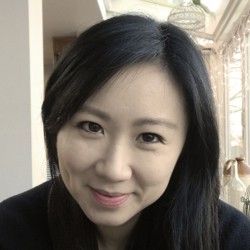
 Tingting Zhu
· 1 previous affiliation
- University of OxfordSince 2019
- Associate Professor · Since 2023
- RAEng Research Fellow · 2019–2025
Research Overview
Tingting Zhu focuses on machine learning for healthcare, developing probabilistic and deep learning techniques to analyze complex time-series medical data. Her trajectory spans from robust vital sign estimation using wearable sensors to advanced representation learning for electronic health records. Recently, she investigates the application of foundation models and large language models to clinical prediction, survival analysis, and global health diagnostics.
Research Trajectory
Zhu’s early work addressed the reliability of noninvasive patient monitoring. In 2015, she introduced a Bayesian fusion approach in Bayesian fusion of algorithms for the robust estimation of respiratory rate from the photoplethysmogram, which combined the outputs of multiple estimation algorithms to improve the accuracy of respiratory rate extraction from wearable pulse oximeter signals.
By 2021, her focus expanded to deep learning architectures for complex cardiac signals. She collaborated on CLOCS: Contrastive Learning of Cardiac Signals Across Space, Time, and Patients, a self-supervised framework that leverages the spatial and temporal properties of electrocardiograms (ECGs) alongside patient identity to learn representations without massive labeled datasets. This work contributed to the research direction of Contrastive Learning for Personalized Physiological Signatures and the broader area of Deep Learning Architectures for Automated Sleep Staging. Recognizing that clinical environments are dynamic rather than static, she developed A clinical deep learning framework for continually learning from cardiac signals across diseases, time, modalities, and institutions, which mitigates catastrophic forgetting when models encounter shifting sensor types or seasonal disease patterns. That same year, her group introduced DeepMI: Deep Multi-lead ECG Fusion for Identifying Myocardial Infarction and its Occurrence-time. By combining spectral and temporal modeling to fuse 12-lead ECG data, the system automated the detection and temporal classification of myocardial infarctions, advancing work in the area of Processing One Dimensional Signals as Two Dimensional Images.
In 2022, Zhu continued to explore Processing One Dimensional Signals as Two Dimensional Images by applying wearable ECG sensors and spectrogram transformations to global health challenges. Her lab developed Classification of Tetanus Severity in Intensive-Care Settings for Low-Income Countries Using Wearable Sensing, utilizing a 2D convolutional neural network with channel-wise attention to automate patient triage in resource-constrained environments. To address the persistent bottleneck of unlabeled continuous monitoring data, she contributed to SoQal: Selective Oracle Questioning for Consistency Based Active Learning of Cardiac Signals, a method that identifies the most informative data points for human annotation, contributing to the research direction of Robust Active Learning for Noisy Environments. Concurrently, she directed research into electronic health records (EHR), presenting Learning of Cluster-based Feature Importance for Electronic Health Record Time-series to predict patient deterioration despite the sparse, multi-modal, and heavily imbalanced nature of clinical data.
A major expansion into complex survival analysis and multi-modal EHR modeling emerged in 2025. Her team presented Multi-Modal Interpretable Graph for Competing Risk Prediction with Electronic Health Records, an end-to-end framework that fuses time-series, demographics, diagnostic histories, and radiographic text into a global patient graph to model competing clinical endpoints. She also led the development of DoseSurv: Predicting Personalized Survival Outcomes under Continuous-Valued Treatments, which combined varying-coefficient networks with representation balancing to estimate how different drug dosages affect individual survival times. To improve early diagnosis in primary care, she introduced GI-Clust: Deep Clustering for Early Gastrointestinal Cancer Detection, a predictive deep clustering framework designed for irregular, multivariate EHR time series. Recognizing the need for rigorous evaluation in this growing field, she created SurvBench: A Standardised Preprocessing Pipeline for Multi-Modal Electronic Health Record Survival Analysis, providing a reproducible workflow to enable standardized comparisons of deep learning survival models across major databases.
Alongside her EHR survival analysis work in 2025, Zhu investigated the deployment of foundation models and large language models (LLMs) in healthcare. She led a study exploring practical AI for global health in Foundation model embeddings enable cardiovascular screening for people living with HIV in Vietnam using wearable signals, demonstrating that frozen embeddings from low-cost wearables could outperform traditional clinical risk scores. She also investigated the safety of generative models in Are Large Language Models Dynamic Treatment Planners? An In Silico Study from a Prior Knowledge Injection Angle, testing zero-shot LLMs against reinforcement learning agents for insulin dosing and highlighting the discrepancy between linguistic reasoning and physiological constraints.
In 2026, her research addressed cross-modal transfer, data scarcity, and LLM efficiency. Her lab introduced BioX-Bridge: Model Bridging for Unsupervised Cross-Modal Knowledge Transfer across Biosignals, a lightweight network that transfers knowledge between different modalities, such as clinical ECGs and smartwatch PPGs, without requiring labeled data for the new sensor. To tackle data scarcity in intensive care units, she developed Bridging data gaps of rare conditions in ICU: a multi-disease adaptation approach for clinical prediction, combining condition-agnostic pre-training with knowledge-guided domain adaptation to advance the area of Biological Subtyping to Parse Clinical Heterogeneity. Finally, her team designed From Token to Token Pair: Efficient Prompt Compression for Large Language Models in Clinical Prediction, a lossless compression method that merges frequently co-occurring medical sub-tokens to significantly reduce inference latency when processing lengthy EHR sequences.
Her lab also pushed further into survival modeling, foundation model architectures, and interpretability in 2026. For causal survival analysis, Zhu led the introduction of Doubly Robust Learning of Heterogeneous Survival Treatment Effects under Time-Varying Treatments, proposing a doubly robust learner equipped with Neyman-orthogonality and rate double robustness to estimate heterogeneous effects under sequential treatments and history-dependent censoring. To advance multimodal EHR survival prediction, Zhu collaborated on Structure-Biased Graph Learning for Multimodal Survival on EHR, introducing M-CADENCE to learn sparsity-regularized intra-modal and cross-modal graphs for robust outcome prediction. In foundation model engineering, Zhu’s group developed Merging with Directional Alignment in Geometry-Aware Directional Alignment for Coherent Model Merging to preserve structural coherence across parameter and feature spaces when fusing independently trained healthcare models. In the neural signal domain, their team introduced Standing on the Shoulders of Giants: Rethinking EEG Foundation Model Pretraining via Multi-Teacher Distillation, bootstrapping electroencephalogram models via a two-stage distillation framework utilizing teacher representations from vision and time series. Finally, addressing foundation model explainability, Zhu led When Is an SAE Feature Interpretable? A Validation Ladder for EEG Foundation Models, showing that perturbation sensitivities in sparse autoencoders can be misleading without energy normalization and establishing a multi-step validation ladder for latent interpretations.
Current Directions
The most recent papers in the evidence address the integration of foundation models and large language models into clinical workflows, with a focus on efficiency, safety, and data scarcity. Recent work investigates unsupervised cross-modal knowledge transfer to bridge different biosignal modalities without requiring labeled data for new sensors. Additionally, her research explores multi-disease adaptation approaches to improve clinical prediction for rare conditions in intensive care settings. Another major focus is optimizing large language models and foundation models for healthcare, including developing efficient prompt compression and model merging techniques, multi-teacher pretraining for electroencephalograms, rigorous mechanistic interpretability for neural latents, and doubly robust causal survival estimation under time-varying treatments.
Profile updated
Loading new papers…
Other researchers whose papers cluster into the same research directions — a proxy for overlapping technical interests and shared intellectual neighborhoods.
See something wrong? Report a mistake