

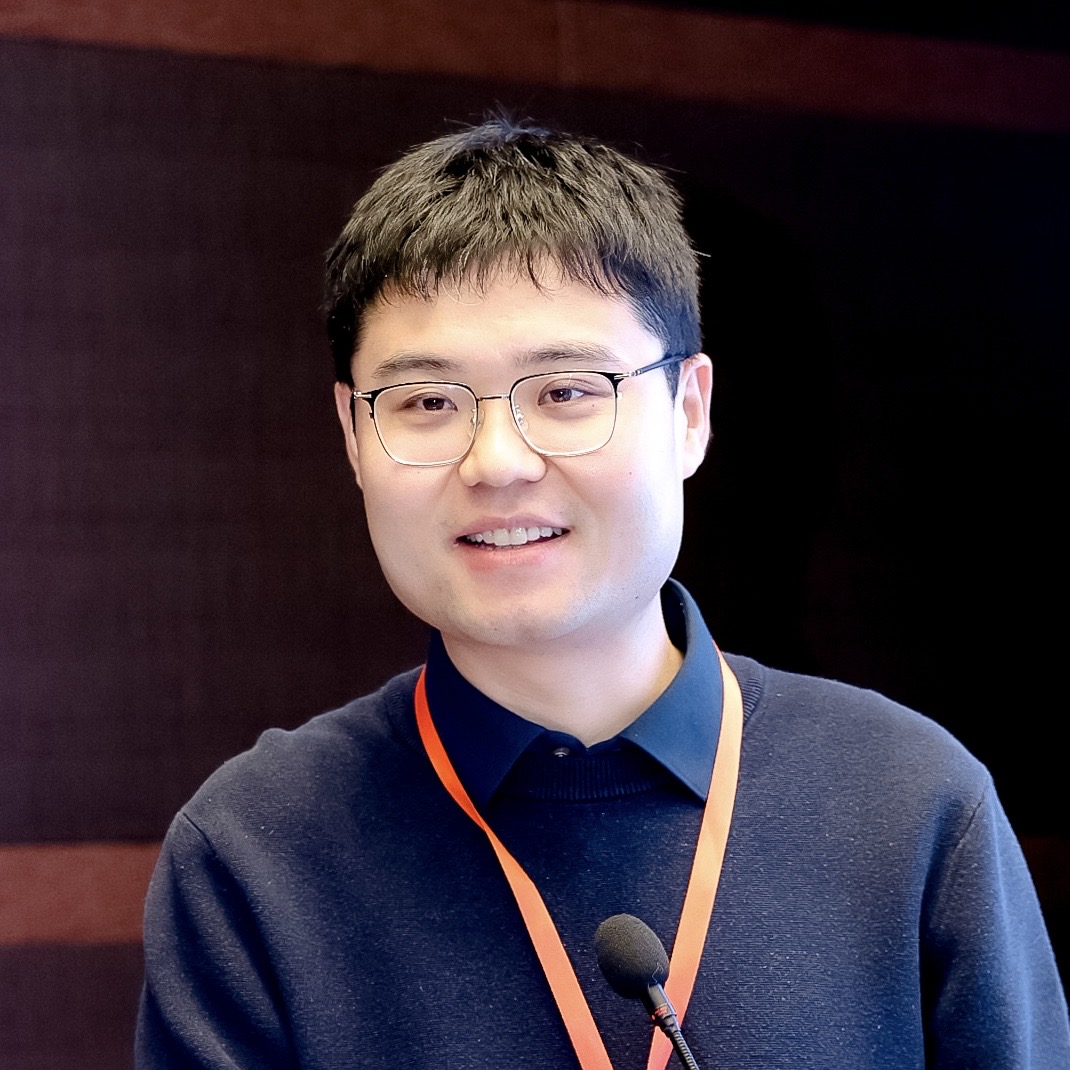
 Shenda Hong
· 3 previous affiliations
- Peking UniversitySince 2014
- Assistant Professor · Since 2022
- Postdoc · 2020–2022
- PhD student · 2014–2019
- Georgia Institute of Technology2019–2020
- Postdoc · 2019–2020
- Undergrad student · 2010–2014
Research Overview
Shenda Hong focuses on artificial intelligence for digital health, developing deep learning methods for physiological time-series analysis and biosignal foundation models. His trajectory spans from early work on fusing expert clinical knowledge with neural networks to recent advances in multimodal large language models for medical diagnostics. Currently, he investigates scalable architectures for real-world clinical validation and non-invasive cardiovascular screening.
Research Trajectory
Hong's early research addressed the challenges of processing continuous physiological streams generated by medical devices. In Combining Multiple Concurrent Physiological Streams to Assessing Patients Condition (2016), he introduced methods for real-time patient assessment using adaptive sampling and multi-dimensional nearest center analysis. This focus on clinical signals naturally extended to electrocardiography (ECG). He developed ensemble methods in ENCASE: an ENsemble ClASsifiEr for ECG Classification Using Expert Features and Deep Neural Networks, which laid the groundwork for his broader contributions to the area of Fusing Expert Knowledge with Deep Representations. A key advancement in this direction was MINA: Multilevel Knowledge-Guided Attention for Modeling Electrocardiography Signals, which aligned neural network attention mechanisms with beat-, rhythm-, and frequency-level medical knowledge to improve interpretability. Recognizing the disparity in data quality across clinical environments, he also explored imitation learning in RDPD: Rich Data Helps Poor Data via Imitation to deploy competitive models in settings with limited sensory equipment by transferring knowledge from rich, multi-modal environments.
Moving into more complex temporal dynamics, his work expanded to address multivariate time-series forecasting and unsupervised representation learning. He proposed the Recurrent Graph Evolution Neural Network in Pay Attention to Evolution: Time Series Forecasting With Deep Graph-Evolution Learning to model how relationships between variables change over time, demonstrating significant improvements in tracking global epidemiological data. Concurrently, he contributed to the research direction of Dual-Domain Fusion for Robust Time Series Modeling through his participation in Unsupervised Time-Series Representation Learning with Iterative Bilinear Temporal-Spectral Fusion, addressing the complex dynamics of time-series data without relying on explicit labels.
By 2023, Hong's trajectory increasingly emphasized predictive diagnostics and the discovery of digital biomarkers. He explored postoperative mortality prediction in Expanding electrocardiogram abilities for postoperative mortality prediction with deep learning. Advancing the broader area of Deep Learning for Subclinical Disease Detection, he developed a framework to predict chronic obstructive pulmonary disease up to five years in advance in Deep learning for detecting and early predicting chronic obstructive pulmonary disease from spirogram time series. His research also leveraged everyday wearable sensors; contributing to the field of One Dimensional Residual Networks for Sequential Signal Processing, he introduced a deep learning model to estimate vascular age from optical blood-flow signals in Artificial intelligence-derived photoplethysmography age as a digital biomarker for cardiovascular health, transforming standard smartwatch data into a non-invasive screening tool for population-level heart health.
A major theme in his recent work is the development and application of large-scale medical foundation models. He participated in building a massive diagnostic model in An Electrocardiogram Foundation Model Built on over 10 Million Recordings, which achieved expert-level performance across various cardiovascular tasks. He subsequently applied this architecture to predict life-threatening arrhythmias in Combining ECG Foundation Model and XGBoost to Predict In-Hospital Malignant Ventricular Arrhythmias in AMI Patients. Extending these capabilities to non-invasive wearables, he advanced the research direction of Cross-Modal Transfer Learning for Physiological Monitoring by fine-tuning the foundation model to estimate 108 laboratory blood values from single-lead signals in AnyECG-Lab: An Exploration Study of Fine-tuning an ECG Foundation Model to Estimate Laboratory Values from Single-Lead ECG Signals.
To bridge the gap between wearable devices and clinical-grade diagnostics, Hong focused heavily on the area of Inferring Multi-Lead Cardiac Morphology from Single-Lead Sensors. In Self-Alignment Learning to Improve Myocardial Infarction Detection from Single-Lead ECG, he introduced a framework that aligns single-lead representations with full 12-lead clinical data to infer global cardiac health from a limited local view. He further validated on-device algorithms for real-time remote assessment in On-device Computation of Single-lead ECG Parameters for Real-time Remote Cardiac Health Assessment: A Real-world Validation Study and demonstrated their accuracy for detecting conditions like Long QT syndrome in Accuracy of Wearable ECG Parameter Calculation Method for Long QT and First-Degree A-V Block Detection: A Multi-Center Real-World Study with External Validations Compared to Standard ECG Machines and Cardiologist Assessments. Additionally, he explored causal discovery in dynamic systems, proposing a diffusion-based framework in DiffuGC: Diffusion Model Can Help Discover Granger Causality from Interventional Time Series to amplify causal signals without prior knowledge of intervention targets.
Most recently, Hong has addressed the reliability of large language models in clinical contexts. He tackled model hallucinations by encouraging models to directly quote contextual fragments in Copy-Paste to Mitigate Large Language Model Hallucinations. Building on this need for fidelity, he developed a reasoning-focused multimodal large language model in ECG-R1: Protocol-Guided and Modality-Agnostic MLLM for Reliable ECG Interpretation, designed specifically to reduce hallucinations and improve diagnostic accuracy by prioritizing clinical evidence over parametric memory.
Current Directions
The most recent papers in the evidence indicate a strong focus on the reliability and reasoning capabilities of Multimodal Large Language Models (MLLMs) in healthcare. Recent work investigates methods to mitigate hallucinations in LLMs by enforcing contextual faithfulness, ensuring that models prioritize clinical evidence over internal memory when interpreting medical data. Concurrently, Hong continues to advance the deployment of biosignal foundation models, exploring how massive, multi-modality datasets can enable robust representation learning and zero-shot generalization for complex diagnostic tasks. This includes translating these large-scale models into practical, on-device applications that allow single-lead wearable sensors to perform clinical-grade screening and estimate systemic health markers in real-world settings.
Profile updated
Loading new papers…
Other researchers whose papers cluster into the same research directions — a proxy for overlapping technical interests and shared intellectual neighborhoods.
See something wrong? Report a mistake