

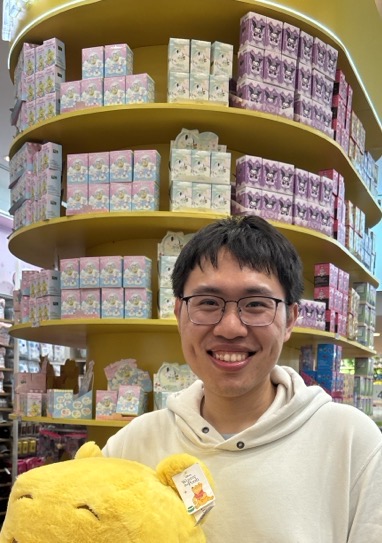
 Tianyu Liu
· 8 previous affiliations
- Alibaba Group (China)Since 2026
- Researcher · Since 2026
- Yale University2022–2026
- PhD student · 2022–2026
- Broad Institute2025
- Intern · 2025
- Genentech2024
- Intern · 2024
- Zhejiang University2018–2022
- Undergrad student · 2018–2022
- Undergrad student · 2018–2022
- BioMap Research2022
- Intern · 2022
- Intern · 2021
6 other authors named Tianyu Liu: Tianyu Liu (90 papers), Tianyu Liu (ETH Zurich · 21 papers), Tianyu Liu (National University of Singapore · 11 papers), Tianyu Liu (University of Science and Technology of China · 7 papers), Tianyu Liu (Tsinghua University · 5 papers), and 1 more
Research Overview
Tianyu Liu focuses on the development of artificial intelligence systems for biomedical research, single-cell transcriptomics, and multimodal foundation models. His trajectory spans from resolving batch effects and integrating sparse genomic data to building predictive models for cellular perturbation responses. Currently, he investigates autonomous AI agents and large language models designed to accelerate scientific discovery and drug synergy analysis.
Research Trajectory
Liu’s early work addressed foundational challenges in single-cell genomics, particularly the integration of diverse datasets and the mitigation of technical noise. In 2021, he led an analysis of the Multimodal single cell data integration challenge: Results and lessons learned, contributing to the broader area of Overcoming Data Sparsity in Single Cell Sequencing. Building on the need for robust data harmonization, he collaborated on ResPAN: a powerful batch correction model for scRNA-seq data through residual adversarial networks to facilitate integrative downstream analysis across multiple sequencing batches.
Expanding into multimodal representation learning, he introduced MuSe-GNN: Learning Unified Gene Representation From Multimodal Biological Graph Data in 2023. This framework combined deep graph neural networks with multimodal machine learning to discover functionally similar genes across diverse tissues, sequencing techniques, and species by leveraging informative graph structures.
His focus subsequently shifted toward predictive modeling of cellular behavior and the adaptation of language models for biology. He developed Modeling and predicting single-cell multi-gene perturbation responses with scLAMBDA, a deep generative framework that forecasts the effects of genetic edits. This work advanced the research direction of Zero-Shot Prediction of Cellular Response to Perturbation and intersected with the area of Contextual Embeddings from Protein Language Models. Further exploring the utility of general-purpose language models, he introduced scELMo: Embeddings from Language Models are Good Learners for Single-cell Data Analysis, demonstrating that the internal knowledge of existing large language models could be leveraged for single-cell analysis without training massive domain-specific models from scratch.
In 2025, Liu’s research expanded significantly into spatial transcriptomics and comprehensive foundation models. To address high noise and dropout rates in spatial data, he contributed to spRefine Denoises and Imputes Spatial Transcriptomics with a Reference-Free Framework Powered by Genomic Language Model, advancing the area of Bridging Spatial and Single Cell Transcriptomics. He further tackled spatial data limitations by developing VISTA Uncovers Missing Gene Expression and Spatial-induced Information for Spatial Transcriptomic Data Analysis, a deep-learning framework combining variational inference and graph neural networks to predict missing gene expression with quantified uncertainty.
Concurrently, he advanced the field of Multimodal Foundation Models for Single Cell Biology through several collaborative and lead efforts. He participated in the development of UNICORN: Towards universal cellular expression prediction with a multi-task learning framework, which predicts cell-type-specific gene expression directly from biological sequences. He also contributed to Building a unified model for drug synergy analysis powered by large language models, a framework that transforms textual descriptions of drugs and cell lines into functional embeddings for zero-shot synergy prediction. To better integrate genomic sequences with textual annotations, he introduced A Multi-Modal Foundation Model Across Species for Interpreting Gene Functions (DNACLIP), jointly modeling DNA and text across dozens of species. Recognizing the growing role of AI in scientific workflows, he also co-authored Towards Artificial Intelligence Research Assistant for Expert-Involved Learning, introducing the ARIEL dataset to benchmark language models on summarizing scientific texts and interpreting biomedical figures.
Most recently, Liu has focused on aligning multimodal biological data and automating scientific discovery. He developed Learning Perturbation Effects Through Contrastive Alignment of Transcriptomics and Textual Embeddings (PertOmni), a CLIP-style framework that aligns transcriptomic perturbation signatures with text-derived embeddings of genes and compounds. In spatial biology, he collaborated on spVelo: RNA velocity inference for multi-batch spatial transcriptomics data, enabling scalable trajectory inference that incorporates spatial context. Finally, reflecting a shift toward autonomous research systems, he contributed to Accelerating Scientific Discovery with Autonomous Goal-evolving Agents, which introduced the SAGA framework to automate the design of scientific objectives using a bi-level architecture of language model agents.
Current Directions
The most recent papers in the evidence indicate a strong focus on autonomous AI systems for scientific discovery and the alignment of multimodal biological data. Recent work investigates the use of large language models as active agents capable of evolving their own research objectives to accelerate tasks like drug and materials design. Concurrently, ongoing research addresses the integration of textual knowledge with transcriptomic data to better predict cellular perturbation effects, as well as the development of scalable methods for inferring RNA velocity and temporal dynamics in spatial transcriptomics.
Profile updated
Loading new papers…
Other researchers whose papers cluster into the same research directions — a proxy for overlapping technical interests and shared intellectual neighborhoods.
See something wrong? Report a mistake