

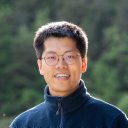
 Minsheng Hao
1 previous affiliation
- Tsinghua University2016–2025
- PhD student · 2020–2025
- Undergrad student · 2016–2020
Research Overview
Minsheng Hao focuses on computational biology, developing scalable machine learning methods for single-cell and spatial transcriptomics. His trajectory spans from early spatial gene identification and transfer learning frameworks to the development of large-scale foundation models for single-cell data. Most recently, his work emphasizes generative AI and autonomous agents for forecasting cellular dynamics and guiding genetic perturbation experiments.
Research Trajectory
Hao's early work addressed the computational challenges of high-resolution spatial omics. He introduced SOMDE: a scalable method for identifying spatially variable genes with self-organizing map, which provided an efficient approach to analyzing spatial gene expression patterns. Building on this spatial analysis, he and his collaborators developed frameworks to bridge the resolution gap between single-cell sequencing and spatial transcriptomics. This effort led to STEM: A Method for Mapping Single-cell and Spatial Transcriptomics Data with Transfer Learning and its related presentation, Learning Spatially-Aware Representations of Transcriptomic Data via Transfer Learning. By projecting both data types into a shared latent space, STEM maps individual cells to precise physical locations while eliminating domain gaps, contributing to the broader research direction of Multimodal Foundation Models for Single Cell Biology.
As the volume of single-cell data grew, Hao's research shifted toward large-scale representation learning. He contributed to the development of xTrimoGene: An Efficient and Scalable Representation Learner for Single-Cell RNA-Seq Data, an asymmetric encoder-decoder transformer designed to handle the extreme sparsity of single-cell RNA-seq data. By focusing computation primarily on non-zero gene expressions, the model achieved significant reductions in computational overhead, advancing areas such as The Information Cost of Discretizing Continuous Data and Scaling Laws for Biological Sequence Modeling. This architecture laid the groundwork for Large-scale foundation model on single-cell transcriptomics, where he detailed scFoundation, a model with 100 million parameters pretrained on over 50 million human single-cell profiles. Alongside these sequence-level models, he continued to advance spatial analysis with QueST: Querying Functional and Structural Niches on Spatial Transcriptomics Data via Contrastive Subgraph Embedding. QueST utilizes adversarial batch removal and contrastive learning to identify similar multicellular local environments across datasets, revealing functionally distinct tissue architectures that correlate with patient prognosis.
The most recent phase of Hao's trajectory focuses on generative modeling and temporal forecasting for biological systems. To address the limited availability of high-quality, controlled single-cell data, he collaborated on scDiffusion: conditional generation of high-quality single-cell data using diffusion model. This generative approach was subsequently expanded to multi-omics contexts in Multi-modal Diffusion Model with Dual-Cross-Attention for Multi-Omics Data Generation and Translation. By introducing a Dual-Cross-Attention module, this latent diffusion model learns the hidden logic between molecular layers to predict one modality from another, supporting research in the area of Mechanistic Interpretability for Genomic Deep Learning.
Moving beyond static generation, his work has increasingly tackled dynamic biological processes and experimental design. He contributed to PerTurboAgent: A Self-Planning Agent for Boosting Sequential Perturb-seq Experiments, an LLM-powered agent that autonomously manages iterative genetic discovery—from literature retrieval to training machine learning models—to address challenges in the area of Navigating the Combinatorial Explosion of Genetic Interactions. Finally, extending generative AI to temporal dynamics, he explored Autoregressive forecasting of future single-cell state transitions, proposing CellTempo to predict long-range cell-state transition trajectories by representing cells as learned semantic codes and forecasting ordered sequences from snapshot data.
Current Directions
The most recent papers in the evidence indicate a strong focus on dynamic and generative modeling for complex biological systems. Current work investigates the application of advanced generative AI—such as latent diffusion models and autoregressive decoders—to forecast cellular state transitions and translate between different molecular modalities. Additionally, recent research explores the integration of large language models as autonomous agents to guide and optimize sequential genetic perturbation experiments, aiming to efficiently map gene regulatory networks and navigate the vast combinatorial space of genetic interactions.
Profile updated
Loading new papers…
Other researchers whose papers cluster into the same research directions — a proxy for overlapping technical interests and shared intellectual neighborhoods.
See something wrong? Report a mistake