

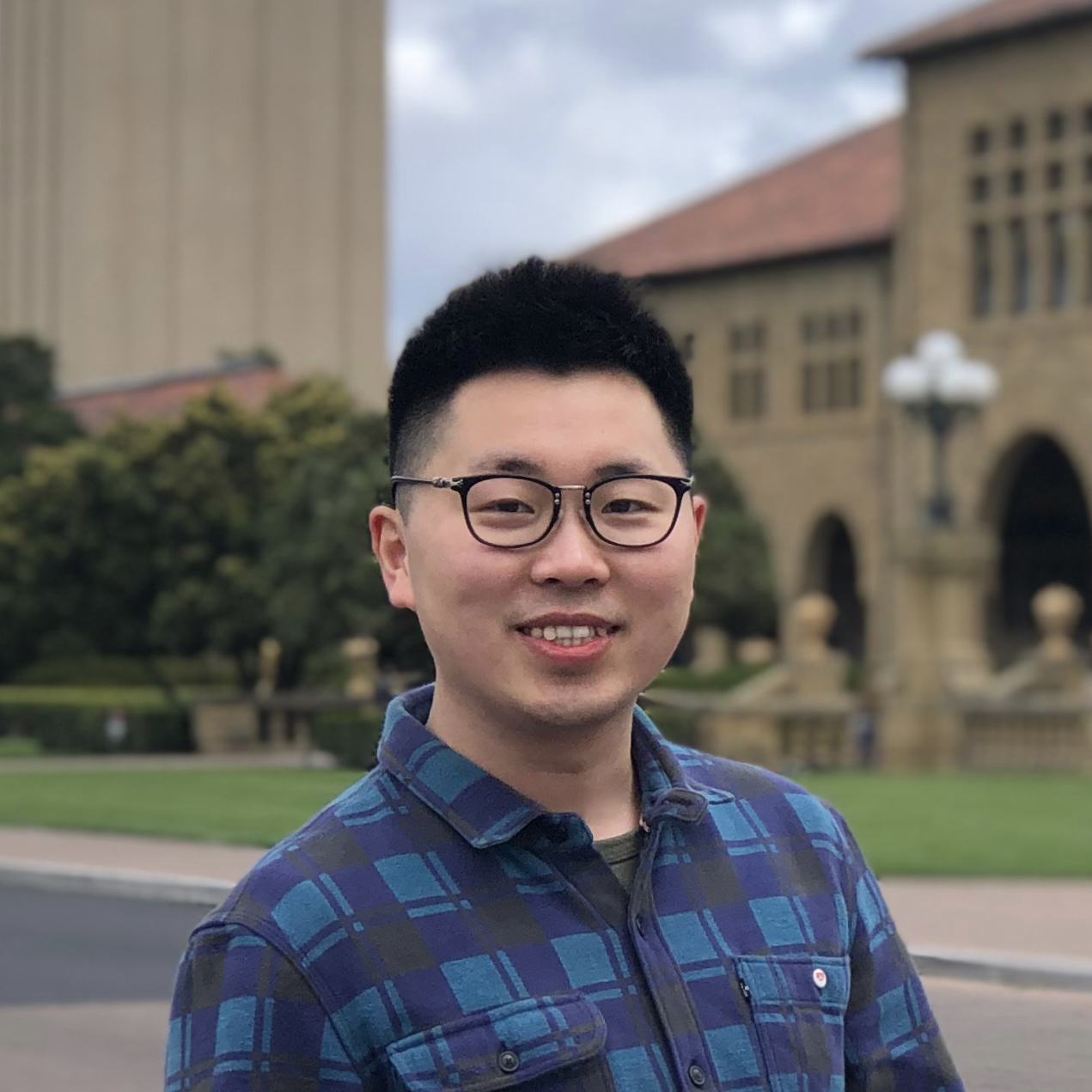
 Hongru Hu
· 9 previous affiliations
- TEMPUS AISince 2025
- ML lead, Lab-in-the-Loop · Since 2026
- Machine Learning Scientist, Oncology Foundation Model · Since 2025
- Deloitte (United States)2020–2025
- PhD student · 2020–2025
- Research Intern @ MSR · 2024
- Sanofi (France)2023
- Machine Learning Scientist co-op · 2023
- Florida State University2017–2020
- MS student · 2017–2020
- Case Western Reserve University2015–2017
- MS student · 2015–2017
- Northwest A&F University2011–2015
- Undergrad student · 2011–2015
- Certificate, Machine Learning
- Doctor of Philosophy - Ph.D., Applied Machine Learning
Research Overview
Hongru Hu focuses on the development of machine learning frameworks for multiscale and multimodal biomedical data. His work integrates computational science, statistical learning, genomics, and neuroscience to address challenges in multimodal alignment, compositional data synthesis, and large-scale graph co-representation. His current research emphasizes the design of generative frameworks, including Large Language Model (LLM) adapters and latent diffusion models, to improve the interpretability and accuracy of AI-driven scientific research (AI4Science).
Research Trajectory
Hu’s early research was grounded in traditional molecular biology and transcriptomics, specifically investigating the mechanisms of albinism in plant cultures. In Comprehensive analysis of differently expressed genes and proteins in albino and green plantlets from a wheat anther culture, he utilized RNA-Seq and mass spectrometry to identify differentially expressed genes and proteins involved in photosynthetic pathways. This early work established a foundation in high-throughput data analysis and the study of complex biological phenotypes through molecular profiling.
By 2020, Hu’s focus shifted toward neurogenetics and the application of genomic approaches to understand neuronal morphology and behavior. He investigated the role of cell adhesion molecules (CAMs), specifically the Dpr/DIP immunoglobulin superfamily, in Drosophila reproductive behavior. This work, detailed in Investigation of Drosophila fruitless neurons that express Dpr/DIP cell adhesion molecules, combined single-cell RNA-seq (scRNA-seq) with behavioral studies to map the overlapping expression patterns of neurons in both sexes. This period marked a transition toward single-cell analysis and the exploration of how molecular "glue" influences functional neuronal circuits.
In 2022 and 2023, Hu began developing specialized computational tools to solve specific bottlenecks in biomedical imaging and multimodal assays. He co-developed SIC50: Determining drug inhibitory concentrations using a vision transformer and an optimized Sobel operator, a label-free method for evaluating drug potency. By applying computer vision techniques—specifically Vision Transformers (ViT) and Sobel operators—to phase-contrast images, this work enabled the continuous, cost-effective monitoring of drug effects without the need for toxic chemical reagents. Simultaneously, he addressed the inherent noise in multimodal biological assays by developing Projecting RNA measurements onto single cell atlases to extract cell type-specific expression profiles using scProjection. This framework treats imprecise RNA measurements as projections onto known biological manifolds, allowing for the recovery of high-resolution expression profiles.
Hu’s most recent work (2024–2025) represents a move toward advanced generative modeling and the prediction of emergent phenotypes from large-scale populations. He has pioneered methods that treat biological samples as unstructured "point clouds," bypassing the need for manual cell-type labeling. His recent contributions also include the application of latent diffusion models to disentangle biological signal from technical noise (batch effects) in imaging studies, as well as the use of interpretable deep learning to map the regulatory wiring of glial cells in neurodegenerative diseases.
Current Directions
Hu’s current research is concentrated on three primary areas: generative frameworks for data synthesis, multimodal integration, and AI-driven discovery in neurodegeneration.
A major focus is the development of "implicit feature selection" methods for single-cell multimodal analysis. By leveraging large-scale unimodal atlases to boost smaller, noisier multimodal datasets, Hu aims to improve the mapping of cell states and the prediction of features across different biological modalities. This direction is exemplified by his work on deep learning frameworks that achieve state-of-the-art accuracy in cross-modality feature prediction.
In the domain of AI4Science, Hu is exploring the use of conditional latent diffusion models to standardize biological imaging data. This approach addresses the "batch effect" problem, where environmental or technical factors mask genetic mutations. By "re-rendering" images into a standardized latent space, these models allow for more accurate genotype classification and biological interpretation.
Finally, Hu is applying these interpretable machine learning workflows to Alzheimer’s Disease. By integrating single-cell gene expression with chromatin accessibility, he seeks to identify the specific gene regulatory programs and sub-populations—such as those involving Solute Carrier (SLC) proteins—that drive disease progression. This work aims to provide a high-resolution blueprint for therapeutic targeting by moving beyond simple correlation to understanding the underlying "regulatory wiring" of the brain.
Representative Work
The following papers represent Hu’s primary contributions to the fields of computational biology and applied machine learning, focusing on his roles as a first or lead author.
In Projecting RNA measurements onto single cell atlases to extract cell type-specific expression profiles using scProjection, Hu introduced a computational framework designed to "clean" imprecise RNA measurements from multi-modal assays. By mapping noisy signals onto high-resolution single-cell reference atlases, the method enables the recovery of cell-type-specific profiles and the imputation of missing data, addressing a significant challenge in the analysis of Patch-seq and similar technologies.
Hu’s work on drug potency screening, SIC50: Determining drug inhibitory concentrations using a vision transformer and an optimized Sobel operator, demonstrates the application of state-of-the-art computer vision to high-throughput screening. The SIC50 method eliminates the requirement for traditional reagents by using a Vision Transformer to classify phase-contrast images, facilitating faster and more cost-efficient evaluation of half-maximal inhibitory concentrations (IC50).
In scPair: Boosting single cell multimodal analysis by leveraging implicit feature selection and single cell atlases, Hu developed a deep learning framework that improves the integration of simultaneous gene expression and chromatin accessibility data. The framework utilizes implicit feature selection and leverages large unimodal atlases to enhance the analysis of smaller datasets, achieving high accuracy in mapping cell states across biological modalities.
Hu addressed the prediction of complex biological traits in Predicting emergent phenotypes from single cell populations using CELLECTION. This framework treats biological samples as "point clouds" of individual cells or genes, allowing for the prediction of phenotypes such as disease status or developmental age without requiring manual cell-type labels. This approach has been applied to diverse biological contexts, from Alzheimer’s disease to avian evolution.
In A conditional generative model to disentangle morphological variation from batch effects in model organism imaging studies, Hu utilized a conditional latent diffusion model (cLDM) to solve the problem of technical noise in biological imaging. By disentangling environmental "clutch" effects from physical changes caused by genetic mutations, the model significantly improved genotype classification accuracy, demonstrating the utility of generative models in standardizing experimental data.
Hu’s research into neurodegeneration is highlighted in Single-cell multiomics reveals disrupted glial gene regulatory programs in Alzheimer’s disease via interpretable machine learning. This study integrates single-cell gene expression and chromatin accessibility to map the regulatory mechanisms of glial cells. Using interpretable machine learning, the work identifies specific glial sub-populations and gene families that contribute to Alzheimer’s progression, providing a high-resolution map for potential therapeutic intervention.
Profile updated
Loading new papers…
Other researchers whose papers cluster into the same research directions — a proxy for overlapping technical interests and shared intellectual neighborhoods.
See something wrong? Report a mistake