

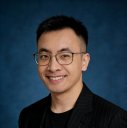
 Tian Ye
· 1 previous affiliation
- PhD student · Since 2024
- Researcher · 2023–2024
3 other authors named Tian Ye: Tian Ye (University of Southern California · 10 papers), Tian Ye (Carnegie Mellon University · 3 papers), Tian Ye (1 paper)
Research Overview
Tian Ye focuses on generative vision, foundation models, and scalable architectures for image synthesis and restoration. His trajectory spans from zero-shot diffusion techniques for low-light enhancement to the development of large-scale diffusion transformers for native high-resolution generation. Recent work investigates unified frameworks for aesthetic design and efficient video understanding.
Research Trajectory
In 2025, his research centered on leveraging generative priors for complex image and video tasks. Addressing image restoration in non-homogeneous scattering media, he developed PromptHaze, a method that utilizes depth information from monocular depth priors to iteratively refine prompts and apply controllable dehazing strength for real-world scene recovery. Continuing in the domain of zero-shot image restoration with pre-trained generative priors, he introduced AGLLDiff. This unsupervised diffusion framework tackles low-light image enhancement by guiding generation using fundamental exposure and structural attributes, bypassing the need for paired training data.
His work also extends to efficient video processing and generation. To address the memory bottleneck in linear sequence models, he proposed AuroraLong, which revitalizes linear recurrent neural networks for open-ended video understanding. By introducing a sorted token merging strategy, the approach drastically reduces memory costs and accelerates inference for long-context processing. In the area of real-time video generation with accelerated diffusion models, he developed MagicDistillation, a weak-to-strong distillation framework that compresses massive video diffusion models into efficient generators capable of high-quality, few-step synthesis.
Shifting toward high-resolution visual synthesis and editing, he explored mask-free localized image editing with EditMGT, investigating the potential of masked generative transformers for precise visual modifications. He further addressed scaling generative models for high-resolution visual synthesis with UltraFlux. This data-model co-design framework enables diffusion transformers to generate native 4K images across diverse aspect ratios by employing spectral regularization, resonance-based positional encoding, and wavelet-aware loss functions.
In 2026, his research expanded the application of diffusion priors to both perception and complex restoration tasks. With collaborators, he contributed to GlassWizard, harvesting priors from pre-trained diffusion models to improve glass surface detection and enhance object recognition accuracy. Advancing the broader area of All-in-One Image Restoration for Compound Degradations, he co-developed LucidFlux. This framework adapts a massive 12-billion-parameter diffusion transformer for caption-free universal image restoration, utilizing a dual-branch conditioning system and adaptive modulation to recover structural fidelity. Finally, exploring preference optimization for visual generative models, he participated in the development of PosterCraft, a unified framework that combines large-scale text-rendering optimization, region-aware fine-tuning, and reinforcement learning to generate high-quality aesthetic posters directly from text prompts.
Current Directions
Recent work investigates the integration of large-scale diffusion models into unified frameworks for both complex image restoration and aesthetic design. The most recent papers in the evidence address the adaptation of massive diffusion transformers for caption-free recovery of degraded images, as well as the use of reinforcement learning and preference optimization to generate professional-grade layouts and typography. Additionally, ongoing research explores harvesting diffusion priors to enhance physical surface detection, bridging the gap between generative synthesis and precise visual perception.
Profile updated
Loading new papers…
Other researchers whose papers cluster into the same research directions — a proxy for overlapping technical interests and shared intellectual neighborhoods.
See something wrong? Report a mistake