

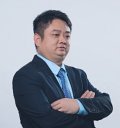
 Lei Zhu
· 4 previous affiliations
- Assistant Professor · Since 2021
- Current
- University of Cambridge2021–2022
- Postdoc · 2021–2022
- Chinese University of Hong Kong2013–2020
- Postdoc · 2018–2020
- PhD student · 2013–2017
- Hong Kong Polytechnic University2017–2018
- Post Doc · 2017–2018
9 other authors named Lei Zhu: Lei Zhu (Tongji University · 313 papers), Lei Zhu (Peking University · 61 papers), Lei Zhu (Huawei Hong Kong Research Center(HKRC) · Tencent (China) · 20 papers), Lei Zhu (7 papers), Lei Zhu (Nanchang University · National University of Singapore · 6 papers), and 4 more
Research Overview
Lei Zhu focuses on computer vision, image restoration, and medical artificial intelligence, developing methods to extract robust information from complex visual content. His trajectory spans early work in spatial context modeling and shadow detection to advanced generative architectures for high-resolution synthesis and medical image segmentation. Currently, he investigates autonomous image restoration and the detection of AI-generated media using large-scale foundation models.
Research Trajectory
The early phase of Lei Zhu's research focused on geometric processing and foundational computer vision tasks. This work began with geometric filtering techniques, introducing Coarse-to-Fine Normal Filtering for Feature-Preserving Mesh Denoising Based on Isotropic Subneighborhoods in 2013. He subsequently shifted toward deep learning applications for visual saliency and shadow detection. He collaborated on R³Net: Recurrent Residual Refinement Network for Saliency Detection, an architecture designed to identify salient objects while maintaining crisp boundaries and filtering background clutter. Building on spatial modeling techniques, he developed Direction-Aware Spatial Context Features for Shadow Detection, which leveraged spatial recurrent neural networks and learnable attention mechanisms to distinguish shadows from dark objects. This work contributed significantly to the broader area of Multi-Directional Spatial Recurrence for Global Context and the research direction of Directional Attention for Anisotropic Spatial Context.
Expanding on his shadow detection research, he introduced A Multi-Task Mean Teacher for Semi-Supervised Shadow Detection, advancing the area of Separating Shadows from Low Albedo Surfaces. By jointly learning shadow regions, boundaries, and counts within a student-teacher architecture, the model effectively utilized unlabeled images to improve performance. During this period, his research also extended into medical imaging. He participated in the development of Global guidance network for breast lesion segmentation in ultrasound images, which aggregated non-local features to achieve high-quality boundary detection, contributing to the field of Delineating Ambiguous Boundaries in Low-Contrast Images. Concurrently, he addressed complex video and image processing challenges, introducing VIL-100: A New Dataset and A Baseline Model for Video Instance Lane Detection to maintain lane consistency under severe occlusion, and collaborating on A Multi-Task Network for Joint Specular Highlight Detection and Removal to bridge the domain gap between synthetic training data and real-world images.
In recent years, his focus has shifted toward high-resolution synthesis, complex image restoration, and the adaptation of large language models. He oversaw the development of UltraPixel: Advancing Ultra High-Resolution Image Synthesis to New Peaks, an architecture that generates images up to 6K resolution by sharing parameters across scales and utilizing low-resolution guidance. In the domain of All-in-One Image Restoration for Compound Degradations, his lab introduced RestoreAgent: Autonomous Image Restoration Agent via Multimodal Large Language Models, an autonomous system designed to handle multiple overlapping image degradations. He also guided research in video enhancement with Triplane-smoothed video dehazing with clip-enhanced generalization. In medical AI, he led the creation of VQ-Seg: Vector-Quantized Token Perturbation for Semi-Supervised Medical Image Segmentation, a framework that discretizes features to prevent model collapse during training, accompanied by a large-scale lung cancer CT dataset. Additionally, he explored efficient model adaptation through Federated Residual Low-Rank Adaptation of Large Language Models (FRLoRA), addressing rank constraints and client drift in federated learning environments.
Most recently, his research group has tackled the challenges of AI-generated media and advanced diffusion models. He directed the development of SynerDetect: Hierarchical Synergistic Learning for Generalizable AI-Generated Image Detection, which balances perceptual semantics and fine-grained artifacts to identify synthetic images. This forensic approach was further expanded in Hermes: An Evidence-Driven Agentic Framework for Trustworthy and Explainable AI-Generated Video Detection, a multi-agent system that reasons over evidence to detect AI-generated videos without specialized training. In generative applications, he guided GlassWizard: Harvesting Diffusion Priors for Glass Surface Detection, leveraging pre-trained diffusion models for precise transparent surface recognition. He also advanced image restoration with LucidFlux: Caption-Free Universal Image Restoration via a Large-Scale Diffusion Transformer, adapting a 12-billion-parameter model for high-fidelity recovery without text prompts. Finally, he oversaw PosterCraft: Rethinking High-Quality Aesthetic Poster Generation in a Unified Framework, contributing to the area of Legible Text Generation in Diffusion Models by combining text-rendering optimization and reinforcement learning for professional-grade layouts.
Current Directions
The most recent papers in the evidence address the dual challenges of leveraging and regulating advanced generative models. A primary focus is the detection of AI-generated media, where recent work investigates multi-agent frameworks and hierarchical synergistic learning to identify synthetic images and videos with high interpretability and generalization. Concurrently, ongoing research explores the application of large-scale diffusion transformers and multimodal large language models to complex visual tasks. This includes developing caption-free universal image restoration systems, harvesting diffusion priors for specialized recognition tasks like glass surface detection, and optimizing unified frameworks for high-quality, text-integrated aesthetic generation.
Profile updated
Loading new papers…
Other researchers whose papers cluster into the same research directions — a proxy for overlapping technical interests and shared intellectual neighborhoods.
See something wrong? Report a mistake