

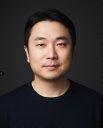
 Tao Tan
· 2 previous affiliations
- The Netherlands Cancer InstituteSince 2018
- Researcher · Since 2018
- Faulty of Applied SciencesSince 2022
- Associate Professor · Since 2022
1 other author named Tao Tan: Tao Tan (6 papers)
Research Overview
Tao Tan focuses on medical image analysis, the clinical validation of generative models, and the adaptation of large language models for healthcare applications. His trajectory spans early work in magnetic resonance image denoising to recent developments in prompt-driven foundation models and multi-modal diagnostic systems. Currently, he investigates universal medical AI architectures and remote physiological sensing.
Research Trajectory
Tan’s early work addressed fundamental challenges in medical imaging signal restoration. In 2017, he introduced a multi-channel residual learning convolutional neural network for the Denoising of 3D magnetic resonance images with multi-channel residual learning of convolutional neural network. This work tackled Rician noise in high-resolution 3D anatomical views, laying the groundwork for more robust downstream automated segmentation. He subsequently expanded his scope into video-based clinical analysis, developing methods for Video-based discomfort detection for infants in 2019.
By 2023, his focus shifted toward the integration of generative AI and large language models (LLMs) into healthcare. He led the development of IvyGPT: InteractiVe Chinese Pathway Language Model in Medical Domain, an LLM fine-tuned with high-quality medical question-answer instances and Reinforcement Learning from Human Feedback (RLHF). This work addressed the critical need for clinical accuracy and reliable medical advice in general-purpose LLMs. Continuing to explore generative architectures in 2024, Tan focused on explainability and data synthesis. He developed a Distance guided generative adversarial network for explainable medical image classifications and introduced IMPORTANT-Net: Integrated MRI multi-parametric increment fusion generator with attention network for synthesizing absent data, which utilized attention mechanisms to synthesize missing MRI data.
The year 2025 marked a significant expansion into prompt-driven foundation models and universal medical AI architectures. He authored Prompt Mechanisms in Medical Imaging: A Comprehensive Survey, which detailed the transition from rigid, task-specific models to flexible foundation models adapted via textual and visual cues. This survey contributed to the broader area of Visual Interpretability for Medical Image Analysis. Applying these concepts, he introduced DpDNet: An Dual-Prompt-Driven Network for Universal PET-CT Segmentation, utilizing a dual-prompt strategy to capture both cancer-specific and common features for personalized risk stratification. Concurrently, Tan contributed to the evaluation of "all-in-one" models in Diagnostic Performance of Universal-Learning Ultrasound AI Across Multiple Organs and Tasks: the UUSIC25 Challenge. This work demonstrated that a single Transformer-based model could match specialized systems across multiple anatomical regions, advancing the area of Overcoming Cross-Institutional Domain Shift in Medical AI.
To address the persistent challenge of LLM hallucinations in clinical settings, he developed a hybrid framework in Dual retrieving and ranking medical large language model with retrieval augmented generation. By combining keyword search, semantic vector search, and a ColBERTv2 re-ranking step, the system significantly improved the reliability of clinical decision support.
Tan’s 2025 portfolio also includes extensive work in multi-modal and semi-supervised learning. He developed predictive models for oncology, including 3MT-Net: A Multi-Modal Multi-Task Model for Breast Cancer and Pathological Subtype Classification Based on a Multicenter Study and Multi-Modal Longitudinal Representation Learning for Predicting Neoadjuvant Therapy Response in Breast Cancer Treatment. In the domain of semi-supervised learning, he explored Dynamic mask stitching-guided region consistency for semi-supervised 3D medical image segmentation and Data augmentation strategies for semi-supervised medical image segmentation. Additionally, he proposed BLENet: A Bio-Inspired Lightweight and Efficient Network for Left Ventricle Segmentation in Echocardiography, focusing on efficient architectures for cardiac imaging.
Moving into 2026, Tan's research continues to fuse expert knowledge with foundation models, as seen in Synergistic perception: Fusing expert knowledge and foundation models for semi-supervised mammogram segmentation. He also collaborated on PhysLLM: Harnessing Large Language Models for Cross-Modal Remote Physiological Sensing. This framework aligns continuous physiological signals with discrete linguistic tokens to extract heart rate data from video, demonstrating robustness against motion and lighting interference and advancing the research direction of Mitigating Motion and Lighting Artifacts in Remote Photoplethysmography.
Broadening into embodied AI, Tan also contributed to ATI-VLA: Action-Centric Predictive Vision–Language–Action Models via Actionable Alignment Then Adaptive Injection. The framework aligns predictive observation and action representations into a shared codebook before adaptively injecting predictive latents via a side-path to improve robotic manipulation performance.
Current Directions
The most recent papers in the evidence indicate a strong focus on integrating large language models and foundation models with complex, multi-modal physiological data. Recent work investigates cross-modal alignment techniques that allow LLMs to process continuous time-series data, such as remote heart rate sensing from facial video. Additionally, Tan continues to explore semi-supervised learning paradigms that fuse expert clinical knowledge with foundation models to improve diagnostic segmentation in specialized domains like mammography. A persistent theme across these current efforts is the drive to create universal, robust AI systems that maintain high accuracy across diverse clinical environments and modalities while minimizing the need for exhaustive, fully supervised retraining.
Profile updated
Loading new papers…
Other researchers whose papers cluster into the same research directions — a proxy for overlapping technical interests and shared intellectual neighborhoods.
See something wrong? Report a mistake