

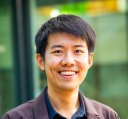
 Sitan Chen
· 3 previous affiliations
- Harvard UniversitySince 2023
- Assistant Professor · Since 2023
- Current
- MS student · 2015–2016
- Undergrad student · 2012–2016
- Postdoc · 2021–2023
- PhD student · 2016–2021
Research Overview
Sitan Chen focuses on the theoretical foundations of machine learning, quantum information, and generative modeling. His early work established fundamental bounds in quantum state learning and holographic algorithms. His current research investigates the algorithmic properties of localization-based generative models, including diffusion and masked language models, alongside the design of efficient quantum protocols for characterizing physical systems.
Research Trajectory
Chen’s early research addressed foundational problems in theoretical computer science, beginning with an analysis of domain and basis sizes in Basis collapse for holographic algorithms over all domain sizes. He subsequently developed a major focus on quantum learning theory, investigating the fundamental data requirements for understanding quantum systems. In Exponential Separations Between Learning With and Without Quantum Memory, he established tight bounds demonstrating that algorithms lacking quantum memory require vastly more data for tasks like state tomography and distinguishing quantum dynamics. Continuing this focus on measurement constraints, he analyzed mixedness testing and state certification using incoherent measurements in Tight Bounds for Quantum State Certification with Incoherent Measurements, identifying the limitations of protocols that measure only one copy of a state at a time.
Building on these quantum measurement constraints, Chen investigated the role of adaptive strategies in state tomography. He explored the sample complexity of these protocols in When Does Adaptivity Help for Quantum State Learning?. This work culminated in Adaptivity can help exponentially for shadow tomography, which proved that adaptive two-copy measurements are exponentially more efficient than non-adaptive approaches for Pauli shadow tomography. This result significantly advanced the research direction of Adaptive Measurement Strategies for Quantum State Tomography, as well as broader work in the areas of Efficient Quantum State Learning via Structured Multi-Copy Measurements and Overcoming the Exponential Complexity of Quantum State Tomography. Concurrently, Chen addressed classical machine learning theory, contributing to the area of Complexity Bottlenecks in Learning Shallow Neural Networks. In Learning Narrow One-Hidden-Layer ReLU Networks, he introduced a polynomial-time algorithm for learning a linear combination of a constant number of ReLU activations under Gaussian distributions, utilizing random contractions of higher-order moment tensors to bypass the conditioning assumptions required by prior methods.
A major parallel track in Chen’s trajectory focuses on the theoretical guarantees and sampling efficiency of generative models. In Sampling is as easy as learning the score: theory for diffusion models with minimal data assumptions, he provided convergence guarantees for score-based generative models, demonstrating that they can efficiently sample from realistic data distributions without relying on restrictive functional inequality conditions. He later expanded on diffusion sampling efficiency in Faster Diffusion Sampling with Randomized Midpoints: Sequential and Parallel, contributing to the area of Randomized Midpoint Methods for Faster Diffusion and Sampling by introducing a scheme that scales more favorably with dimensionality and provides provable guarantees for parallel sampling. To further accelerate sampling in low-step regimes, he developed a data-free method to optimize solver coefficients in S4S: Solving for a Diffusion Model Solver.
Chen’s recent generative modeling research has increasingly examined masked diffusion models (MDMs) and the dynamics of feature generation. In Train for the Worst, Plan for the Best: Understanding Token Ordering in Masked Diffusions, his group analyzed the trade-offs between the computationally intractable subproblems MDMs face during training and their flexibility during inference. He also formalized how generative models commit to key features during narrow critical windows in Blink of an eye: a simple theory for feature localization in generative models. To improve MDM training and inference, his lab introduced Progressive UnMAsking (PUMA) to align training and inference masking patterns in Stop Training for the Worst: Progressive Unmasking Accelerates Masked Diffusion Training. Furthermore, they developed PRISM, a fine-tuning method that enables MDMs to self-correct low-quality tokens during inference, detailed in Fine-Tuning Masked Diffusion for Provable Self-Correction.
Returning to quantum systems, Chen’s 2025 work explores the fundamental limits of learning from physical data. In Information-Computation Gaps in Quantum Learning via Low-Degree Likelihood, he extended the classical low-degree method to quantum tasks, identifying scenarios where sufficient information exists but cannot be efficiently extracted, contributing to the research direction of The Information-Computation Gap in Quantum Learning. Additionally, he addressed the practical constraints of experimental physics in Quantum Probe Tomography, formulating algorithms for Hamiltonian learning when access is restricted to a single local probe rather than global measurements.
Current Directions
Recent work investigates the algorithmic properties and training dynamics of discrete generative models, particularly masked diffusion models. This includes developing methods to align masking patterns between training and inference to accelerate convergence, as well as designing fine-tuning objectives that allow MDMs to provably self-correct during generation. His group is also formalizing the phenomenon of feature localization, explaining how generative models commit to specific outputs during narrow critical windows of the sampling process.
In parallel, Chen continues to advance quantum learning theory by mapping the boundaries of computational tractability. The most recent papers in the evidence address information-computation gaps in quantum tasks, utilizing low-degree likelihood methods to prove that certain quantum states cannot be efficiently learned even when sufficient information is present. He is also developing practical Hamiltonian learning frameworks, such as quantum probe tomography, to characterize complex many-body systems when experimental access is limited to a single local probe.
Profile updated
Loading new papers…
Other researchers whose papers cluster into the same research directions — a proxy for overlapping technical interests and shared intellectual neighborhoods.
See something wrong? Report a mistake