

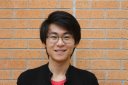
 Jerry Li
· 4 previous affiliations
- University of WashingtonSince 2024
- Associate Professor · Since 2024
- Microsoft (United States)2018–2024
- Senior Researcher · 2018–2024
- PhD student · 2013–2018
- Postdoc · 2018
4 other authors named Jerry Li: Jerry Li (8 papers), Jerry Li (Spellbrush · 2 papers), Jerry Li (Samsung Research America (SRA) · University of Southern California · 1 paper), Jerry Li (1 paper)
Research Overview
Jerry Li focuses on learning theory, robust high-dimensional statistics, and quantum information theory. His early work established foundational algorithms for robust estimation in high dimensions, demonstrating that machine learning models can efficiently tolerate structured outliers. More recently, his research addresses the theoretical limits and algorithmic capabilities of near-term quantum devices, particularly in quantum state tomography and learning from quantum experiments.
Research Trajectory
Jerry Li’s early research included contributions to concurrent data structures and systems. In 2015, he helped develop The SprayList: a scalable relaxed priority queue, a design that avoids the sequential bottlenecks typically found in DeleteMin operations by distributing them across the head of a SkipList, enabling high-performance concurrent task scheduling.
Shortly after, his focus shifted toward theoretical computer science and machine learning, particularly the challenge of high-dimensional distribution learning in the presence of adversarial noise. In 2016, he addressed a long-standing open problem with Robust Estimators in High Dimensions without the Computational Intractability. This work provided computationally efficient algorithms for agnostically learning fundamental distribution classes despite arbitrary corruptions to a fraction of the samples. He expanded on this theoretical foundation to demonstrate its practical viability in Being Robust (in High Dimensions) Can Be Practical, advancing the research direction of Spectral Filtering for Robust High Dimensional Estimation.
Concurrently, he investigated distributed optimization, developing QSGD: Communication-Efficient SGD via Gradient Quantization and Encoding in 2017 to address bandwidth bottlenecks in parallel stochastic gradient descent while maintaining convergence guarantees. Returning to robustness, he introduced Sever: A Robust Meta-Algorithm for Stochastic Optimization in 2019, a meta-algorithm designed to protect high-dimensional machine learning methods from structured outliers. He continued exploring adversarial settings in Efficiently learning structured distributions from untrusted batches (2020), analyzing the total variation distance error when a fraction of users send adversarially chosen responses, expanding his work in the area of List Decodable Estimation in Majority Outlier Regimes.
A major shift in his trajectory involves quantum learning theory. He demonstrated fundamental limits and advantages of quantum systems, starting with Exponential Separations Between Learning With and Without Quantum Memory in 2021, which proved that algorithms lacking quantum memory require vastly more data for tasks like state tomography. He formalized the computational power of near-term devices in The Complexity of NISQ (2022), contributing to the broader area of Overcoming the Exponential Complexity of Quantum State Tomography. He also investigated the sample complexity of mixedness testing in Toward Instance-Optimal State Certification With Incoherent Measurements (2022), advancing the direction of Adaptive Measurement Strategies for Quantum State Tomography.
In the domain of generative models, he developed algorithms for Learning Polynomial Transformations via Generalized Tensor Decompositions in 2023, focusing on learning pushforwards of Gaussians under polynomial transformations, aligning with his broader interest in the area of Statistical Estimation via Effective Rank and Tensor Structure.
His recent work spans classical algorithms and quantum state learning. In classical settings, he established fundamental limits in Query Lower Bounds for Log-concave Sampling (2024), proving tight bounds for sampling from strongly log-concave distributions. He also analyzed dimensionality reduction through Black-Box k-to-1-PCA Reductions: Theory and Applications (2024). In quantum learning, he explored the constraints of contemporary devices in An Optimal Tradeoff between Entanglement and Copy Complexity for State Tomography (2024), contributing to the field of Efficient Quantum State Learning via Structured Multi-Copy Measurements. Most recently, he has focused on predicting and approximating quantum systems, as seen in Predicting quantum channels over general product distributions (2025) and Learning the Closest Product State (2025), which introduces efficient algorithms for finding product state approximations to complex quantum states.
Current Directions
Recent work investigates the theoretical boundaries of both classical sampling and quantum state approximation. In the classical domain, his research addresses fundamental query complexities for high-dimensional sampling and black-box reductions for principal component analysis. In the quantum domain, his most recent papers focus on efficiently learning and predicting the behavior of complex quantum systems using simpler building blocks, such as product states and general product distributions. This includes developing optimal tradeoffs between entanglement and copy complexity, aiming to bridge the gap between near-term quantum device constraints and fault-tolerant quantum computing capabilities.
Profile updated
Loading new papers…
Other researchers whose papers cluster into the same research directions — a proxy for overlapping technical interests and shared intellectual neighborhoods.
See something wrong? Report a mistake