

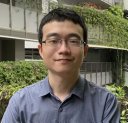
 Siqiang Luo
· 1 previous affiliation
- Nanyang Technological UniversitySince 2021
- Assistant Professor · Since 2021
Research Overview
Siqiang Luo focuses on scalable graph neural networks, distributed graph processing algorithms, and optimized data storage systems. His trajectory spans from foundational distributed algorithms for network analysis to advanced architectures for heterophilic graph learning. Most recently, his research investigates the integration of graph topologies with large language models and dynamic resource management for key-value stores.
Research Trajectory
Luo’s early research addressed the challenges of querying and analyzing large-scale spatial and relational data. In 2012, he contributed to DISKs: A System for Distributed Spatial Group Keyword Search on Road Networks, which explored distributed architectures for complex spatial queries. He later expanded on distributed graph processing by investigating theoretical communication bottlenecks, introducing optimized approaches in Improved Communication Cost in Distributed PageRank Computation - A Theoretical Study (2020).
By 2022, his focus expanded into graph representation learning, specifically addressing the limitations of standard Graph Neural Networks (GNNs) when applied to heterophilous graphs—networks where connected nodes tend to have different labels. He participated in the development of GloGNN in Finding Global Homophily in Graph Neural Networks When Meeting Heterophily, an architecture that aggregates information globally rather than relying strictly on local neighborhoods. This work situated him within the broader area of Overcoming the Homophily Assumption in Graph Neural Networks. He continued this line of inquiry in 2023 with LD2: Scalable Heterophilous Graph Neural Network with Decoupled Embeddings. By precomputing low-dimensional embeddings, this framework achieved significant speedups and memory reductions on million-scale graphs, advancing the research direction of Decoupling Feature Propagation from Graph Neural Network Training.
In 2024, Luo advanced both his distributed algorithms and graph learning tracks. Returning to fundamental network measures, he developed Massively Parallel Single-Source SimRanks in O(log N) Rounds, contributing to the area of Round-Efficient Algorithms for Massively Parallel Graph Processing. Concurrently, he addressed the challenge of noisy supervision in heterophilous networks with Resurrecting Label Propagation for Graphs with Heterophily and Label Noise. This iterative algorithm reconstructs graph topology to favor homophily, aligning with the research directions of Mitigating Noise Propagation in Graph Neural Networks and Structural Rewiring for Heterophilic Graph Learning.
The year 2025 marked a significant diversification in Luo’s research portfolio, bridging graph structures with generative AI, security, and database systems. He continued his work on heterophily with SIGMA: An Efficient Heterophilous Graph Neural Network with Fast Global Aggregation, which utilized the SimRank metric for efficient global aggregation. He also explored structural motif discovery in Finding Near-Optimal Maximum Set of Disjoint $k$-Cliques in Real-World Social Networks. Moving into applied domains, he adapted GNNs for multimedia security in When Deepfake Detection Meets Graph Neural Network:a Unified and Lightweight Learning Framework, modeling videos as spatiotemporal graphs to detect anomalies with a highly parameter-efficient architecture.
Simultaneously, Luo began investigating the intersection of structured data and Large Language Models (LLMs). He led a comprehensive survey on Graph-based Approaches and Functionalities in Retrieval-Augmented Generation: A Comprehensive Survey, detailing how knowledge graphs can mitigate hallucination and enable multi-hop reasoning in LLMs. He applied these concepts practically in SEQ-GPT: LLM-assisted Spatial Query via Example, an LLM-powered framework that translates natural language into complex geospatial database queries.
Parallel to his machine learning research, Luo established a robust track in data storage systems, specifically optimizing Log-Structured Merge Trees (LSM-trees). In 2025, he evaluated disk-based operations in Are Joins over LSM-trees Ready: Take RocksDB as an Example and proposed dynamic workload management techniques in [Technical Report] ArceKV: Towards Workload-driven LSM-compactions for Key-Value Store Under Dynamic Workloads. This systems research continued into 2026 with Evaluating Learned Indexes in LSM-tree Systems: Benchmarks, Insights and Design Choices and AdCache: Adaptive Cache Management with Admission Control for LSM-tree Key-Value Stores, the latter contributing to the broader area of Dynamic Resource Partitioning for Shared Memory Hierarchies. Also in 2026, he pushed the boundaries of graph foundation models with Modality-free Graph In-context Alignment, introducing a framework that uses gradient fingerprints to align disparate graph datasets, enabling true in-context learning without domain-specific fine-tuning.
Current Directions
The most recent papers in the evidence point to three primary research vectors. First, Luo is actively investigating the optimization of LSM-tree-based key-value stores, focusing on dynamic workload adaptation, cache management, and the integration of learned indexes to improve read/write efficiency. Second, his work explores the intersection of large language models and structured graph data, particularly how graph topologies can enhance Retrieval-Augmented Generation (RAG) and facilitate complex spatial querying. Finally, he is advancing graph foundation models, developing modality-free in-context learning techniques that allow graph networks to adapt to new domains using only a few examples, bypassing the need for raw text data or domain-specific encoders.
Profile updated
Loading new papers…
Other researchers whose papers cluster into the same research directions — a proxy for overlapping technical interests and shared intellectual neighborhoods.
See something wrong? Report a mistake