

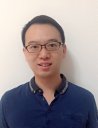
 Sibo Wang
· 7 previous affiliations
- Chinese University of Hong KongSince 2018
- Associate Professor · Since 2024
- Assistant Professor · 2018–2024
- The University of Queensland2017–2018
- Research Fellow · 2017–2018
- Nanyang Technological University2016–2017
- Research Fellow · 2016–2017
- Research Assistant · 2016
- NTU2011–2016
- Doctor of Philosophy (PhD), Computer Science · 2011–2016
- ShanDa Interactive Entertainment Ltd.2011
- Developer · 2011
- Fudan University2007–2011
- Bachelor of Science (BS), Computer Software Engineering · 2007–2011
3 other authors named Sibo Wang: Sibo Wang (2 papers), Sibo Wang (2 papers), Sibo Wang (AutoX · 1 paper)
Research Overview
Sibo Wang focuses on database systems, data mining, and machine learning, with an emphasis on large-scale graph data analysis and efficient dynamic data processing. His early work established foundational indexing and approximation algorithms for network search and similarity measures. More recently, his research investigates graph neural networks for anomaly detection, streaming algorithms, and advanced sampling techniques for complex database queries.
Research Trajectory
Wang’s early research concentrated on algorithmic efficiency for large-scale network analysis, particularly through novel indexing schemes. He introduced a timetable labelling approach for Efficient Route Planning on Public Transportation Networks: A Labelling Approach (2015), optimizing route retrieval on timetable graphs. This focus on scalable graph search naturally extended into the research direction of Incremental Maintenance of Graph Based Search Indices. A central contribution in this area was HubPPR: Effective Indexing for Approximate Personalized PageRank (2016), which utilized hub nodes to drastically accelerate Personalized PageRank (PPR) queries while managing memory trade-offs.
Continuing to refine graph analysis techniques, he collaborated on Revisiting the Stop-and-Stare Algorithms for Influence Maximization (2017) and further advanced PPR approximation with FORA: Simple and Effective Approximate Single-Source Personalized PageRank (2017). To address specific applications like link spam detection and friend recommendations, he developed the BLOG framework in Efficient Algorithms for Finding Approximate Heavy Hitters in Personalized PageRanks (2018), which efficiently identifies nodes that contribute heavily to overall PageRank scores. He also participated in the development of PRSim: Sublinear Time SimRank Computation on Large Power-Law Graphs (2019), addressing the computational bottlenecks of single-source SimRank queries in interactive analysis.
As real-world networks became increasingly dynamic, Wang’s focus expanded to temporal and evolving graph structures. He addressed the challenges of maintaining structural properties over time with Effective Indexing for Dynamic Structural Graph Clustering (2022). By employing approximate similarity measures and a bucketing strategy, this work significantly accelerated clustering on changing graphs, advancing the broader area of Incremental Maintenance of Structural Properties in Dynamic Graphs.
In recent years, Wang has led extensive research into graph neural networks (GNNs) and anomaly detection, particularly under constrained supervision. His group developed SpaceGNN: Multi-Space Graph Neural Network for Node Anomaly Detection with Extremely Limited Labels (2025), which projects graph data into Euclidean, Hyperbolic, and Spherical spaces to identify anomalies without relying on extensive labeled data. To further combat high labeling costs and dataset imbalance, he guided the creation of FracAug: Fractional Augmentation boost Graph-level Anomaly Detection under Limited Supervision (2025), a framework that generates semantically consistent graph variants. He also oversaw work on Chi-Square Wavelet Graph Neural Networks for Heterogeneous Graph Anomaly Detection (2025), extending anomaly detection capabilities to complex, heterogeneous networks. These efforts intersect with the broader area of Spectral Graph Signal Processing and Neural Filtering. Addressing fundamental challenges in GNN architectures, his team investigated the research direction of Mitigating Over-smoothing in Graph Anomaly Detection through SmoothGNN: Smoothing-aware GNN for Unsupervised Node Anomaly Detection (2025). This work demonstrated that the representations of anomalous nodes resist smoothing differently than normal nodes, leveraging these patterns to improve unsupervised detection.
Alongside his work in deep graph learning, Wang continues to innovate in dynamic algorithms and database systems. He expanded his prior clustering research with Dynamic Structural Clustering Unleashed: Flexible Similarities, Versatile Updates and for All Parameters (2025). In the domain of high-dimensional data, his group proposed Efficient Dynamic Indexing for Range Filtered Approximate Nearest Neighbor Search (2025) to manage the trade-offs between storage, query performance, and update support when applying attribute filters to vector searches. His recent contributions also include streaming algorithms, such as the space-optimal framework detailed in Optimal Approximate Matrix Multiplication over Sliding Window (2025). Most recently, he has addressed foundational database theory with Acyclic Join Sampling Under Selections: Dichotomy, Union Sampling, and Enumeration (2026), establishing optimal algorithms for sampling from database joins under complex selection conditions.
Current Directions
Recent work investigates the intersection of graph neural networks and anomaly detection, with a specific focus on overcoming data scarcity and architectural limitations like over-smoothing. The most recent papers in the evidence address unsupervised and semi-supervised learning on complex topologies, including heterogeneous graphs and mixed-curvature spaces. Concurrently, Wang maintains an active research agenda in dynamic data structures and database theory, developing optimal streaming algorithms for matrix operations and advancing the theoretical limits of query sampling and range-filtered vector search.
Profile updated
Loading new papers…
Other researchers whose papers cluster into the same research directions — a proxy for overlapping technical interests and shared intellectual neighborhoods.
See something wrong? Report a mistake