

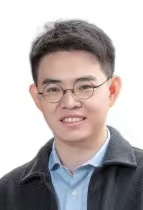
 Renchi Yang
· 4 previous affiliations
- Hong Kong Baptist UniversitySince 2023
- Assistant Professor · Since 2023
- National University of Singapore2021–2022
- Postdoc · 2021–2022
- Researcher · 2021
- Nanyang Technological University2016–2021
- PhD student · 2016–2021
Research Overview
Renchi Yang focuses on large-scale data management, graph mining, and data-centric machine learning. His trajectory spans from developing highly efficient algorithms for massive graph processing to advancing representation learning and clustering on complex, heterogeneous network structures. Currently, his work addresses multimodal attributed graphs and self-supervised graph clustering techniques to improve scalability and topological robustness in real-world data analytics.
Research Trajectory
Yang's early research addressed the computational bottlenecks of analyzing massive, irregular graphs, focusing on extreme algorithmic efficiency and hardware optimization. A key contribution during this period is Realtime Top-k Personalized PageRank over Large Graphs on GPUs, where Yang and his collaborators developed an algorithm capable of executing personalized PageRank queries on billion-edge graphs in under 100 milliseconds. By combining an adaptive forward push technique with a space-efficient inverted random walk index, this work outperformed existing CPU and GPU solutions by orders of magnitude. This foundational interest in hardware-accelerated graph analytics aligns with the broader area of Balancing Power Law Workloads in Parallel Graph Processing, optimizing computational resources for the power-law distributions inherent in real-world networks.
As graph representation learning gained prominence, Yang's focus expanded between 2022 and 2023 to address the structural complexities of heterogeneous data. In Scalable and Effective Bipartite Network Embedding, he led the development of methods designed to preserve both direct connections and the multi-hop relationships formed alternately by two distinct types of nodes. This work contributed significantly to the research direction of Modeling Latent Structures in Bipartite Networks, providing scalable solutions for massive graphs with millions of nodes. Concurrently, Yang maintained his emphasis on algorithmic efficiency for fundamental graph metrics, as demonstrated in Efficient Estimation of Pairwise Effective Resistance. This research introduced improved Monte Carlo approaches to estimate node dissimilarity—a critical metric for recommender systems and combinatorial optimization—without sacrificing practical efficiency or approximation guarantees.
More recently, from 2024 to 2025, Yang's trajectory has concentrated heavily on the intersection of graph clustering and rich node attributes. In Effective Clustering on Large Attributed Bipartite Graphs, he addressed the limitations of prior methods that either ignored attribute information or failed to capture bipartite topologies accurately, proposing a unified approach to partition heterogeneous node sets. This focus on clustering efficiency culminated in Spectral Subspace Clustering for Attributed Graphs, which mathematically transformed complex subspace clustering objectives into singular value decomposition problems, yielding massive computational speedups over previous benchmarks. Expanding into increasingly complex data modalities, Yang also led Cross-Contrastive Clustering for Multimodal Attributed Graphs with Dual Graph Filtering. This research tackles the unique challenges of multimodal attributes—such as text and images processed by large pre-trained models—by filtering intense feature-wise noise and managing low modality-wise correlation through dual graph filtering techniques.
Current Directions
The most recent papers in the evidence indicate a strong ongoing focus on self-supervised learning and robust clustering methodologies for complex networks. A primary current direction involves integrating graph clustering with semi-supervised node classification to extract richer structural signals from unlabeled data. This aligns with broader efforts in the research area of Graph Structure Learning for Robust Topological Denoising, where the goal is to mitigate the impact of missing or noisy links in real-world datasets by treating the input adjacency matrix as malleable rather than absolute ground truth.
Additionally, Yang's current work investigates adaptive, localized approaches to graph analytics, allowing for personalized cluster identification without requiring access to the entire global graph structure. The recent evidence also points to an interest in advancing unsupervised methodologies, including themes such as the Autonomous Discovery of the Optimal Number of Clusters and the challenge of Adapting Graph Neural Networks for Evolving Network Topologies. Together, these directions reflect a broader ambition to make graph machine learning more autonomous, scalable, and resilient to dynamic, noisy environments.
Profile updated
Loading new papers…
Other researchers whose papers cluster into the same research directions — a proxy for overlapping technical interests and shared intellectual neighborhoods.
See something wrong? Report a mistake