

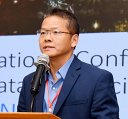
 Xingquan Zhu
· 1 previous affiliation
- Florida Atlantic UniversitySince 2018
- Full Professor · Since 2018
Research Overview
Xingquan Zhu focuses on data mining, machine learning, and network representation learning, with an emphasis on big data analytics and complex graph structures. His trajectory spans foundational work in active learning and sequential pattern mining to advanced graph neural network architectures. Currently, he investigates robust graph learning, time series analysis, and fairness in continual learning.
Research Trajectory
Zhu’s early research addressed fundamental challenges in data quality and model training efficiency. He explored methods for improving dataset reliability in Eliminating Class Noise in Large Datasets (2003). Building on this focus on data efficiency, he later advanced the research direction of Sample Selection Guided by Model Uncertainty with the publication of Active Learning With Optimal Instance Subset Selection (2013). As datasets grew in scale and complexity, he provided a comprehensive overview of the field's evolving challenges in Data Mining with Big Data (2014).
Moving into the 2020s, Zhu's focus expanded significantly into dynamic networks and sequential pattern mining. To capture how nodes change their behavior over time, he and his collaborators introduced GAEN: Graph Attention Evolving Networks (2021). By combining non-negative tensor factorization with a GRU-based mechanism, this framework advanced the broader area of Dynamic Network Embedding, alongside contributing to temporal tensor factorization for multiway data analysis. Concurrently, he addressed the complexities of sequential data in HANP-Miner: High average utility nonoverlapping sequential pattern mining (2021).
This line of inquiry into pattern mining matured into specialized techniques for time series analysis. Zhu contributed to the area of Ordinal Pattern Mining for Scale Invariant Time Series Analysis through OPP-Miner: Order-Preserving Sequential Pattern Mining for Time Series (2023). He further refined these techniques for classification tasks in COPP-Miner: Top-k Contrast Order-Preserving Pattern Mining for Time Series Classification (2024). Both works also drove progress in the research direction of Search Space Pruning for Efficient Pattern Mining. In parallel with his time series research, Zhu explored complex node classifications in GLDL: Graph Label Distribution Learning (2024). This framework explicitly modeled the interplay between node topology and label-to-label correlations, moving beyond binary classifications to provide probabilistic descriptions of network nodes and advancing the area of Modeling Label Dependencies in Multi-Label Learning.
In 2025, Zhu's research output reflects a broad engagement with robust machine learning, graph neural networks (GNNs), and complex environmental data. He continued his long-standing work in pattern mining by overseeing the development of the HUP-Miner algorithm in Mining High Average Utility Nonoverlapping Patterns from Sequential Database (2025), which uses a position dictionary to efficiently discover low-frequency, high-utility subsequences without repeatedly scanning the original database. He also tackled dynamic and unstructured data environments in Online Outlier Detection in Open Feature Spaces (2025).
Applying deep learning to critical environmental challenges, Zhu introduced OASIS: Harnessing Diffusion Adversarial Network for Ocean Salinity Imputation using Sparse Drifter Trajectories (2025). This framework integrates transformers for long-range dependencies with a diffusion model conditioned on tidal data, contributing to robust time series forecasting and reversible normalization for non-stationary environments.
Simultaneously, Zhu has deeply investigated the structural limitations and vulnerabilities of GNNs. He co-authored A Systematic Study and Analysis of Graph Neural Networks under Noise (2025) and provided a comprehensive taxonomy of feature homogenization issues in Oversmoothing alleviation in graph neural networks: a survey and unified view (2025). The latter work synthesizes solutions for counteracting feature homogenization and preserving node identity in deep graph neural networks. Expanding the intersection of graphs and modern foundational models, he also explored Automated graph anomaly detection with large language models (2025). Finally, addressing the ethical dimensions of sequential learning, Zhu contributed to fairness mitigation with scarce labeled data and task ordering sensitivity in Metric-Agnostic Continual Learning for Sustainable Group Fairness (2025).
Current Directions
The most recent papers in the evidence indicate that Zhu is currently focused on the robustness, scalability, and fairness of deep learning models, particularly in graph-structured and temporal domains. A major theme is the structural integrity of Graph Neural Networks; his recent work systematically addresses core vulnerabilities like oversmoothing and noise susceptibility, while also integrating Large Language Models to automate graph anomaly detection.
In the realm of time series and spatial-temporal data, Zhu is investigating advanced generative approaches, such as diffusion adversarial networks, to impute missing data in complex, non-stationary environments like oceanography. He also continues to refine sequential pattern mining algorithms to handle open feature spaces and high-utility nonoverlapping patterns efficiently. Additionally, his recent foray into continual learning addresses the stability-plasticity tradeoff, focusing on metric-agnostic methods to sustain group fairness across sequential tasks.
Profile updated
Loading new papers…
Other researchers whose papers cluster into the same research directions — a proxy for overlapping technical interests and shared intellectual neighborhoods.
See something wrong? Report a mistake