

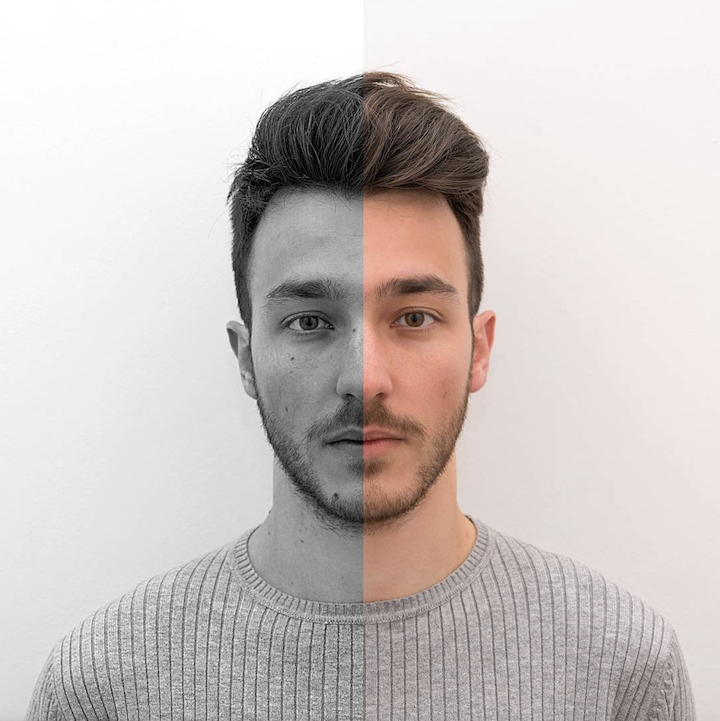
 Simone Azeglio
· 11 previous affiliations
- UpworkSince 2021
- Machine Learning Consultant · Since 2021
- Institut de la VisionSince 2022
- Ph.D. Candidate · Since 2022
- École Normale Supérieure - PSL2022–2026
- Ph.D. Candidate · 2022–2026
- Sorbonne Université2022–2026
- Doctor of Philosophy - PhD · 2022–2026
- Research Intern · 2024
- Research Intern · 2024
- Machine Learning Journal Club2019–2022
- President & Co-Founder · 2019–2022
- Research Engineer · 2021–2022
- University of Turin2014–2021
- MS student · 2018–2021
- Undergrad student · 2014–2018
- University of Ottawa2020–2021
- Visiting Student Researcher · 2020–2021
- Research Intern · 2021
Research Overview
Simone Azeglio focuses on biologically inspired representation learning, computational neuroscience, and generative models. His early work explored physics-informed neural networks and epidemiological modeling before shifting toward the intersection of machine learning and biological vision. Currently, he investigates how geometric principles and information-theoretic frameworks can improve the expressivity and interpretability of visual representations.
Research Trajectory
Azeglio's early research applied advanced machine learning techniques to complex physical and biological systems. In 2021, he investigated the decoding of brain signals, demonstrating that topological data analysis could capture hidden neural information to enhance hand pose classification from ECoG recordings in Topological Data Analysis (TDA) Techniques Enhance Hand Pose Classification from ECoG Neural Recordings.
Concurrently, he contributed to scientific machine learning, focusing on the broader area of Accelerating Physical Simulations with Neural Surrogates. This included developing a physics-informed machine learning simulator for wildfire propagation, Physics-Informed Machine Learning Simulator for Wildfire Propagation, and participating in the development of tools to automate physics-informed neural networks with error approximations in NeuralPDE: Automating Physics-Informed Neural Networks (PINNs) with Error Approximations. This latter work also touched upon the research direction of Hybrid First and Second Order Optimization. During the same period, he addressed public health challenges by modeling epidemic dynamics. He developed a high-fidelity multi-agent system to simulate SARS-CoV-2 spread in Toronto, analyzing how urban mobility restrictions impact contagion in Optimizing Urban Mobility Restrictions: a Multi-Agent System (MAS) for SARS-CoV-2. This research advanced the fields of Modeling Epidemics Beyond the Homogeneous Mixing Assumption and Efficient Simulation of Large Scale Multi Agent Systems, while contributing to the area of Individual Based Models for Heterogeneous Epidemic Dynamics.
By 2022, Azeglio's focus shifted toward the intersection of computational neuroscience and computer vision. Recognizing that standard deep convolutional neural networks do not fully capture the computations of the ventral visual stream, he investigated recurrent and feedback mechanisms. In Improving Neural Predictivity in the Visual Cortex with Gated Recurrent Connections, he explored how gated recurrent connections could better align artificial models with biological representational geometry, aiming to improve neural predictivity in the visual cortex.
His recent work formalizes information processing principles from biological vision into machine learning frameworks. He introduced "Higher-Order Convolution" (HoConv), an operator designed to mimic the complex, multiplicative interactions of biological neurons. This approach was applied to model retinal responses in Higher-Order Convolution Improves Neural Predictivity in the Retina, achieving strong predictive performance while requiring less training data. He subsequently extended this biologically inspired mechanism to general computer vision tasks in Convolution Goes Higher-Order: A Biologically Inspired Mechanism Empowers Image Classification, demonstrating that higher-order convolutional neural networks can improve classification accuracy on complex textures by aligning network operations with the statistical structure of natural scenes.
Alongside his work on visual architectures, Azeglio has advanced the theoretical understanding of representation learning and generative models. With collaborators, he developed a framework to decompose mutual information into stimulus-specific and feature-specific contributions using diffusion models in Decomposing stimulus-specific sensory neural information via diffusion models. This approach allows for precise identification of which pixels in high-dimensional images provide the most information to a neural population. Further exploring the geometry of generative models, he investigated the latent manifolds of diffusion models in What's Inside Your Diffusion Model? A Score-Based Riemannian Metric to Explore the Data Manifold. By deriving a Riemannian metric from the Stein score function, this work enables the computation of geodesics that follow the contours of the data manifold, improving image interpolation and extrapolation.
Current Directions
The most recent papers in the evidence address the integration of biological inductive biases into deep learning and the geometric analysis of generative models. Recent work investigates higher-order convolutional operators that replicate the nonlinear, multiplicative interactions found in biological vision, applying these mechanisms to both retinal modeling and general image classification. Additionally, current research explores the information-theoretic and geometric properties of diffusion models, focusing on decomposing sensory neural information and utilizing score-based Riemannian metrics to navigate high-dimensional data manifolds.
Profile updated
Loading new papers…
Other researchers whose papers cluster into the same research directions — a proxy for overlapping technical interests and shared intellectual neighborhoods.
See something wrong? Report a mistake