

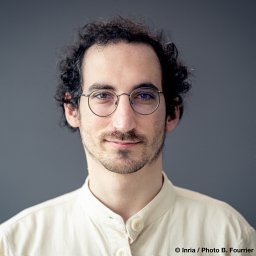
 Josué Tonelli-Cueto
· 7 previous affiliations
- CUNEF UniversidadSince 2026
- Assistant Professor · Since 2026
- Johns Hopkins University2023–2026
- Rufus Isaacs Postdoctoral Fellow · 2023–2026
- Investigador posdoctoral · 2022–2023
- Postdoc · 2020–2022
- FSMP Postdoctoral Fellow · 2020
- Technische Universität Berlin2014–2019
- Doctorado, Matemáticas · 2017–2019
- Master of Science (MSc), Matemáticas · 2014–2017
- UNIBASQ - Agency for Quality of the Basque University System2015–2018
- Vocal Estudiante del Comité de Evaluación de Titulaciones de Ciencia · 2015–2018
- University of the Basque Country2009–2014
- Undergrad student · 2009–2014
Research Overview
Josué Tonelli-Cueto focuses on computational algebraic geometry, the smoothed analysis of algorithms, and geometric machine learning. His work bridges theoretical complexity and practical performance by developing numerically stable algorithms for polynomial systems and semialgebraic sets. Recently, he has expanded his focus to include the design of equivariant neural architectures that respect fundamental physical symmetries.
Research Trajectory
Josué Tonelli-Cueto’s early research addressed fundamental bottlenecks in computational semialgebraic geometry, specifically the challenge of computing topological invariants. In his 2019 thesis work, Condition and homology in semialgebraic geometry, he tackled the computation of homology groups for semialgebraic sets defined by Boolean formulas. Moving away from traditional symbolic methods that require doubly exponential time, he introduced numerical algorithms capable of running in single exponential time with high probability. During this same period, he explored average-case algorithmic complexity in Plantinga-Vegter Algorithm takes Average Polynomial Time (2019).
He expanded on his numerical approach to topology in a two-part series. Computing the Homology of Semialgebraic Sets. I: Lax Formulas (2020) established a numerically stable framework that achieved weak exponential time complexity for sets defined by lax Boolean formulas. The subsequent paper, Computing the Homology of Semialgebraic Sets. II: General Formulas (2021), generalized this method to compute Betti numbers and torsion coefficients for any semialgebraic set, effectively bypassing a long-standing doubly exponential bottleneck in the field.
By 2022, his focus broadened to include the rigorous analysis of root isolation algorithms, contributing significantly to the research direction of Smoothed Analysis for Discrete and Integer Algorithms. In A Near-Optimal Expected Boolean Complexity Bound for Descartes Solver (2022), he applied smoothed analysis to integer polynomials to explain why the Descartes solver—despite pessimistic worst-case theoretical bounds—performs exceptionally well in practice. This work demonstrated that the solver's expected bit complexity is quasi-linear relative to the input size, advancing the broader area of Scaling Computational Algebra to Multivariate Polynomial Systems. Concurrently, he translated classical real algebraic techniques into the $p$-adic realm with A p-adic Descartes solver: the Strassman solver (2022), developing an efficient subdivision algorithm for isolating the roots of $p$-adic polynomials.
In 2023, his work intersected with linear algebra and optimization. Generalized Perron Roots and Solvability of the Absolute Value Equation introduced a topological framework based on the "aligned spectrum" of a matrix, providing new sufficient conditions for the solvability of the Absolute Value Equation and the Linear Complementarity Problem.
Throughout 2024, Tonelli-Cueto published across several distinct mathematical and computational domains. Returning to polynomial systems, Condition-based Low-Degree Approximation of Real Polynomial Systems I: The Zero-Dimensional Case utilized condition numbers to bound the number of real zeros, proving that systems with unusually high numbers of real roots are mathematically ill-conditioned. In multilinear algebra, Probabilistic bounds on best rank-1 approximation ratio employed probabilistic methods and the geometry of homogeneous polynomials to establish sharp bounds on the ratio between a symmetric tensor's spectral and Frobenius norms. Additionally, he contributed to combinatorial design with Almost Orthogonal Arrays: Theory and Search Three Ways, combining integer programming and local search heuristics to construct practical relaxations of Orthogonal Arrays for experimental design and numerical integration.
More recently, his trajectory has incorporated the theoretical foundations of machine learning, particularly concerning symmetries and expressivity. Learning equivariant tensor functions with applications to sparse vector recovery (2024) characterized equivariant polynomial functions mapping tensor inputs to tensor outputs, focusing on the orthogonal group to define new equivariant machine learning models. This geometric approach was further formalized in Tensor learning with orthogonal, Lorentz, and symplectic symmetries (2026), which provided architectural constraints for models dealing with tensor-valued data in physics. In parallel, Is uniform expressivity too restrictive? Towards efficient expressivity of GNNs (2025) analyzed Graph Neural Networks, proving that while GNNs with sigmoid or tanh activations lack the uniform logical expressivity of ReLU networks, they can still express complex queries efficiently if their size scales logarithmically with the graph's maximum degree. Alongside these machine learning advancements, he continued his work in symbolic computation with Beyond Worst-Case Analysis for Symbolic Computation: Root Isolation Algorithms (2025), further solidifying the smoothed analysis of the Descartes solver.
Current Directions
The most recent papers in the evidence indicate a dual focus on the theoretical foundations of geometric machine learning and the continued refinement of symbolic computation algorithms. In the realm of deep learning, recent work investigates the design of neural architectures that are intrinsically equivariant to physical symmetries—such as the orthogonal, Lorentz, and symplectic groups—enabling more sample-efficient learning on tensor-valued data. Parallel research addresses the expressivity and efficiency of Graph Neural Networks, particularly those utilizing non-ReLU activation functions. Alongside these machine learning contributions, ongoing work continues to apply smoothed analysis to root isolation algorithms, further bridging the gap between theoretical complexity bounds and the practical performance of algebraic solvers.
Profile updated
| Paper | Venue | Year |
|---|---|---|
| Almost Orthogonal Arrays: Theory and Search Three WaysGitHubtonellicueto/ | arXiv | 2024 |
Loading new papers…
Other researchers whose papers cluster into the same research directions — a proxy for overlapping technical interests and shared intellectual neighborhoods.
See something wrong? Report a mistake