

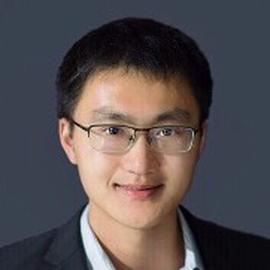
 Siheng Chen
· 4 previous affiliations
- Shanghai Jiao Tong UniversitySince 2020
- Associate Professor · Since 2020
- Current
- Research scientist · 2019–2020
- Uber AI (United States)2017–2019
- Autonomous engineer · 2017–2019
- Carnegie Mellon University2011–2017
- Postdoc · 2017
- PhD student · 2011–2016
Research Overview
Siheng Chen focuses on graph signal processing, collaborative perception for autonomous systems, and the design of large language model-based multi-agent networks. His early work established foundational sampling and recovery theories for signals on irregular graphs before expanding into 3D point cloud analysis and connected vehicle perception. Most recently, his research investigates autonomous, self-evolving agentic workflows for complex software engineering and scientific discovery.
Research Trajectory
The early phase of Chen’s research focused heavily on the research direction of Generalizing Signal Processing to Irregular Graphs, adapting classical signal processing techniques to complex network structures. An initial application of this work was demonstrated in Semi-Supervised Multiresolution Classification Using Adaptive Graph Filtering With Application to Indirect Bridge Structural Health Monitoring, which utilized adaptive graph filtering for structural analysis. He subsequently formalized a unified framework for these techniques in Signal Recovery on Graphs: Variation Minimization, formulating tasks like inpainting and anomaly detection as optimization problems that minimize graph total variation and matrix rank. This theoretical foundation was expanded in Discrete Signal Processing on Graphs: Sampling Theory, which introduced principles for perfectly recovering bandlimited graph signals from a subset of samples. Years later, he bridged these traditional algorithms with deep learning by introducing Graph Unrolling Networks: Interpretable Neural Networks for Graph Signal Denoising, a framework that unrolled signal processing steps into neural network layers to achieve superior denoising with high interpretability.
As his research progressed, Chen extended graph-based and spatial reasoning to the domain of 3D vision and autonomous driving. He developed Deep Unsupervised Learning of 3D Point Clouds via Graph Topology Inference and Filtering, proposing an autoencoder architecture that processes raw 3D points directly to avoid the discretization errors inherent in voxel-based methods. Concurrently, he participated in the development of MotionNet: Joint Perception and Motion Prediction for Autonomous Driving Based on Bird's Eye View Maps, a spatio-temporal pyramid network designed to extract features from LiDAR sweeps and encode object categories and motion behavior in a bird's eye view format.
This focus on autonomous systems naturally led to work in the area of Overcoming Sensor Occlusion Through Collaborative Perception. With collaborators, he explored knowledge distillation techniques in Learning Distilled Collaboration Graph for Multi-Agent Perception, creating a teacher-student framework to train pose-aware, adaptive collaboration models between agents. To address the fundamental trade-offs in the area of Bandwidth Efficient Collaborative Perception for Connected Vehicles, his research group developed Where2comm: Communication-Efficient Collaborative Perception via Spatial Confidence Maps. By utilizing spatial confidence maps, this framework empowers agents to share only perceptually critical information, contributing significantly to the broader direction of Sparse Object-Centric Communication for Collaborative Perception.
By 2025, Chen’s focus on multi-agent collaboration evolved to incorporate large language models (LLMs), advancing the area of Dynamic and Self-Organizing Multi-Agent Collaboration Networks. His lab introduced Self-Evolving Multi-Agent Collaboration Networks for Software Development (EvoMAC), a system that dynamically updates its own workflow and agent prompts during test time using textual backpropagation. They also sought to automate the creation of these architectures entirely in MAS-GPT: Training LLMs to Build LLM-based Multi-Agent Systems, framing multi-agent system design as a generative language task where a model outputs executable code to define query-specific agent teams.
Most recently, this agentic research has scaled to broader scientific and engineering domains. His group proposed EvoMaster: A Foundational Evolving Agent Framework for Agentic Science at Scale, providing a domain-agnostic harness that supports continuous self-evolution for scientific research agents. They also developed ML-Agent: Reinforcing LLM Agents for Autonomous Machine Learning Engineering, shifting from static prompt-based agents to a reinforcement learning paradigm to create highly efficient models capable of generalizing to unseen machine learning tasks. Alongside these architectural advances, rigorous evaluation has become a priority. The lab introduced MCP-Persona: Benchmarking LLM Agents on Real-World Personal Applications via Environment Simulation to test agents in complex, account-bound environments, revealing significant limitations in current frontier models. Similarly, InfoMosaic-Bench: Evaluating Multi-Source Information Seeking in Tool-Augmented Agents was developed to assess how well agents orchestrate specialized domain tools, highlighting ongoing challenges in multi-source integration. Finally, to democratize access to high-performing agents, his team released OpenSeeker: Democratizing Frontier Search Agents by Fully Open-Sourcing Training Data, synthesizing complex reasoning tasks from the web graph to train state-of-the-art search agents with minimal data.
In 2026, Chen's group expanded on environment and task synthesis for training autonomous agents. They introduced SoftwareGym: Scaling Computer-Use Agent Training with Diverse Synthesized Software Environments, an automated pipeline for generating and iteratively repairing diverse GUI applications to scale supervision for computer-use agents, and AssetForge: Asset-Augmented Task Synthesis for Business Automation Agents, which pairs reusable construction assets with task-specific rubrics to generate executable business automation workflows. Concurrently, their work addressed post-training and harness design in Belief-State Management Meets Rubric Rewards for Agentic Forecasting, introducing proactive context compression and process-quality rubric rewards for forecasting agents. Chen also contributed to physical embodiment in KODA: Kinematics--Observation Data Alignment for Humanoid Learning from Human Egocentric Demonstration, aligning egocentric human demonstrations into reusable whole-body vision-language-action data for humanoid robots.
Current Directions
The most recent papers in the evidence indicate a primary focus on the design, optimization, and evaluation of large language model agents and multi-agent systems. Recent work investigates how to transition from static, prompt-based agents to dynamic, self-evolving frameworks capable of autonomous software engineering and iterative scientific research. A significant portion of this current agenda involves developing rigorous benchmarks to expose the limitations of frontier models in real-world, personalized environments and complex multi-tool orchestration. Additionally, there is an active effort to democratize these capabilities by open-sourcing training pipelines and utilizing reinforcement learning to train specialized, highly efficient autonomous agents that can generalize to entirely new tasks.
Profile updated
Loading new papers…
Other researchers whose papers cluster into the same research directions — a proxy for overlapping technical interests and shared intellectual neighborhoods.
See something wrong? Report a mistake