

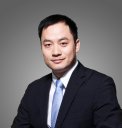
 Yanfeng Wang
· 1 previous affiliation
- Shanghai Jiao Tong UniversitySince 2013
- Full Professor · Since 2018
- Current
- Associate Professor · 2013–2017
- PhD student · 2005–2009
Research Overview
Yanfeng Wang focuses on multimodal foundation models, efficient deep learning architectures, and clinical artificial intelligence. His trajectory spans the development of grounded vision-language systems for medical imaging to the integration of state space models for efficient video and image segmentation. Most recently, his work addresses the efficiency of large language models and generative diffusion models, particularly in reasoning and handling class-imbalanced data.
Research Trajectory
Wang’s recent research trajectory is characterized by a dual focus on adapting foundation models for complex, domain-specific tasks—particularly in healthcare—and developing highly efficient architectures for spatiotemporal reasoning.
In 2025, a significant portion of his work centered on bridging the gap between clinical data and natural language, advancing the automated structuring of clinical narratives with language models. He directed the development of Knowledge-enhanced Visual-Language Pretraining for Computational Pathology, introducing a comprehensive pathology knowledge tree containing over 50,000 attributes to ground visual representation learning in domain-specific medical knowledge. Expanding this multimodal grounding to radiology, he led the creation of Development of a large-scale grounded vision language dataset for chest CT analysis. This work produced the RadGenome-Chest CT dataset, linking hundreds of thousands of report sentences to precise 3D anatomical segmentation masks. To rigorously evaluate how these models perform in practice, his group introduced Quantifying the reasoning abilities of LLMs on clinical cases. Through the MedR-Bench framework, this research highlighted that while large language models excel at diagnosis given complete information, they still struggle with proactive clinical inquiry and sequential treatment planning. This evaluation of reasoning capabilities connects to his ongoing work in the broader area of Why Generalist Models Outperform Domain Specialists.
Parallel to his clinical AI research, Wang has driven advancements in efficient spatiotemporal modeling with linear complexity, heavily utilizing State Space Models (SSMs) like Mamba. In MoMa: Modulating Mamba for Adapting Image Foundation Models to Video Recognition, he introduced a divide-and-modulate architecture that adapts pre-trained image models to capture complex video dynamics without the computational overhead of traditional 3D attention. His expertise in video and temporal modeling also extends to the research direction Semantic Filtering of Speech Transcripts for Video Understanding and the area of Hierarchical Multi Scale Representations for Skeleton Based Learning. He applied similar linear-complexity multimodal fusion techniques to spatial tasks in SaFiRe: Saccade-Fixation Reiteration with Mamba for Referring Image Segmentation. By mimicking human cognitive saccade-fixation processes, this framework resolves ambiguous language queries more effectively than heavier transformer-based alternatives.
Wang's 2025 portfolio also addresses fundamental challenges in the pre-training and instruction tuning of foundation models. To combat the diversity dilemma in self-supervised learning, he developed Combatting Dimensional Collapse in LLM Pre-Training Data via Submodular File Selection, proposing an algorithm that selects decorrelated files to maintain a balanced feature space and drastically improve data efficiency. In the multimodal domain, he sought to ground language generation in visual evidence with Learning to Instruct for Visual Instruction Tuning. This work forces models to predict the instruction alongside the response, preventing them from relying on language shortcuts and significantly reducing hallucinations. Broadening the scope of data collection, he explored decentralized learning frameworks in MobileA3gent: Training Mobile GUI Agents Using Decentralized Self-Sourced Data from Diverse Users, enabling the privacy-preserving extraction of user instructions to train mobile agents—a contribution that aligns with his broader interest in distributed systems, including the research direction Generative Data Augmentation for Heterogeneous Federated Learning and work in the area of Mitigating Spatial Misalignment in Collaborative Perception. Additionally, he synthesized broader trends in brain-computer interfaces through a comprehensive review, Progress, challenges and future of linguistic neural decoding with deep learning, which examined multimodal alignment and the invasiveness-fidelity trade-off in neural interfaces.
Moving into 2026, Wang’s focus expanded to optimize the inference and reasoning efficiency of generative models. He participated in the development of Rejection Mixing: Fast Semantic Propagation of Mask Tokens for Efficient DLLM Inference, a decoding framework that overcomes the independence assumption in parallel decoding to accelerate Diffusion Large Language Models without sacrificing generation quality. He also collaborated on Overthinking Reduction with Decoupled Rewards and Curriculum Data Scheduling, which addresses the tendency of large reasoning models to generate excessively long chains of thought. By surgically penalizing redundant tokens, this approach prunes redundant thinking while preserving exploratory reasoning steps. Finally, returning to generative modeling challenges, he led Improving Diffusion Models for Class-imbalanced Training Data via Capacity Manipulation. This work tackles gradient dominance in long-tailed learning by using low-rank decomposition to explicitly reserve representational capacity for minority classes, improving generation quality for rare data at zero additional inference cost. This focus on data imbalances and model capacity reflects his wider investigations into model robustness, including the research direction Robust Deep Learning through the Memorization Effect.
Wang also advanced architectural efficiency and specialized clinical AI systems in 2026. In UpLoop: Training Looped Transformers via Upcycling at No Extra Pretraining Compute, they co-developed an upcycling schedule that trains looped Transformers with recurrent middle blocks by progressively growing depth from a shallow base, matching standard dense pretraining FLOPs and parameter budgets while improving downstream and mathematical reasoning. In healthcare applications, Wang contributed to Advancing Clinical Genomic Analysis with a Skill-Centred Agent, introducing ClinGeX to orchestrate curated executable skills for genomic interpretation and variant classification. Further enhancing diagnostic reasoning, they collaborated on Neurodegenerative Differential Diagnosis with Knowledge-enhanced Structural Reasoning, which introduces KnowSR to ground multimodal patient representations in structured medical knowledge banks and differential graph reasoning for diagnosing neurodegenerative disorders.
Current Directions
The most recent papers in the evidence, published in 2026, indicate a strong focus on optimizing the inference efficiency and reasoning capabilities of generative models. Wang is currently investigating methods to overcome the independence assumption in parallel decoding, as seen in his work on Diffusion Large Language Models (DLLMs), which aims to accelerate text generation while maintaining semantic consistency. Additionally, his recent research addresses the efficiency of large reasoning models by pruning redundant thinking and mitigating "overthinking" without degrading performance. Finally, they continue to explore generative modeling for long-tail distributions, parameter-efficient looped Transformer architectures via upcycling, and knowledge-grounded agentic systems for complex clinical diagnostics.
Profile updated
Loading new papers…
Other researchers whose papers cluster into the same research directions — a proxy for overlapping technical interests and shared intellectual neighborhoods.
See something wrong? Report a mistake