

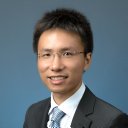
 Shuo Han
· 3 previous affiliations
- University of Illinois ChicagoSince 2017
- Associate Professor · Since 2025
- Current
- Assistant Professor · 2017–2025
- University of Pennsylvania2013–2017
- Postdoc · 2013–2017
- California Institute of Technology2006–2013
- PhD student · 2006–2013
5 other authors named Shuo Han: Shuo Han (6 papers), Shuo Han (3 papers), Shuo Han (Northwestern University · 2 papers), Shuo Han (University College London · 1 paper), Shuo Han (1 paper)
Research Overview
Shuo Han focuses on robust optimization, data-driven control of stochastic systems, and privacy-preserving algorithms. His early work established convex reformulations for optimal uncertainty quantification and applied differential privacy to distributed resource allocation. More recently, his research addresses multi-agent reinforcement learning, ad hoc teamwork, and the adversarial robustness of multimodal large language models.
Research Trajectory
Han's early research concentrated on the worst-case analysis of stochastic systems, particularly when the underlying probability distributions are imperfectly known. He developed algorithms for optimal uncertainty quantification (OUQ), demonstrating how these problems can be reformulated into tractable finite-dimensional convex optimization tasks when the objective function is piecewise concave and constraints are piecewise convex. This work was detailed in Convex optimal uncertainty quantification: Algorithms and a case study in energy storage placement for power grids, which applied the framework to energy storage placement, and further formalized in Convex Optimal Uncertainty Quantification. Expanding on robust optimization techniques, he also proposed a data-driven framework using conic geometric programming to allocate protection resources—such as vaccines or antidotes—to eradicate viral spreading processes in directed contact networks, as presented in Data-Driven Network Resource Allocation for Controlling Spreading Processes.
Concurrently, Han began investigating privacy mechanisms for distributed systems. In An approximately truthful mechanism for electric vehicle charging via joint differential privacy, he utilized joint differential privacy to design scheduling mechanisms that discourage users from maliciously manipulating the scheduling process by misreporting their specifications to the power grid. He continued to explore privacy metrics tailored to specific events—such as whether a user is home during a particular time slot—rather than protecting the entire data stream, detailing this approach in Event-based information-theoretic privacy: A case study of smart meters. Working with collaborators, he also developed a correlated noise mechanism modeled as a lazy Markov stochastic process to allow the Gradual Release of Sensitive Data under Differential Privacy, ensuring that subsequent data releases maintain accuracy as privacy levels are relaxed over time. This trajectory culminated in Differentially Private Distributed Constrained Optimization, an algorithm that calibrates noise to protect user data during shared coordination tasks. This work contributed to the broader research areas of Privacy Preserving Decentralized Optimization, The Privacy-Utility Trade-off in Differentially Private Learning, and Asymptotic Privacy Utility Scaling in Large Datasets.
Around the same time, Han applied control theory and robust optimization to urban transportation networks. He contributed to a receding horizon control framework for balancing city-wide supply and demand in Taxi Dispatch With Real-Time Sensing Data in Metropolitan Areas: A Receding Horizon Control Approach. He later formalized metrics to compare the rebalancing costs of automated fleets under direct control versus human-driven fleets managed indirectly via pricing in Quantification on the efficiency gain of automated ridesharing services. Building on historical data to construct uncertainty sets, he co-developed a computationally tractable approach to demand-supply mismatch in Data-Driven Robust Taxi Dispatch Under Demand Uncertainties, which minimized idle driving mileage. This research advanced the fields of Tractable Convex Reformulations for Robust Optimization and Stochastic Optimization for Robust Real World Logistics.
In recent years, Han's focus has shifted toward machine learning, reinforcement learning (RL), and multi-agent systems. He participated in the development of secure architectures for natural language processing in A Secure and Efficient Federated Learning Framework for NLP. In the domain of multi-agent reinforcement learning, he contributed to the theoretical and empirical analysis of state perturbation adversaries in Robust Multi-Agent Reinforcement Learning with State Uncertainties. He also co-authored Accelerating Model-Free Policy Optimization Using Model-Based Gradient: A Composite Optimization Perspective, which blends model-based and model-free approaches by reformulating policy learning as a composite optimization task, thereby reducing the need for expensive model-free updates. Addressing ad hoc teamwork, he explored redundancy-aware algorithms in Efficient Collaboration with Unknown Agents: Ignoring Similar Agents without Checking Similarity. This work improves sample complexity by ignoring similar partner policies in the hypothesis set, allowing learning to scale with the number of distinct partner types rather than the total number of policies.
Most recently, Han has participated in research on the adversarial robustness of large AI models. This includes work on Geometry-Driven Diverse and Transferable Visual Attacks on Multimodal LLMs, which treats visual jailbreaks not as isolated points, but as connected regions of low adversarial loss in image space to generate highly transferable attacks.
Current Directions
The most recent papers in the evidence indicate a focus on the robustness, efficiency, and security of complex machine learning systems. Recent work investigates multi-agent coordination, specifically designing redundancy-aware algorithms for ad hoc teamwork that allow agents to collaborate efficiently with unknown partners by filtering out redundant behaviors. Additionally, Han is involved in evaluating the adversarial vulnerabilities of multimodal large language models, exploring how geometric properties in image space can be used to understand and generate transferable visual jailbreaks.
Profile updated
Loading new papers…
Other researchers whose papers cluster into the same research directions — a proxy for overlapping technical interests and shared intellectual neighborhoods.
See something wrong? Report a mistake