

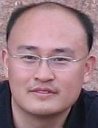
 Shuai Ma
· 3 previous affiliations
- Beihang UniversitySince 2011
- Full Professor · Since 2011
- University of Edinburgh2007–2010
- PhD student · 2007–2010
- Peking University2001–2004
- PhD student · 2001–2004
Research Overview
Shuai Ma focuses on database theory, graph data analysis, and data quality management. His early trajectory established foundational methods for data cleaning and graph pattern matching, particularly through the development of conditional dependencies and distributed graph simulation. More recently, his research has expanded to encompass large language model reasoning, temporal knowledge graphs, and neural-combinatorial optimization.
Research Trajectory
His early work began in mobile computing, specifically addressing the maintenance of mined behavioral patterns. In Incremental Maintenance of Discovered Mobile User Maximal Moving Sequential Patterns (2004), he and his collaborators developed an approach using prefix trees to efficiently combine new moving sequences with existing patterns, significantly outperforming straightforward mining algorithms.
By the late 2000s, his focus shifted significantly toward database theory, particularly the area of Conditional Functional Dependencies for Data Cleaning. A central contribution during this period was the introduction of Conditional Functional Dependencies (CFDs) in Improving Data Quality: Consistency and Accuracy (2007). This framework provided heuristic algorithms for automated data cleaning and statistical sampling methods to guarantee repair accuracy. Expanding on this, Extending Dependencies with Conditions (2007) introduced Conditional Inclusion Dependencies (CINDs) to apply constraints to specific data patterns. This research highlighted a complexity trap where combining CINDs and CFDs makes consistency checking undecidable, necessitating novel heuristic approaches. This body of work also intersects with the broader field of Automated Rule Induction for Neuro-Symbolic AI. He continued advancing data cleaning methodologies with Towards Certain Fixes with Editing Rules and Master Data (2010).
In the early 2010s, he made substantial contributions to graph data management, contributing to research directions such as Incremental Maintenance of Graph Based Search Indices and Incremental Maintenance of Structural Properties in Dynamic Graphs. Addressing the computational challenges of graph querying, Graph Pattern Matching: From Intractable to Polynomial Time (2010) explored tractable algorithms for complex matching tasks. This was followed by Capturing Topology in Graph Pattern Matching (2011), which refined how structural relationships are preserved during queries. Recognizing the growing scale of web and social network data, he subsequently developed evaluation algorithms and optimizations for graph simulation across multiple machines in Distributed graph pattern matching (2012), analyzing the impacts of system components and data locality.
His research later incorporated spatial and temporal data processing. In One-Pass Error Bounded Trajectory Simplification (2017), he participated in designing efficient methods for managing trajectory data. This interest in spatial structures aligns with his broader contributions to the area of Boundary Effects in Finite Spatial Networks.
In recent years, his trajectory has expanded to encompass modern machine learning, large language models (LLMs), and complex system optimization. In the domain of natural language processing, his group developed the RE2 prompting method in Re-Reading Improves Reasoning in Large Language Models (2024), which enhances LLM comprehension by processing input questions twice, facilitating bidirectional encoding in unidirectional decoder-only models. He also addressed the evaluation of generated text in RetriEVAL: Evaluating Text Generation with Contextualized Lexical Match (2025), proposing an unsupervised metric that mitigates the noise inherent in dense embeddings.
His recent work also tackles advanced graph neural networks and anomaly detection. Hyperbolic Graph Neural Network for Temporal Knowledge Graph Completion (2024) introduced HyGNet, leveraging hyperbolic geometry to capture intricate temporal dynamics and hierarchical relations in knowledge graphs. In Semi-Supervised Anomaly Detection through Denoising-Aware Contrastive Distance Learning (2025), his team developed methods to effectively utilize unlabeled data while managing potential noise and modeling complex relationships between data instances.
Furthermore, he has applied algorithmic insights to hardware design and combinatorial optimization. A Delay-Driven Iterative Technology Mapping Framework (2025) revisited the technology mapping problem in ASIC synthesis, introducing a structure-aware load-slew model for better gate delay estimation. In Empowering Targeted Neighborhood Search via Hyper Tour for Large-Scale TSP (2025), he introduced HyperNS, a framework combining sparse neural heatmaps with a clustering strategy to solve massive Traveling Salesman Problems, achieving significant speedups over traditional solvers. Concurrently, he remains active in foundational database theory, as evidenced by Efficient Discovery of Relaxed Functional Dependencies (2025).
Current Directions
The most recent papers in the evidence indicate a dual focus on advancing large language model capabilities and applying deep learning to complex structured data. Recent work investigates prompting strategies to improve LLM reasoning and develops robust, unsupervised evaluation metrics for text generation. Concurrently, his research addresses temporal knowledge graph completion using hyperbolic geometry to model hierarchical and dynamic relationships. He is also actively exploring neural-combinatorial optimization, utilizing sparse neural heatmaps to solve large-scale routing problems, and applying machine learning techniques to electronic design automation and semi-supervised anomaly detection.
Profile updated
Loading new papers…
Other researchers whose papers cluster into the same research directions — a proxy for overlapping technical interests and shared intellectual neighborhoods.
See something wrong? Report a mistake