

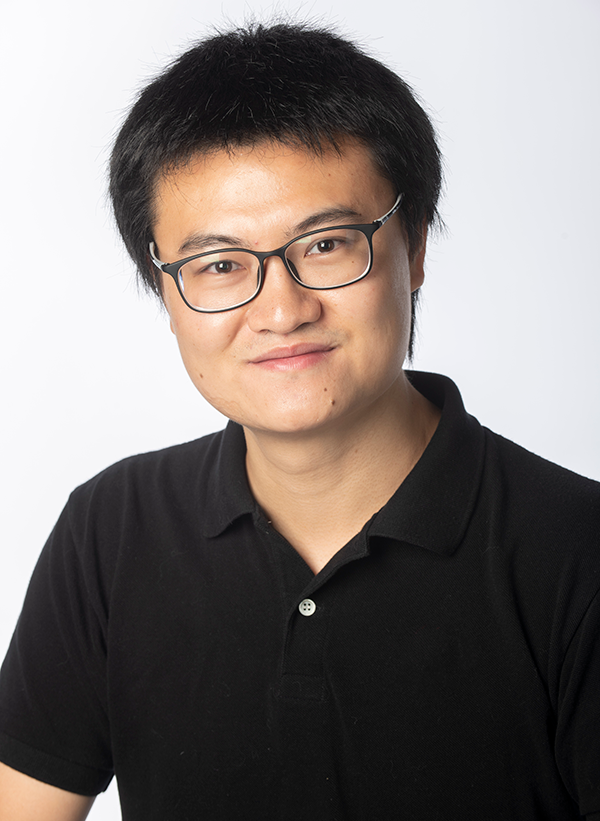
 Shihao Yang
· 1 previous affiliation
- Georgia Institute of TechnologySince 2020
- Assistant Professor · Since 2020
1 other author named Shihao Yang: Shihao Yang (Stevens Institute of Technology · 1 paper)
Research Overview
Shihao Yang focuses on time series analysis, physics-informed machine learning, and statistical modeling for dynamical systems. His early work developed robust frameworks for real-time infectious disease forecasting using digital surveillance data. More recently, he investigates efficient attention mechanisms for sequence modeling and integrates physical laws into deep learning to solve complex differential equations.
Research Trajectory
His early research addressed the challenges of real-time digital sensing and infectious disease forecasting. In 2015, he introduced Accurate estimation of influenza epidemics using Google search data via ARGO, a statistical framework that combined historical clinical data with internet search trends. This work demonstrated how self-correcting dynamic models could filter out the noise inherent in big data, contributing to the broader area of Mitigating Spurious Correlations in High Dimensional Feature Spaces. Building on these epidemiological applications, he later participated in developing a High-Resolution Spatio-Temporal Model for County-Level COVID-19 Activity in the U.S (2021), which incorporated local mobility, demographic factors, and cross-county propagation to estimate disease trajectories.
Alongside his work in epidemiology, he advanced methods for inferring the hidden dynamics of complex systems. With Inference of dynamic systems from noisy and sparse data via manifold-constrained Gaussian processes (2021), he developed the MAGI framework. This approach embeds the structure of ordinary differential equations directly into Bayesian priors, allowing for efficient parameter estimation and uncertainty quantification without the need for computationally expensive numerical integration.
In recent years, his focus has expanded to multivariate time series forecasting and the adaptation of Transformer architectures for temporal data. In 2024, his group proposed ARM: Refining Multivariate Forecasting with Adaptive Temporal-Contextual Learning and introduced CATS: Enhancing Multivariate Time Series Forecasting by Constructing Auxiliary Time Series as Exogenous Variables. The CATS framework enforces continuity and sparsity to generate auxiliary series, enabling simpler models to achieve high performance with reduced computational overhead. Continuing this trajectory, he developed WAVE: Weighted Autoregressive Varying Gate for Time Series Forecasting (2025), an attention mechanism that integrates classical autoregressive moving average concepts into decoder-only Transformers to decouple long-range trends from local fluctuations. He also explored in-context learning for temporal data with the In-context Time Series Predictor (2025), treating forecasting tasks as tokens to enable zero-shot and few-shot predictions without relying on massive pre-trained language models.
Beyond deep learning architectures, his methodological work spans financial modeling and causal inference. He contributed to Order Book Queue Hawkes Markovian Modeling (2024), addressing the dynamics of financial markets. In 2025, he presented Causal Clustering for Conditional Average Treatment Effects Estimation and Subgroup Discovery, proposing a framework that leverages learned kernels from causal forests to identify latent subpopulation structures and estimate heterogeneous treatment effects.
A major theme in his most recent research is the design of efficient attention mechanisms and sequence models that overcome the quadratic scaling bottleneck of standard Transformers. He introduced ZeroS: Zero‑Sum Linear Attention for Efficient Transformers (2025), which removes the constant averaging term from the softmax expansion to enable negative weights and contrastive operations in linear time. In 2026, he collaborated on HyperMLP: An Integrated Perspective for Sequence Modeling, which reframes self-attention as a dynamic two-layer perceptron with a specialized lag layout. That same year, he co-authored Free Energy Mixer, introducing a value-aware, per-channel read operation based on free-energy optimization to address information loss in the key-value cache of sequence models.
Concurrently, he has continued to push the boundaries of scientific machine learning, particularly in the research direction of Deep Variational Methods for High Dimensional Partial Differential Equations. In Physics-Informed Inference Time Scaling via Simulation-Calibrated Scientific Machine Learning (2025), he proposed a method that uses a stochastic simulator to solve for the error of a pre-trained model, allowing for inference-time scaling that significantly reduces error in high-dimensional problems. Further addressing the limitations of standard physics-informed neural networks, he helped develop Coupled Integral PINN for Discontinuity (2026). This dual-network architecture enforces conservation laws in their integral form, enabling the model to capture sharp discontinuities like shock waves without the loss function instability that affects traditional approaches.
Current Directions
The most recent papers in the evidence indicate a dual focus on scaling efficient sequence architectures and advancing physics-informed machine learning. In the domain of sequence modeling, current work investigates alternatives to standard softmax attention, exploring linear-time mechanisms, dynamic multi-layer perceptron layouts, and free-energy-based memory retrieval to improve the efficiency and expressivity of Transformers. Concurrently, in scientific machine learning, recent efforts address the fundamental limitations of neural PDE solvers. This includes developing inference-time scaling techniques for high-dimensional systems and designing integral-based network architectures capable of modeling sharp discontinuities and shock waves without mathematical instability.
Profile updated
Loading new papers…
Other researchers whose papers cluster into the same research directions — a proxy for overlapping technical interests and shared intellectual neighborhoods.
See something wrong? Report a mistake