

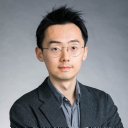
 Shixiang Zhu
· 5 previous affiliations
- Carnegie Mellon UniversitySince 2022
- Assistant Professor · 2022–2028
- Georgia Institute of Technology2017–2022
- Research Assistant · 2017–2022
- Argonne National Laboratory2020–2021
- Research Intern · 2020–2021
- Bachelor and Master's degree, Computer Science · 2010–2017
- Baidu (China)2015–2016
- Machine Learning Engineer · 2015–2016
Research Overview
Shixiang Zhu focuses on the intersection of machine learning, statistics, and operations research, developing models that integrate predictive learning, uncertainty quantification, and robust optimization. His trajectory spans from foundational work in temporal point processes and anomaly detection to recent frameworks for decision-focused learning and conformal prediction. Currently, he investigates human-AI collaboration and robust decision-making for high-stakes societal systems, particularly power grid resilience.
Research Trajectory
Zhu’s early research concentrated on sequential detection and the modeling of complex event data. In 2017, he developed online algorithms for real-time signal detection in Sequential Adaptive Detection for In-Situ Transmission Electron Microscopy (TEM), addressing the challenge of identifying sparse, transient events under strict memory constraints. He subsequently participated in developing new learning paradigms for event data in Learning Temporal Point Processes via Reinforcement Learning, exploring reinforcement learning to generate samples from complex dynamics without relying solely on maximum-likelihood estimation.
By 2021, his focus expanded into sophisticated spatio-temporal modeling. In the context of public health, he introduced the High-Resolution Spatio-Temporal Model for County-Level COVID-19 Activity in the U.S, which incorporated local mobility and demographic covariates. This work contributed to the broader research direction of Resolving Spatial Scale Mismatches in Epidemic Forecasting. Concurrently, he advanced the area of Adaptive Thresholding for Dynamic Anomaly Detection with Sequential Adversarial Anomaly Detection with Deep Fourier Kernel, designing a detector that learns optimal time-varying thresholds from one-class training samples. He further leveraged Fourier kernel embeddings in Deep Fourier Kernel for Self-Attentive Point Processes to capture complex non-linear temporal dependencies in discrete event data.
Continuing his work on point processes in 2022, Zhu introduced NEST in Imitation Learning of Neural Spatio-Temporal Point Processes. This model utilized flexible Gaussian kernels and imitation learning to efficiently capture spatial patterns in high-dimensional event data. He also addressed the limitations of stationary kernels within the research direction of Modeling Bursty Event Sequences with Hawkes Processes by proposing Neural Spectral Marked Point Processes, a framework capable of incorporating contextual marks and non-stationary dynamics. Transitioning toward robust optimization, he tackled feature uncertainties in few-shot learning with Distributionally robust weighted k-nearest neighbors. This algorithm efficiently solved a minimax functional optimization problem, advancing the domain of Calibrating Uncertainty Set Radii for Robust Optimization.
In recent years, Zhu’s trajectory has increasingly emphasized decision-focused learning, conformal prediction, and the resilience of physical infrastructure. In 2025, he introduced DSM-CUSUM in Sequential Change Point Detection via Denoising Score Matching to identify distribution shifts in high-dimensional data streams without rigid parametric assumptions. To enhance electricity-system resilience against weather-driven outages, he integrated conformal prediction into a tri-level optimization framework in Adaptive Robust Optimization with Data-Driven Uncertainty for Enhancing Distribution System Resilience. His work on aligning predictive models with downstream optimization led to Global-Decision-Focused Neural ODEs for Proactive Grid Resilience Management, which unified power outage forecasting with resource optimization to minimize decision regret. He also addressed uncertainty quantification in complex directional pathways with Topology-Aware Conformal Prediction for Stream Networks.
Alongside physical systems, Zhu investigated the dynamics of human-in-the-loop systems. In Who Should Do What? Adaptive Delegation in Human-AI Collaboration, he formalized an adaptive delegation framework using generalized Nash equilibrium to optimize task assignment between AI and cost-sensitive human agents.
In 2026, his research formalized risk and robustness in high-stakes decision-making. He introduced the CREME framework in Calibrating Decision Robustness via Inverse Conformal Risk Control, mapping a certified Pareto frontier between risk and cost with finite-sample guarantees. Expanding on this, he proposed a "decide-then-assess" paradigm in Conformalized Decision Risk Assessment, providing distribution-free risk certificates for decisions proposed by human experts. Finally, he tackled high-dimensional, risk-sensitive scenarios with Gen-DFL: Decision-Focused Generative Learning for Robust Decision Making, utilizing generative models to capture parameter uncertainty and optimize for tail risks.
Current Directions
The most recent papers in the evidence indicate a strong focus on decision-focused learning and rigorous uncertainty quantification for high-stakes environments. Recent work investigates how to bridge the gap between predictive modeling and downstream optimization, particularly through conformal prediction and generative learning. A major theme is the development of distribution-free risk certificates that allow human experts to evaluate the robustness and potential regret of their decisions. Additionally, ongoing research addresses the resilience of complex infrastructure—such as power grids and stream networks—by integrating physical topology and adaptive robust optimization into machine learning frameworks.
Profile updated
Loading new papers…
Other researchers whose papers cluster into the same research directions — a proxy for overlapping technical interests and shared intellectual neighborhoods.
See something wrong? Report a mistake