

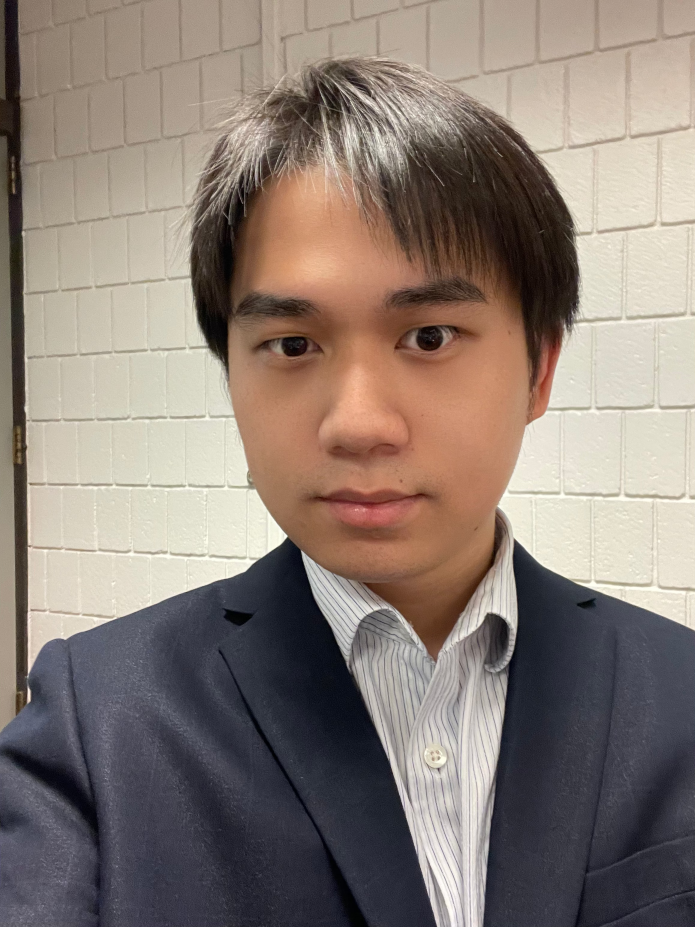
 Jiecheng Lu
· 6 previous affiliations
- Georgia Institute of TechnologySince 2021
- PhD student · 2023–2027
- Current
- MS student · 2021–2023
- Tencent (China)2021–2022
- Data Scientist Intern · 2021–2022
- Business Analyst Intern · 2021
- Peking University2020–2021
- Research Assistant · 2020–2021
- Country Garden Group2020
- Strategy and Data Analytics Intern · 2020
- Tianjin University2016–2020
- Undergrad student · 2016–2020
Research Overview
Jiecheng Lu focuses on machine learning for sequential data, with an emphasis on time series forecasting and efficient sequence modeling. His research integrates classical statistical principles with emerging neural network architectures to develop scalable, interpretable methods for temporal data. Recently, his work has expanded into optimizing attention mechanisms and developing foundational approaches for long-context sequence modeling.
Research Trajectory
Lu's early work centers on improving multivariate time series forecasting by rethinking how models capture temporal and cross-variable relationships. In 2024, he introduced CATS: Enhancing Multivariate Time Series Forecasting by Constructing Auxiliary Time Series as Exogenous Variables, a framework that generates auxiliary series to act as exogenous inputs. By enforcing principles of continuity, sparsity, and variability, this approach allows simpler models to perform efficiently, contributing to the broader area of Identifying and Eliminating Parameter Redundancy in Deep Networks and advancing research in Hybrid Architectures for Local and Global Sequence Modeling. Concurrently, he developed ARM: Refining Multivariate Forecasting with Adaptive Temporal-Contextual Learning, which disentangles individual series patterns before modeling their interactions. This work addresses core challenges in the research direction of Modeling Cross-Variable Dependencies in Multivariate Time Series and the field of Deep Seasonal Trend Decomposition for Time Series Analysis.
In 2025, Lu's research evolved to bridge classical statistical methods with modern Transformer architectures. He proposed WAVE: Weighted Autoregressive Varying Gate for Time Series Forecasting, which integrates Autoregressive Moving Average (ARMA) structures into decoder-only Transformers via a weighted varying gate. This mechanism decouples long-range trends from local fluctuations without increasing computational complexity. Deepening this synthesis of statistics and deep learning, he authored Linear Transformers as VAR Models: Aligning Autoregressive Attention Mechanisms with Autoregressive Forecasting. This paper establishes a mathematical equivalence between linear attention layers and dynamic Vector Autoregressive (VAR) models, introducing the SAMoVAR architecture to improve both forecasting accuracy and model interpretability.
Alongside architectural alignment, Lu explored new learning paradigms for temporal data. With the In-context Time Series Predictor, he reformulated forecasting as an in-context learning problem. By constructing prompts from sequences of lookback and future pairs, the model adapts to new forecasting tasks from context without requiring parameter updates, advancing the research direction of Retrieval Augmented Forecasting via Historical Analogies.
His focus on efficiency also led to innovations in core attention mechanisms. He developed ZeroS: Zero‑Sum Linear Attention for Efficient Transformers, which removes the uniform zero-order term from the softmax expansion. This modification enables stable positive and negative attention weights, allowing contrastive operations within a single layer while maintaining linear-time complexity. This contribution aligns with broader efforts in the area of Scaling Limits of Efficient Attention Architectures.
Moving into 2026, Lu's trajectory expanded into fundamental sequence modeling and physics-inspired architectures. He introduced HyperMLP: An Integrated Perspective for Sequence Modeling, which reframes self-attention as a dynamic two-layer multilayer perceptron. By utilizing attention scores as a growing hidden representation and introducing a specialized lag layout, this architecture offers a more expressive alternative to standard Transformers under equivalent compute budgets. He further addressed information retrieval bottlenecks in memory caches with the Free Energy Mixer. This work replaces standard head-wide averaging with a per-channel read operation based on free-energy optimization, allowing different dimensions of a model to selectively focus on distinct past tokens.
Additionally, guiding research as a principal investigator, he oversaw the development of StretchTime: Adaptive Time Series Forecasting via Symplectic Attention. This research introduces Symplectic Positional Embeddings, a framework that allows models to adaptively warp their perception of time using learnable symplectic flows, effectively handling real-world sequences with fluctuating rhythms while drastically reducing parameter counts.
Current Directions
The most recent papers in the evidence indicate a focus on rethinking the foundational components of sequence modeling to improve both expressivity and efficiency. Recent work investigates alternatives to standard softmax attention and static positional encodings, drawing on physics-inspired concepts such as free-energy optimization and symplectic flows. A major theme in these current directions is overcoming the information-loss bottlenecks inherent in standard Transformer memory retrieval, enabling models to dynamically adapt to varying temporal rhythms and selectively retrieve historical context without incurring quadratic computational costs.
Profile updated
Loading new papers…
Other researchers whose papers cluster into the same research directions — a proxy for overlapping technical interests and shared intellectual neighborhoods.
See something wrong? Report a mistake