

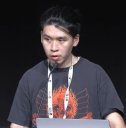
 Shih-Yang Liu
2 previous affiliations
- PhD student · 2021–2026
- Undergrad student · 2016–2021
- Nvidia (United States)2023–2025
- Intern · 2023–2025
Research Overview
Shih-Yang Liu focuses on model compression, parameter-efficient fine-tuning, and the optimization of large-scale neural networks. His trajectory spans foundational work in low-bit quantization for vision and language models to advanced adaptation techniques that bridge the gap between efficient tuning and full model training. Recently, his research has expanded into multi-reward reinforcement learning and fine-tuning-free compensation methods for compressed architectures.
Research Trajectory
Shih-Yang Liu’s research initially centered on overcoming the computational bottlenecks of deploying large-scale models through advanced quantization techniques. In 2023, he addressed the limitations of integer-based post-training quantization (PTQ), which often struggles at sub-8-bit widths. With LLM-FP4: 4-Bit Floating-Point Quantized Transformers, he developed a PTQ solution that compresses both weights and activations in large language models down to 4-bit floating-point values. Recognizing that floating-point quantization is highly sensitive to the choice of exponent bits and clipping ranges, this work established a strong baseline for handling the long-tail and bell-shaped distributions typical of LLM activations.
Concurrently, he investigated similar efficiency bottlenecks in computer vision architectures. In Oscillation-free Quantization for Low-bit Vision Transformers, he identified "weight oscillation"—a phenomenon where quantized weights continuously flip-flop between discrete levels during training—as a primary cause of performance degradation in low-bit ViTs. By replacing learnable scaling factors with statistical alternatives, decoupling query-key interactions, and implementing a targeted annealing strategy, he achieved substantial accuracy gains in 2-bit quantization. This work contributed significantly to the area of Why Transformers Collapse Under Low-Bit Quantization and the broader research direction of Weight Oscillation in Low Precision Training.
In 2024, his focus expanded to include the efficiency of the training process itself and parameter-efficient model adaptation. He collaborated on Robust and Efficient Quantization-aware Training via Coreset Selection, which sought to mitigate the high energy costs and long training times associated with traditional end-to-end quantization-aware training (QAT). The research introduced an Adaptive Coreset Selection method that quantifies the importance of individual training samples using error vector and disagreement scores derived from the loss and gradients of quantized weights. This approach not only accelerated training but also improved robustness against label noise, advancing the research area of The Hidden Cost of Dynamic Selection in Deep Learning and the field of Dataset Distillation.
That same year, he introduced a novel approach to parameter-efficient fine-tuning (PEFT) with DoRA: Weight-Decomposed Low-Rank Adaptation. Recognizing the accuracy gap between standard low-rank adaptation (LoRA) and full model fine-tuning, he developed a method that decomposes pre-trained weights into distinct magnitude and directional components. By applying low-rank updates exclusively to the directional component, DoRA successfully mimics the complex learning patterns of full fine-tuning without introducing any additional inference overhead. This contribution directly addressed challenges in the research direction of Bridging the Parameter Efficient Fine Tuning Performance Gap.
In 2025, his work included contributions to applied machine learning and dataset curation. He participated in the development of CMOSE: Comprehensive Multi-Modality Online Student Engagement Dataset with High-Quality Labels. This project addressed the lack of high-quality, psychologically grounded data for engagement recognition systems in online learning, tackling inherent challenges like extreme data imbalance and intra-class behavioral variety.
By 2026, his research trajectory synthesized his earlier work in model compression with new optimization paradigms. He developed EoRA: Fine-tuning-free Compensation for Compressed LLM with Eigenspace Low-Rank Approximation, a method designed to recover the task-specific accuracy lost during aggressive quantization or pruning. Rather than relying on costly retraining, EoRA utilizes low-rank matrices to compensate for compression errors, offering a flexible and efficient deployment strategy for compressed LLMs. Additionally, he addressed optimization challenges in reinforcement learning with GDPO: Group reward-Decoupled Normalization Policy Optimization for Multi-reward RL Optimization. This work identified a critical failure mode in standard Group Relative Policy Optimization (GRPO) where distinct reward combinations collapse into identical training signals. By decoupling and normalizing individual rewards separately before aggregation, GDPO significantly improved training stability and performance across complex tool-calling, mathematical reasoning, and coding tasks.
Current Directions
The most recent papers in the evidence indicate a dual focus on post-compression model recovery and the optimization of reinforcement learning algorithms for complex, multi-objective environments. In the domain of model efficiency, recent work investigates fine-tuning-free compensation mechanisms that use eigenspace low-rank approximations to restore the capabilities of compressed large language models. This approach aims to mitigate the accuracy degradation caused by quantization and pruning without incurring the computational expense of retraining.
Concurrently, research in reinforcement learning addresses the stability of policy optimization in multi-reward settings. By decoupling and independently normalizing distinct reward signals before aggregation, this work seeks to prevent signal collapse—a common issue where diverse reward combinations yield indistinguishable training updates. This direction focuses on improving model performance and training stability on sophisticated reasoning, mathematical, and coding tasks that require balancing multiple competing objectives.
Profile updated
Loading new papers…
Other researchers whose papers cluster into the same research directions — a proxy for overlapping technical interests and shared intellectual neighborhoods.
See something wrong? Report a mistake