

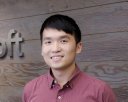
 Chien-Yi Wang
· 8 previous affiliations
- Amazon (United States)Since 2024
- Researcher · Since 2024
- Nvidia (United States)2022–2024
- Researcher · 2022–2024
- Microsoft (United States)2018–2022
- Senior Software Engineer · 2021–2022
- Researcher · 2018–2021
- 木刻思2017–2021
- Curator and Editor · 2017–2021
- Ambarella Inc.2018
- Researcher · 2018
- Honda Research Institute, USA2016–2018
- Researcher · 2016–2018
- University of Southern California2014–2016
- MS student · 2014–2016
- Electrical Engineering
- Electrical and Electronics Engineering
1 other author named Chien-Yi Wang: Chien-Yi Wang (MediaTek (Taiwan) · 1 paper)
Research Overview
Chien-Yi Wang focuses on computer vision, multi-modal representation learning, and deep learning model optimization. His trajectory spans early work in 3D scene understanding and face representation to recent advancements in parameter-efficient fine-tuning for large language models. Currently, he investigates efficient adaptation methods and vision-language frameworks for complex video and spatial reasoning tasks.
Research Trajectory
Wang's early research addressed foundational problems in computer vision, particularly in segmentation and scene analysis. In 2015, he contributed to Robust Image Segmentation Using Contour-Guided Color Palettes, which integrated contour and color cues to generate image-dependent color palettes for spatial segmentation. He subsequently expanded his focus to three-dimensional environments, developing A 3D Dynamic Scene Analysis Framework for Development of Intelligent Transportation Systems (2018). This framework systematically combined 2D and 3D sensory data to reconstruct semantically labeled traffic scenes, providing a basis for holistic driving scene understanding.
Moving into representation learning, Wang explored cross-model compatibility in Unified Representation Learning for Cross Model Compatibility (2020). He then applied fine-grained recognition techniques to security domains with PatchNet: A Simple Face Anti-Spoofing Framework via Fine-Grained Patch Recognition (2022). By reformulating face anti-spoofing as a patch-type recognition problem, this work enabled networks to better discriminate between live and spoof images by capturing the local characteristics of capturing devices and presentation materials.
In the domain of autonomous driving, Wang introduced DMSTrack in Probabilistic 3D Multi-Object Cooperative Tracking for Autonomous Driving via Differentiable Multi-Sensor Kalman Filter (2023). This system utilized a differentiable multi-sensor Kalman Filter to allow vehicles to cooperatively track objects by sharing detections and learned uncertainty estimates, significantly improving tracking accuracy while reducing bandwidth requirements.
Wang's subsequent work increasingly emphasized model interpretability and the efficient adaptation of large-scale models. He proposed an inherently interpretable image classifier in MCPNet: An Interpretable Classifier via Multi-Level Concept Prototypes (2024), which explains its decisions using concept prototypes extracted from multiple layers of a convolutional neural network. Concurrently, he co-developed a novel parameter-efficient fine-tuning approach in DoRA: Weight-Decomposed Low-Rank Adaptation (2024). DoRA decomposes pre-trained weights to consistently outperform standard low-rank adaptation methods in large language models without incurring additional inference costs.
In parallel, Wang has actively investigated weakly supervised learning and prompting strategies for video and image segmentation. He participated in the development of the GroPrompt framework in GroPrompt: Efficient Grounded Prompting and Adaptation for Referring Video Object Segmentation (2024), which adapts foundation segmentation models using text-aware prompt contrastive learning. He further explored semantic alignment in Semantic Prompt Learning for Weakly-Supervised Semantic Segmentation (2025), learning to prompt the CLIP latent space to refine pseudo masks. Continuing this trajectory, he contributed to the Tenet framework in Temporal Prompting Matters: Rethinking Referring Video Object Segmentation (2025). By decoupling the task into referring, tracking, and segmentation factors, this work advances the broader research direction of Low-Supervision Video Object Segmentation.
Most recently, Wang's research has expanded into complex physical reasoning and extreme model compression. He collaborated on Δynamics: Language-Based Representation for Inferring Rigid-Body Dynamics From Videos (2026), a vision-language framework that generates scene configurations in a structured text format for physics simulation, bypassing the need to directly predict physical parameters. Additionally, he participated in the design of EoRA: Fine-tuning-free Compensation for Compressed LLM with Eigenspace Low-Rank Approximation (2026). This method utilizes low-rank matrices to compensate for compression errors in large language models without requiring retraining, contributing to critical areas such as Preserving Model Capabilities Under Aggressive Compression and Fused Kernels for Quantized Execution in Large Models.
Current Directions
Recent work investigates the intersection of multi-modal foundation models and efficient system deployment. A primary focus is the adaptation and compression of large language models, exploring fine-tuning-free compensation methods and weight-decomposed low-rank adaptation to maintain model performance under strict computational constraints. Concurrently, Wang is exploring advanced prompting strategies for vision tasks, utilizing text-aware contrastive learning and temporal prompt preference learning to achieve high-fidelity video object segmentation with minimal supervision. His most recent collaborations also address physics-based perception, leveraging language as a unified representation to infer rigid-body dynamics directly from monocular videos.
Profile updated
Loading new papers…
Other researchers whose papers cluster into the same research directions — a proxy for overlapping technical interests and shared intellectual neighborhoods.
See something wrong? Report a mistake