

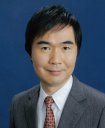
 Satoshi Matsuoka
· 4 previous affiliations
- Current
- RIKEN2018–2025
- Director · 2018–2025
- Tokyo Institute of Technology1996–2018
- Full Professor · 2000–2018
- Associate Professor · 1996–2000
- The University of Tokyo1981–1996
- Lecturer · 1993–1996
- Assistant Professor · 1989–1993
- PhD student · 1988–1989
- MS student · 1986–1988
- Undergrad student · 1981–1986
Research Overview
Satoshi Matsuoka focuses on high-performance computing architecture, memory subsystem optimization, and large-scale distributed machine learning. His trajectory spans from developing execution models that mitigate the memory wall in GPUs and CPUs to addressing broader architectural scaling challenges in the post-Moore era. Recently, his work emphasizes scalable training frameworks for graph neural networks and the integration of advanced AI analytics with supercomputing infrastructure.
Research Trajectory
In 2021, Matsuoka’s work addressed the optimization of complex imaging algorithms for general-purpose processors. He developed Performance Portable Back-projection Algorithms on CPUs: Agnostic Data Locality and Vectorization Optimizations, which introduced novel approaches to extracting parallelism and managing data locality for computed tomography on power-constrained CPU devices, challenging the traditional reliance on GPUs for these compute-intense operations.
A central theme of his subsequent research is the broader area of Overcoming the Memory Wall in High-Performance Computing. To address the data movement bottleneck in iterative memory-bound applications, his group introduced the PERKS execution model. Detailed in Persistent Kernels for Iterative Memory-bound GPU Applications and its expanded conference version PERKS: a Locality-Optimized Execution Model for Iterative Memory-bound GPU Applications, this approach moves the time-stepping loop inside the GPU kernel. By utilizing device-wide synchronization and caching intermediate results in unused registers and shared memory, the model significantly reduces device memory traffic.
Concurrently, he investigated hardware-level solutions to the memory wall, specifically evaluating the impact of copious 3D-stacked SRAM on future HPC processors. This research, initially presented in At the Locus of Performance: A Case Study in Enhancing CPUs with Copious 3D-Stacked Cache and further quantified in At the Locus of Performance: Quantifying the Effects of Copious 3D-Stacked Cache on HPC Workloads, utilized gem5 simulations of a hypothetical large-cache processor to project substantial speedups for cache-sensitive workloads.
Continuing the focus on memory optimization in 2023, Matsuoka advanced temporal blocking techniques for GPU stencil computations. In Revisiting Temporal Blocking Stencil Optimizations, he adapted temporal blocking schemes to leverage modern GPU features like large scratchpad memories and hardware prefetching. This methodology was further explored in Exploiting Scratchpad Memory for Deep Temporal Blocking: A case study for 2D Jacobian 5-point iterative stencil kernel (j2d5pt), which demonstrated how tiling domains to fully utilize scratchpad capacity allows for processing multiple time steps efficiently without returning to global memory.
Alongside his technical contributions, Matsuoka has provided critical perspectives on the evolution of the field. He published Myths and legends in high-performance computing (also released as a preprint, Myths and Legends in High-Performance Computing), which examines the folklore and assumptions prevalent in the HPC community as traditional scaling laws like Moore's law and Dennard scaling come to an end, advocating for a shift toward algorithmic scaling and novel architecture research.
In recent years, his research has expanded into distributed machine learning on supercomputers. He contributed to the optimization of Graph Convolutional Networks (GCNs) for large-scale graphs, collaborating on the SuperGNN framework to reduce communication overhead via hybrid pre-post-aggregation and integer quantization, as detailed in Communication Optimization for Distributed GCN Training on ABCI Supercomputer. This line of inquiry continued with A General and Scalable GCN Training Framework on CPU Supercomputers. Additionally, he worked on applying HPC and AI to physical infrastructure, contributing to Paradigm Shift in Infrastructure Inspection Technology: Leveraging High-performance Imaging and Advanced AI Analytics to Inspect Road Infrastructure, which integrates high-resolution X-ray CT imaging with AI analytics on leading supercomputers like Fugaku and Frontier.
Current Directions
Recent work investigates the intersection of high-performance computing and large-scale artificial intelligence. The most recent papers in the evidence address the communication bottlenecks inherent in training Graph Convolutional Networks (GCNs) on distributed supercomputing architectures, focusing on hybrid aggregation and quantization methods to enable scalable training on both GPU- and CPU-based supercomputers. Additionally, this recent research applies these massive computational capabilities to real-world domains, such as integrating advanced AI analytics with high-throughput synchrotron imaging for large-scale, automated infrastructure inspection.
Profile updated
| Paper | Venue | Year |
|---|---|---|
| Revisiting Temporal Blocking Stencil OptimizationsGitHubneozhang307/ | arXiv | 2023 |
Loading new papers…
Other researchers whose papers cluster into the same research directions — a proxy for overlapping technical interests and shared intellectual neighborhoods.
See something wrong? Report a mistake