

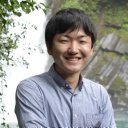
 Kazuki Osawa
· 4 previous affiliations
- Google (United Kingdom)Since 2023
- Research Engineer · Since 2023
- Current
- ETH Zurich2021–2023
- Postdoc · 2021–2023
- Tokyo Institute of Technology2012–2021
- PhD student · 2018–2021
- MS student · 2016–2018
- Undergrad student · 2012–2016
Research Overview
Kazuki Osawa focuses on the intersection of second-order optimization, large-scale deep learning, and parallel computing. His work addresses the computational and algorithmic challenges of training high-dimensional neural networks, with a particular emphasis on making natural gradient methods and curvature-informed optimization practical for large-scale distributed systems. Currently a Research Engineer at Google DeepMind, his trajectory has evolved from investigating model compression and low-rank approximations to developing scalable second-order optimizers and exploring the implicit biases of gradient-based regularization.
Research Trajectory
The early phase of Osawa’s research, beginning around 2017, centered on improving the efficiency of Convolutional Neural Networks (CNNs) through structural approximations. During this period, he investigated the trade-offs between computational complexity and accuracy when applying low-rank approximations to convolutional filters. In Evaluating the Compression Efficiency of the Filters in Convolutional Neural Networks, he examined how low-rank methods could reduce the data and computation associated with convolution processing in state-of-the-art models. This work extended into the acceleration of fundamental operations, as seen in Accelerating Matrix Multiplication in Deep Learning by Using Low-Rank Approximation, which proposed integrating these approximation techniques into deep learning frameworks to optimize dense matrix computations.
By 2019, Osawa’s focus shifted toward the optimization dynamics of large-scale distributed training. A recurring problem in this domain is the "generalization gap" that often emerges when increasing mini-batch sizes to utilize large-scale parallel hardware. Osawa addressed this by moving beyond standard first-order gradient descent toward second-order methods, which utilize curvature information to navigate the loss landscape more effectively. He specifically focused on Kronecker-factored Approximate Curvature (K-FAC), a method designed to make the inversion of the Fisher Information Matrix computationally tractable. This work was instrumental in Navigating Ill-Conditioned Loss Landscapes in Deep Learning, where standard methods often struggle with steep-walled ravines and disparate feature scales.
In 2020, Osawa refined these second-order approaches to improve their scalability and theoretical grounding. He developed Scalable and Practical Natural Gradient Descent (SP-NGD), a principled framework that allows models to achieve the fast convergence of second-order methods while maintaining the generalization performance typically associated with first-order methods. This period also saw an expansion into the theoretical underpinnings of these heuristics. By analyzing deep neural networks in the infinite-width limit, Osawa contributed to the understanding of how approximate Fisher information relates to Linearizing Deep Learning via the Neural Tangent Kernel. This research helped bridge the gap between empirical optimization success and the theoretical frameworks of Reconciling Neural Tangent Kernels with Practical Deep Learning, demonstrating that under certain conditions, approximate natural gradient descent can achieve global minima convergence similar to exact methods.
Current Directions
Osawa’s recent work, particularly from 2022 onwards, has diversified into gradient regularization, continual learning, and the optimization of Large Language Models (LLMs). A significant focus has been the development of Second-Order Regularization for Robustness and Generalization. In this area, he has explored how penalizing the norm of the loss gradient can improve model performance. His research has demonstrated that efficient finite-difference computations can replace expensive "double backpropagation" methods, providing a stronger implicit bias toward high-performing solutions while reducing computational overhead.
Furthermore, Osawa has applied his expertise in second-order information to the challenges of training LLMs and maintaining knowledge in continual learning settings. His work in continual learning involves using accurate gradient reconstructions of past data to combine weight-regularization with experience replay. In the context of LLMs, he has integrated pipelining techniques with Fisher information matrices to create more efficient training pipelines. He has also participated in interdisciplinary efforts to integrate graph neural networks with database systems, contributing to the development of encoders that transform complex graph data models into formats suitable for deep learning.
Representative Work
Second-Order Optimization and Scalability
Osawa’s primary contribution to optimization is the development of practical, large-scale second-order methods. In Large-Scale Distributed Second-Order Optimization Using Kronecker-Factored Approximate Curvature for Deep Convolutional Neural Networks, he demonstrated that K-FAC could be scaled to train ResNet-50 on ImageNet-1K, achieving competitive accuracy while handling larger mini-batches than traditional first-order optimizers. This work addressed the Condition Independent Scaled Gradient Descent problem, showing that curvature-informed methods can mitigate the slowdowns caused by ill-conditioned datasets.
He further advanced this line of inquiry in Scalable and Practical Natural Gradient for Large-Scale Deep Learning, where he introduced SP-NGD. This method was designed to be computationally efficient, adding negligible overhead to large mini-batch training while providing a more principled approach to optimization than ad hoc modifications of learning rates or batch normalization.
Theoretical Foundations of Natural Gradient
To understand why approximate second-order methods perform well in practice, Osawa co-authored Understanding Approximate Fisher Information for Fast Convergence of Natural Gradient Descent in Wide Neural Networks. This study provided a theoretical analysis of Natural Gradient Descent (NGD) within the context of wide neural networks. The research revealed that NGD with approximate Fisher information can achieve the same fast convergence to global minima as exact NGD, provided specific conditions are met, thereby validating heuristic approximations used in large-scale applications.
Gradient Regularization and Implicit Bias
In more recent work, Osawa has served as a senior researcher investigating the algorithmic efficiency of regularization. In Understanding Gradient Regularization in Deep Learning: Efficient Finite-Difference Computation and Implicit Bias, he and his collaborators showed that a finite-difference approximation for gradient regularization is not only twice as fast as standard methods but also improves generalization. The paper argues that this approach introduces a beneficial implicit bias toward sparse, high-performing solutions, offering a more efficient path to robust model training.
Optimization for Large Language Models
Osawa has extended his work on Fisher information to the specific architectural needs of LLMs. In PipeFisher: Efficient Training of Large Language Models Using Pipelining and Fisher Information Matrices, he proposed a method to combine pipelined parallel execution with second-order optimization. This work represents a significant step in applying complex curvature-informed optimizers to the most computationally demanding models in contemporary machine learning.
Early Efficiency Research
Osawa’s foundational work in model efficiency is exemplified by Accelerating Matrix Multiplication in Deep Learning by Using Low-Rank Approximation. This early research established his interest in the computational bottlenecks of deep learning, proposing that techniques from scientific and technical computation—such as low-rank approximation—could be successfully adapted to accelerate the dense matrix operations that underpin modern neural networks.
Profile updated
Loading new papers…
Other researchers whose papers cluster into the same research directions — a proxy for overlapping technical interests and shared intellectual neighborhoods.
See something wrong? Report a mistake