

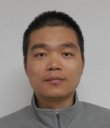
 Peng Chen
· 4 previous affiliations
- RIKENSince 2021
- Seniro Scientist · Since 2025
- Visiting Scientist · 2023–2024
- Visisting Scientist · 2021–2022
- Researcher · 2020
- Tokyo Institute of Technology2017–2020
- Doctor of Philosophy - PhD, School of Computing Department of Mathematical and Computing Science · 2017–2020
- Shanghai Maritime University2005–2007
- Master's degree, Traffic information engineering & Control · 2005–2007
15 other authors named Peng Chen: Peng Chen (Georgia Institute of Technology · 29 papers), Peng Chen (East China Normal University · 18 papers), Peng Chen (Alibaba Group (China) · Zhejiang University · 10 papers), Peng Chen (7 papers), Peng Chen (5 papers), and 10 more
Research Overview
Peng Chen focuses on high-performance computing, GPU kernel optimization, and large-scale image processing. His early work developed scalable algorithms for memory-bound kernels and tomographic reconstruction on heterogeneous architectures. Recently, his research addresses the computational bottlenecks of deep learning, emphasizing efficient data loading, distributed sparse matrix operations, and adaptive memory management for vision transformers.
Research Trajectory
Beginning during his doctoral studies at the Tokyo Institute of Technology and continuing through his research roles at AIST and RIKEN, Chen's early trajectory concentrated on optimizing fundamental computational primitives for graphics processing units. In 2018, he introduced Efficient Algorithms for the Summed Area Tables Primitive on GPUs, which replaced traditional scratchpad memory usage with a register cache technique and thread-level serial scans to improve scalability. He expanded on this approach by developing A versatile software systolic execution model for GPU memory-bound kernels, leveraging CUDA warp primitives to shift partial sums in a manner inspired by hardware systolic arrays. This model proved highly effective for both traditional high-performance computing stencil operations and deep learning convolutions. Concurrently, he applied these acceleration strategies to medical imaging, designing iFDK: a scalable framework for instant high-resolution image reconstruction. By overlapping CPU filtering with GPU back-projection and orchestrating MPI collective communications, the framework enabled scalable computed tomography (CT) reconstruction on supercomputers.
Chen continued to refine tomographic imaging algorithms, extending his focus to CPU architectures and distributed systems. He developed Performance portable back-projection algorithms on CPUs: agnostic data locality and vectorization optimizations, which achieved significant speedups on power-constrained devices by maximizing data locality. This work contributed to the broader research direction of Exploiting Geometric Symmetry for Computational Efficiency. He also addressed the scalability limits of cone-beam CT reconstruction with Scalable FBP decomposition for cone-beam CT reconstruction, proposing a novel decomposition scheme that eliminated redundancies in the end-to-end filtered back-projection pipeline.
Transitioning toward the computational bottlenecks of deep learning, Chen's research began to address the efficient execution of neural networks on diverse hardware. He contributed to the creation of FastConv, an open-source library detailed in Automatic Generation of High-Performance Convolution Kernels on ARM CPUs for Deep Learning, which utilized automated search to generate optimized Winograd convolutions. Returning to GPU optimization, he helped design PERKS: a Locality-Optimized Execution Model for Iterative Memory-bound GPU Applications. By migrating the iterative time loop of simulations directly onto the GPU and recycling on-chip registers across iterations, the PERKS model drastically reduced global memory traffic for stencils and linear solvers.
As deep learning models scaled, Chen investigated systemic bottlenecks in data pipelines and model architectures. He evaluated solutions to the "data stall" problem in High-Performance Data Loader for Large-Scale Data Processing, benchmarking frameworks like DALI and Webdatasets to maximize throughput on supercomputers. In parallel, he collaborated on methods to manage the quadratic compute costs of vision transformers applied to massive images. This included participation in Adaptive Patching for High-resolution Image Segmentation with Transformers, which drew inspiration from adaptive mesh refinement in HPC to dynamically patch images. This approach aligns with the broader area of Adaptive Hierarchical Partitioning for Visual Representation. He further advanced this concept with SHF: Symmetrical Hierarchical Forest with Pretrained Vision Transformer Encoder for High-Resolution Medical Segmentation, replacing uniform image patching with an adaptive, tree-based structure that focuses computational resources on high-detail regions.
In recent years, Chen's work has increasingly focused on the distributed training and execution of large-scale models. He contributed to A General and Scalable GCN Training Framework on CPU Supercomputers, addressing the unique memory and communication patterns of graph convolutional networks. He also participated in the development of SHIRO: Near-Optimal Communication Strategies for Distributed Sparse Matrix Multiplication, a framework that treats data transfer as a graph optimization problem to align communication with the hierarchical structure of GPU clusters. Most recently, he collaborated on FRUGAL: Pushing GPU Applications beyond Memory Limits, an application-agnostic methodology that optimizes execution graphs to reduce GPU memory footprints, enabling models to scale beyond hardware capacity constraints.
Current Directions
The most recent papers in the evidence indicate a strong focus on overcoming memory and communication barriers in large-scale distributed machine learning. Recent work investigates application-agnostic memory management techniques that optimize execution graphs to push GPU applications beyond their physical hardware limits. Additionally, Chen is actively addressing the scalability of sparse tensor algebra and graph neural networks on supercomputers, developing near-optimal communication strategies that map efficiently to the hierarchical topologies of modern computing clusters. In the domain of computer vision, his current research continues to refine adaptive, non-uniform patching mechanisms to process high-resolution medical imagery efficiently without modifying underlying transformer architectures.
Profile updated
Loading new papers…
Other researchers whose papers cluster into the same research directions — a proxy for overlapping technical interests and shared intellectual neighborhoods.
See something wrong? Report a mistake