

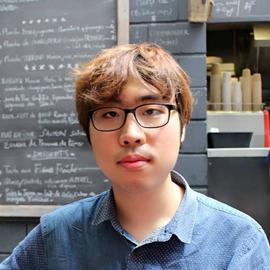
 Sang-Woo Lee
· 4 previous affiliations
- NeurofusionCurrent
- Current
- Naver (South Korea)2018–2025
- Manager · 2023–2025
- Researcher · 2018–2022
- Adjunct Professor · 2021–2024
- Seoul National University2008–2018
- PhD student · 2012–2018
- Undergrad student · 2008–2012
Research Overview
Sang-Woo Lee focuses on the development, adaptation, and evaluation of large-scale language models (LLMs) and task-oriented dialogue systems. His work encompasses the architectural design of generative models, the creation of robust evaluation frameworks for multimodal and text-based AI, and the implementation of intelligent agents in real-world environments. Currently a research scientist at Neurofusion, he previously held leadership roles at NAVER Cloud and NAVER AI Lab, where he directed the development of the HyperCLOVA X model and various conversational AI services.
Research Trajectory
Lee’s early research, conducted during his doctoral studies at Seoul National University, focused on probabilistic graphical models and cognitive modeling. His initial work addressed the structural limitations of deep architectures, specifically proposing an Online Incremental Structure Learning of Sum-Product Networks. This research introduced a method for evolving the number of hidden units and layers in sum-product networks (SPNs) dynamically, treating structure learning as an online clustering problem to allow for efficient inference in streaming data contexts.
Parallel to his work on SPNs, Lee investigated the intersection of deep learning and human cognitive behavior. He addressed the challenge of catastrophic forgetting in neural networks, a significant hurdle for systems designed to learn from continuous data streams. In Dual-memory neural networks for modeling cognitive activities of humans via wearable sensors, he proposed an architecture inspired by neurocognitive theories of memory consolidation, enabling the modeling of human activity from wearable sensor data without the loss of previously acquired information.
Upon joining NAVER in 2018, Lee shifted his focus toward large-scale natural language processing and conversational agents. He contributed to the development of information-theoretic frameworks for task-oriented dialogue, such as Large-Scale Answerer in Questioner's Mind for Visual Dialog Question Generation. This work extended the Answerer in Questioner's Mind (AQM) framework to handle large solution spaces, improving the coherence and information gain of questions generated in visual dialogue tasks.
As his focus moved toward industrial-scale applications, Lee participated in the creation of foundational datasets for the Korean language, such as ClovaCall, a large-scale speech corpus for goal-oriented dialogues in contact center environments. This period also saw a deeper investigation into retrieval mechanisms. He led the development of LOUVRE, a Weakly Supervised Pre-Training for Multi-Hop Retriever, which utilized the internal hyperlink structure of Wikipedia to train models in complex reasoning chains without requiring extensive human annotation.
Current Directions
Lee’s recent work is centered on the optimization and evaluation of foundation models. A significant portion of this research addresses the limitations of standard parameter-efficient fine-tuning (PEFT) methods. He has explored Dynamic Input-Aware Prompting and Adaptation, moving beyond static adapters toward Instance Aware Dynamic Prompting. These approaches aim to tailor the model's internal transformations to the specific nuances of each input query, rather than applying a "one-size-fits-all" strategy.
In the domain of model evaluation, Lee has contributed to the development of more nuanced metrics that move beyond simple word-overlap counts like BLEU or ROUGE. This includes research into Semantic Alignment Metrics for Multimodal Generative Models and Domain-Agnostic Metrics for Generative Model Evaluation. A key theme in this area is the pursuit of Reference-Free Evaluation of Generative Models, which is critical for assessing model performance in specialized domains where human-authored "gold standards" are difficult to obtain. This line of inquiry also involves Shrinkage Regularization for High Dimensional Covariance Estimation to better capture the uncertainty and shape of feature distributions in high-dimensional spaces.
Lee also continues to refine the practical capabilities of LLMs, including their ability to incorporate external metadata and adhere to specific personas. He has worked on Attribute Injection for Pretrained Language Models: A New Benchmark and an Efficient Method, providing a lightweight way to integrate user or product IDs into neural models. His participation in broader projects includes the development of role-specified open-domain dialogue systems and the investigation of "Answer Regeneration" frameworks to improve the reliability of evaluating reasoning-heavy LLMs.
Representative Work
Online Incremental Structure Learning of Sum-Product Networks This paper addresses the challenge of structure learning in deep probabilistic models. Lee proposed an online method for sum-product networks that allows the model architecture to evolve dynamically as new data arrives. By formulating structure learning as an incremental clustering problem, the method enables SPNs to adapt their depth and width without requiring full batch retraining, facilitating efficient inference in real-time applications.
Dual-memory neural networks for modeling cognitive activities of humans via wearable sensors Focusing on the problem of catastrophic forgetting, this work introduces a deep learning architecture designed for lifelong learning from wearable sensor data. The model utilizes a dual-memory system—inspired by the complementary learning systems in the human brain—to balance the acquisition of new information with the retention of existing knowledge. This approach proved effective for modeling complex human cognitive activities over extended periods.
Large-Scale Answerer in Questioner's Mind for Visual Dialog Question Generation Lee developed AQM+, an information-theoretic framework for task-oriented dialogue. While the original AQM framework was limited by the computational cost of calculating information gain in large solution spaces, AQM+ introduced methods to handle thousands of candidate classes. The research demonstrated improved performance in visual dialogue tasks, specifically in generating questions that are both contextually coherent and highly informative.
Weakly Supervised Pre-Training for Multi-Hop Retriever This work presents LOUVRE, a framework for pre-training multi-hop document retrievers. By using the hyperlink structure of Wikipedia as a proxy for reasoning chains, Lee demonstrated that models could learn to navigate multiple documents to answer complex questions without the need for expensive human-annotated multi-hop data. The framework achieved significant gains in both accuracy and computational efficiency compared to existing retrieval models.
NeuralWOZ: Learning to Collect Task-Oriented Dialogue via Model-Based Simulation As the senior author, Lee oversaw the development of NeuralWOZ, a model-based simulation framework for collecting task-oriented dialogue data. This approach addresses the scalability issues of the traditional "Wizard of Oz" data collection method by using neural models to simulate both the user and the system. The research showed that synthetic dialogues generated through this simulation could effectively augment training data for dialogue state tracking and response generation.
Attribute Injection for Pretrained Language Models: A New Benchmark and an Efficient Method In this study, Lee and his colleagues introduced a benchmark and a lightweight method for injecting metadata attributes into pretrained language models. The proposed method utilizes adapters—small, trainable modules inserted into a frozen model—to incorporate external information like user preferences or product categories. This approach provides a cost-effective alternative to full model fine-tuning while maintaining high performance across diverse NLP tasks.
Profile updated
Loading new papers…
Other researchers whose papers cluster into the same research directions — a proxy for overlapping technical interests and shared intellectual neighborhoods.
See something wrong? Report a mistake