

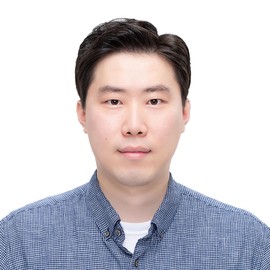
 Gyuwan Kim
· 8 previous affiliations
- Current
- Doctor of Philosophy - PhD, Computer Science · 2021–2026
- Intern · 2025
- Intern · 2024
- Intern · 2023
- Intern · 2022
- NAVER Cloud (South Korea)2017–2021
- Research Scientist · 2017–2021
- Naver (South Korea)2017–2021
- Research Scientist · 2017–2021
- Seoul National University2010–2017
- MS student · 2015–2017
- Undergrad student · 2010–2015
Research Overview
Gyuwan Kim focuses on the efficiency and reliability of language models, adaptive computation, and retrieval-augmented generation. His trajectory spans from early work on subword language modeling and dialogue state tracking to foundational optimizations for transformer architectures. Currently, he investigates efficient inference techniques for large language models, including speculative decoding and long-context reasoning.
Research Trajectory
Kim’s early research addressed the computational bottlenecks of natural language processing systems. In 2019, he introduced Subword Language Model for Query Auto-Completion, which replaced slower character-level models with subword representations to significantly accelerate decoding while maintaining generation quality. Expanding on model capacity, he investigated the integration of large memory structures into pre-trained models in Large Product Key Memory for Pre-trained Language Models, defining new metrics to ensure memory slots are actively updated during training. Concurrently, he contributed to the area of Structured State Compression for Efficient Dialogue Modeling through his work on Efficient Dialogue State Tracking by Selectively Overwriting Memory. This system, SOM-DST, treated dialogue states as persistent memory, selectively predicting and updating only the slots that changed, which yielded substantial inference speedups by bypassing the need to regenerate the entire state at each conversational turn.
In 2021, Kim’s work broadened to encompass fundamental neural network optimization and architectural efficiency. He collaborated on AdamP: Slowing Down the Slowdown for Momentum Optimizers on Scale-invariant Weights, a method that prevents weight norms from growing excessively in networks with normalization layers, thereby advancing the research direction of Stabilizing Effective Learning Rates via Weight Projection. He also developed the Length-Adaptive Transformer: Train Once with Length Drop, Use Anytime with Search, proposing a training paradigm that leverages length dropout to allow dynamic sequence length adjustments during inference. Extending adaptive computation to edge deployments, his research group proposed Dynamic-TinyBERT: Boost TinyBERT's Inference Efficiency by Dynamic Sequence Length, which dynamically prunes unimportant tokens across layers to optimize the trade-off between accuracy and computational budget. Beyond text, he addressed the broader area of Overcoming Cascaded Error Propagation in Spoken Language Processing by co-developing St-Bert: Cross-Modal Language Model Pre-Training for End-to-End Spoken Language Understanding, which learns contextualized cross-modal alignments from phoneme posteriors and subword text. Additionally, he applied sequence modeling techniques to bioinformatics in NASCUP: Nucleic Acid Sequence Classification by Universal Probability, balancing the speed of model-based methods with the accuracy of alignment-based approaches for high-throughput sequencing data.
As large language models became central to the field, Kim focused on retrieval mechanisms and model evaluation. In Bridging the Training-Inference Gap for Dense Phrase Retrieval, he explored methods to align training objectives with the realities of large-scale inference, proposing efficient validation strategies for dense retrievers. Addressing the opacity of LLM training corpora, he designed Detecting Training Data of Large Language Models via Expectation Maximization, introducing the EM-MIA method to iteratively refine membership inference attacks and detect data contamination, a critical step for understanding model behavior.
His recent work emphasizes adaptive computation for complex reasoning tasks. He helped design AcuRank: Uncertainty-Aware Adaptive Computation for Listwise Reranking, which dynamically allocates LLM context windows based on query difficulty rather than relying on fixed document evaluations. Similarly, he participated in creating MacRAG: Compress, Slice, and Scale-up for Multi-Scale Adaptive Context RAG, a hierarchical framework that combines offline document compression with online adaptive expansion to construct optimal contexts for multi-hop reasoning. Most recently, he co-authored KnapSpec: Self-Speculative Decoding via Adaptive Layer Selection as a Knapsack Problem, a training-free framework that accelerates long-context LLM inference by dynamically reconfiguring drafting layers to mitigate hardware bottlenecks.
Current Directions
The most recent papers in the evidence indicate a strong focus on optimizing the inference efficiency and reasoning capabilities of large language models. Recent work investigates adaptive computation strategies, such as dynamically allocating context windows for listwise reranking and treating speculative decoding as a resource-constrained optimization problem to mitigate hardware bottlenecks in long-context scenarios. Additionally, Kim is actively exploring advanced retrieval-augmented generation architectures that balance fine-grained precision with broad context coverage through hierarchical compression and slicing. Alongside these efficiency improvements, his recent research addresses model reliability by developing expectation-maximization techniques for membership inference, providing tools to detect data contamination in opaque LLM training corpora.
Profile updated
Loading new papers…
Other researchers whose papers cluster into the same research directions — a proxy for overlapping technical interests and shared intellectual neighborhoods.
See something wrong? Report a mistake