

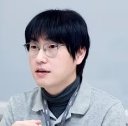
 Jung-Woo Ha
· 8 previous affiliations
- Naver (South Korea)Since 2017
- AI Head (Executive Vice President) · Since 2024
- Research fellow · Since 2023
- Head (Executive Director) · 2017–2023
- 정회원 · Since 2024
- 일반회원 · 2021–2024
- NeurIPS 2025Since 2025
- Senior Area Chair · Since 2025
- 대한민국 대통령실Since 2025
- AI미래기획수석비서관 · Since 2025
- 한국경제인협회2025
- AI특별위원회 운영위원 · 2025
- 광주 AI사관학교2025
- 교장 · 2025
- NAVER Cloud (South Korea)2015–2016
- Researcher · 2015–2016
- Seoul National University1997–2015
- PhD student · 2006–2015
- Undergrad student · 1997–2004
Research Overview
Jung-Woo Ha focuses on large-scale foundation models, multimodal reasoning, and generative computer vision. His trajectory spans from early work in probabilistic graphical models to the development of unified image-to-image translation architectures and robust continual learning frameworks. Most recently, his research addresses the scaling of language models, long-context understanding, and universal user representations for recommendation systems.
Research Trajectory
His early research explored probabilistic graphical models, introducing Evolutionary hypernetwork models for aptamer-based cardiovascular disease diagnosis in 2007. This biology-inspired approach functioned similarly to associative memories, offering more interpretable learning results than standard neural networks of the time. Returning to deep learning a decade later, he focused on the intersection of vision and language. He developed Dual Attention Networks for Multimodal Reasoning and Matching, a framework that simultaneously attends to specific image regions and words over multiple steps, advancing research in bidirectional co-attention for multimodal reasoning.
A major theme in his trajectory is generative computer vision, particularly unified architectures for image synthesis. With collaborators, he proposed StarGAN: Unified Generative Adversarial Networks for Multi-Domain Image-to-Image Translation, which replaced the need for multiple independent models by using a single network and a mask vector to translate images across multiple target domains simultaneously. This work contributed significantly to the area of Geometric Deformation in Unsupervised Image Translation. He later guided the development of StarGAN v2: Diverse Image Synthesis for Multiple Domains, which improved the diversity and scalability of the generated images across domains like human and animal faces. Further exploring generative models for representation learning, he introduced Contrastive Fine-grained Class Clustering via Generative Adversarial Networks, combining GANs with a contrastive objective to separate foreground objects and organize them into distinct clusters without human labels, advancing the direction of generative synthesis for robust representation learning.
Parallel to his vision research, he has extensively investigated audio processing and multimodal systems. He reframed musical onset detection as a survival analysis task in Modeling Musical Onset Probabilities via Neural Distribution Learning, training convolutional networks to predict time-to-event distributions and handle censored data. In the speech domain, he led the creation of ClovaCall: Korean Goal-Oriented Dialog Speech Corpus for Automatic Speech Recognition of Contact Centers, demonstrating that task-specific data significantly improves ASR performance for contact center scenarios. This practical focus on human-computer interaction was also reflected in Understanding Differences between Heavy Users and Light Users in Difficulties with Voice User Interfaces, a user study analyzing interaction challenges with a restaurant reservation system. In multimodal advertising, he developed M2FN: Multi-step modality fusion for advertisement image assessment, an architecture that deeply integrates visual data with auxiliary metadata to predict click-through rates.
His work also addresses fundamental challenges in model training and continual learning. He oversaw the development of AdamP: Slowing Down the Slowdown for Momentum Optimizers on Scale-invariant Weights, which investigated how momentum in gradient descent optimizers interacts with scale-invariant weights, proposing a method to stabilize effective step sizes. In continual learning, he participated in designing Rainbow Memory: Continual Learning With a Memory of Diverse Samples, which manages an episodic memory of diverse samples to handle non-disjoint incremental learning scenarios. This was extended in Online Continual Learning on a Contaminated Data Stream with Blurry Task Boundaries, which tackled the more complex problem of learning from continuously changing data distributions with incorrect labels. His contributions to graph neural networks include Metropolis-Hastings Data Augmentation for Graph Neural Networks, a framework that draws augmented graphs from an explicit target distribution to improve semi-supervised learning. Additionally, he explored natural language processing optimization in Reward Optimization for Neural Machine Translation with Learned Metrics, addressing the limitations of token-level negative log-likelihood and traditional metrics like BLEU.
In recent years, as a researcher affiliated with NAVER, his focus has shifted toward large-scale foundation models and their applications in recommendation and language understanding. He contributed to Scaling Law for Recommendation Models: Towards General-Purpose User Representations, which introduced the Contrastive Learning User Encoder (CLUE) and demonstrated that user modeling follows predictable scaling laws, a key development in the area of Universal User Representations from Behavioral Foundation Models. Building on this, he co-authored Pivotal Role of Language Modeling in Recommender Systems: Enriching Task-specific and Task-agnostic Representation Learning, showing that formatting user behavior histories as plain text and jointly training a language model significantly boosts transferability, advancing the direction of Transferable Recommendation via Universal Semantic Representations. In the realm of large language models, he was involved in the HyperCLOVA X Technical Report, detailing a family of LLMs engineered to balance a massive Korean corpus with English and code data. To address the computational costs of long-context LLMs, he collaborated on Hierarchical Context Merging: Better Long Context Understanding for Pre-trained LLMs, proposing a training-free divide-and-conquer approach that hierarchically merges chunks and prunes redundant tokens. Most recently, his work continues to explore architectural innovations, as seen in the 2025 paper Deformable Graph Transformer.
Current Directions
The most recent papers in the evidence indicate a strong focus on the architecture and application of large-scale foundation models. Recent work investigates methods for extending the context window of pre-trained large language models without additional training, utilizing hierarchical merging and token pruning to reduce memory requirements. Concurrently, his research explores the intersection of language modeling and recommendation systems, demonstrating that user behavior can be effectively modeled as text to create universal, transferable user representations. Additionally, ongoing work addresses architectural improvements in graph neural networks, specifically through the development of deformable graph transformers.
Profile updated
Loading new papers…
Other researchers whose papers cluster into the same research directions — a proxy for overlapping technical interests and shared intellectual neighborhoods.
See something wrong? Report a mistake