

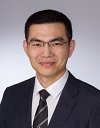
 Rui Zhang
· 3 previous affiliations
- Professor · Since 2024
- Tsinghua UniversitySince 2021
- Visiting Professor · Since 2021
- The University of Melbourne2017–2020
- Full Professor · 2017–2020
24 other authors named Rui Zhang: Rui Zhang (University of Minnesota · 165 papers), Rui Zhang (Chinese Academy of Sciences · 96 papers), Rui Zhang (Pennsylvania State University · 51 papers), Rui Zhang (37 papers), Rui Zhang (30 papers), and 19 more
Research Overview
Rui Zhang focuses on spatial database indexing, trajectory data analytics, and advanced recommender systems. Early research addressed high-dimensional indexing and moving nearest neighbor queries, while subsequent work expanded into machine learning frameworks for knowledge distillation and graph alignment. Current efforts investigate the integration of large language models and self-supervised graph foundation models into recommendation architectures.
Research Trajectory
The trajectory begins in the domain of spatial databases and high-dimensional indexing. Early work introduced the P+-tree in Making the Pyramid Technique Robust to Query Types and Workloads, a structure designed to efficiently support both window and k-nearest neighbor (kNN) queries under varying workloads by mapping clustered subspaces into a single-dimensional space. Subsequent research addressed data stream management, specifically the efficient computation of multiple aggregations over high-speed IP traffic streams, as detailed in Multiple Aggregations Over Data Streams.
This focus on spatial and streaming data naturally extended into moving object databases and trajectory analytics. Zhang contributed to the development of efficient algorithms for moving kNN queries, including V*-kNN: An Efficient Algorithm for Moving k Nearest Neighbor Queries. The research also explored privacy concerns in trajectory data, investigating destination prediction through sub-trajectory synthesis and proposing corresponding privacy protections in Destination prediction by sub-trajectory synthesis and privacy protection against such prediction. Further advancements in this area included Processing Moving kNN Queries Using Influential Neighbor Sets, which advanced the research direction of Dynamic Spatial Indexing for High Frequency Location Updates. Recently, this long-standing interest in trajectory data intersected with modern machine learning via BT-Tree: A Reinforcement Learning Based Index for Big Trajectory Data.
In parallel, the research expanded into core machine learning methodologies and recommender systems. A notable methodological contribution is KDGAN: Knowledge Distillation with Generative Adversarial Networks, which proposed a three-player framework combining a classifier, a teacher, and a discriminator to train lightweight classifiers, contributing to the broader area of Teacher-Student Bias Propagation in Knowledge Distillation. In the recommender systems domain, work addressed the challenge of missing-not-at-random data in Doubly Robust Joint Learning for Recommendation on Data Missing Not at Random, advancing the area of Correcting Selection Bias in Collaborative Filtering. The architecture of recommender systems was further refined in Detecting Beneficial Feature Interactions for Recommender Systems, which introduced a graph neural network approach to prune irrelevant feature interactions, aligning with the research direction of Beyond Pairwise Feature Interactions. The scale and efficiency of these systems were later synthesized in Embedding Compression in Recommender Systems: A Survey, which categorized approaches for reducing memory costs in industrial-scale models, a key topic in the area of Compressing Embedding Tables for Large Scale Recommendation.
Recent work has increasingly leveraged large language models (LLMs) and foundation models across diverse data modalities. In knowledge graph research, AutoAlign: Fully Automatic and Effective Knowledge Graph Alignment Enabled by Large Language Models introduced a method to align entities without manually crafted seed alignments, contributing to the direction of Overcoming the Seed Alignment Bottleneck in Knowledge Graphs. In computer vision, Zhang participated in developing Interactive 3D Object Detection with Prompts, which accelerates 3D bounding box annotation using 2D prompts, advancing the area of Overcoming the 3D Point Cloud Annotation Bottleneck.
Current Directions
The most recent papers in the evidence indicate a strong focus on adapting foundation models for complex recommendation and graph learning tasks. Current work investigates how to disentangle user preferences into stable intrinsic factors and context-dependent extrinsic factors to improve recommendation accuracy across varying scenarios, as seen in Intrinsic and Extrinsic Factor Disentanglement for Recommendation in Various Context Scenarios (contributing to the area of Modeling Situational Shifts in Human Preferences). Additionally, research is exploring the direct adaptation of language models for recommendation using multi-modal and multi-domain item sequences, exemplified by ROMA: Recommendation-Oriented Language Model Adaptation Using Multi-Modal Multi-Domain Item Sequences. Finally, there is an active effort to systematize the rapidly growing field of graph foundation models, particularly through self-supervised pre-training techniques, as detailed in A Survey on Self-Supervised Graph Foundation Models: Knowledge-Based Perspective, which connects to broader areas like Masked Graph Autoencoding.
Profile updated
Loading new papers…
Other researchers whose papers cluster into the same research directions — a proxy for overlapping technical interests and shared intellectual neighborhoods.
See something wrong? Report a mistake